Tuesday, May 19, 2026
Tuesday, February 21, 2023
Apple Update: Apple M1 processors are now mainstream supported in Linux Kernel 6.2.
Friday, September 16, 2022
Updates: This fearsome new Linux malware will shoot a shiver down the backbones of IT professionals
Saturday, June 19, 2021
New Update: Microsofts Linux work apparently broke itself
New Update: Microsoft Linux work apparently broke itself
Bad press
Thursday, December 17, 2020
Linux 5.10 LTS is now live, packing a wealth of latest features
Will soon arrive during a repository near you
- Here are the simplest Linux distros for business
- We’ve also rounded up the simplest Linux distros for developers
- These are the simplest Linux laptops for running Linux
Saturday, September 12, 2020
Linux users beware - you'll be facing more cyber threats than ever before
Linux users are warned to up their security protection following new research which found the system might be facing a big rise in cyber threats.
a
Researchers at Kaspersky have discovered an increase within the number of criminals targeting Linux, which is usually thought to be safer and safer than other operating systems.
But the corporate discovered an increase in attacks designed to specifically damage Linux systems as criminals follow bigger and bolder gains.
- We've put together an inventory of the simplest Linux laptops on the market
- These are the simplest Linux distros for privacy and security
- Also, inspect the simplest Linux web hosting services
Linux security
Kaspersky says the trend in attacks is especially worrying as more organizations choose Linux for strategically important servers and systems over Windows.
However the corporate found Linux systems could potentially be in danger from advanced persistent threats (APTs) and targeted attacks from hackers that have created specifically Linux-focused tools.
Kaspersky says that over a dozen APT actors, including dangerous threat groups like Lazarus, are observed to use Linux malware or some Linux-based modules in recent years, diversifying their attacks across multiple operating systems during a bid to maximize returns.
The company notes that there's a myth that Linux, being a less popular OS, is unlikely to be targeted by malware. However, this is often not the case, with smaller, more targeted attacks becoming the norm, especially in systems using multiple operating systems, where access to an infected device could allow hackers into endpoints running Windows or macOS.
In the example of Lazarus, which is reportedly based in North Korea, the group used Linux malware to hold out widespread attacks and attempts to focus on multiple organizations within the US and Europe.
“The trend of enhancing APT toolsets was identified by our experts repeatedly within the past, and Linux-focused tools are not any exception," noted Yury Namestnikov, head of Kaspersky’s Global Research and Analysis Team (GReAT) in Russia.
"Aiming to secure their systems, IT and security departments are using Linux more often than before. Threat actors are responding to the present with the creation of sophisticated tools that are ready to penetrate such systems. We advise cybersecurity experts to require this trend under consideration and implement additional measures to guard their servers and workstations."
In order to remain safe, Kaspersky recommends maintaining an inventory of trusted software sources and avoid using unencrypted update channels, and not running binaries and scripts from untrusted sources.
Tuesday, August 25, 2020
Latest Update: Linux is now available on more Windows 10 versions
Microsoft expands Windows Subsystem for Linux 2 to Windows 10 1903 and 1909
Linux users will soon be ready to enjoy support from more Windows 10 builds to figure with.
Microsoft has announced it'll be including Windows 10 1903 and 1909 builds in support for Windows Subsystem for Linux 2 (WSL2), allowing the open-source software to run on more versions than ever before.
Previously, WSL2 users had been limited to the newer Windows 10 2004 or higher releases.
- We've highlighted the simplest Linux distros around today
- Best Linux apps: free and open-source software
- Best laptop for programming: top picks for coders, developers, and sysadmins
Windows 10 Linux
"We heard what proportion you liked WSL 2 and wanted to expand its accessibility, and over a previous couple of months, we worked on bringing it back to 1903 and 1909," Microsoft Windows Servicing employees Ty Citrin and Mitchell Minkoff wrote during a blog post announcing the launch.
"We’ve heard great customer feedback on what percentage users have enjoyed using WSL 2, and therefore the primary goal for this backport is to form WSL 2 available to more Windows users."
The pair say that WSL 2 is, "a new version" of the architecture in WSL that changes how Linux distributions interact with Windows. Each Linux distribution can run as WSL 1 or as WSL 2, and maybe switched between at any time.
All the features for WSL 2 distros will now be available for a good larger user base, with the pair promising a full Linux kernel built into WSL 2.
They are also bringing filing system performance now on par with Mac and Linux speeds, improved supervisor call instruction Support for all Linux applications notably, and Docker Desktop support.
The news comes shortly after Microsoft also announced it might be bringing graphics processor support to Linux on Windows 10 through WSL, with Nvidia, Intel, and AMD also announcing their support.
Source URL
Saturday, May 23, 2020
Linux Laptop: Linux laptop vendor uses a really surprising hack to guard your privacy
Nail polish on screws may be a good way to guard laptops against tampering while in transit
Several years ago, it had been revealed that the US National Security Agency (NSA) will sometimes intercept networking gear during shipping so as to switch it to supply backdoor access to the hardware. to urge around this, one company has devised an ingenious hack to make sure that its laptops arrive at customers without being tampered with.
Just six months ago, the social purpose company Purism decided to formalize its anti-interdiction services in order that they appeared as a drop-down choice as against being a “hidden menu item” that was difficult to seek out. The laptop and smartphone maker is one among if not the sole hardware vendor that gives an entire suite of custom anti-interdiction measures to stop its devices from being tampered with during shipping.
What exactly are these anti-interdiction measures? Well for starters, Purism applies glitter nail enamel to all or any of the screws on the rock bottom of its Librem 13 and Librem 15 laptops in order that users will know if someone took the device apart after it had been shipped. the corporate also ships its laptops with customized tamper-evident tape on a bag surrounding the device and its box. it'll even send pictures of the laptop measures it performed over encrypted email to customers.
When Purism first formally announced that it might offer anti-interdiction services to its customers, the corporate expected it to be a fringe upgrade that only a little number of individuals would choose. However, many purchasers trying to find additional security decided to upgrade to its anti-interdiction services.
While some people decided to settle on the service because they're during a high threat situation, others just want the peace of mind that comes with knowing their laptop won't be tampered with in transit without their knowledge.
Of the anti-interdiction measures, Purism offers, its glitter nail enamel is extremely popular and customers prefer to have it placed on either the middle screw or all of the screws of their new laptops.
In a blog post, the chief security officer at Purism, Kyle Rankin reflected on the success of the company's anti-interdiction services, saying:
Source URL
Sunday, February 23, 2020
MySQL: Open source should learn from Linux, not MySQL
When one vendor owns an open-source project, expect the community to seem for alternatives
There have been tons of mention open-source sustainability over the past few years, and permanently reason. Open source now powers much of the world’s most crucial new technologies, from programming languages and application platforms to machine learning and data infrastructure. As such, we'd like more, not less, open-source innovation. However, the foremost innovative and sustainable open source rarely depends exclusively upon one individual or company.
This is how open source was always meant to work—open source founded on an abundance mindset, instead of one among scarcity.
Learning from Linux
Way back in 2007 I used to be writing about this concept of abundance-driven business models. Speaking of Red Hat, I wrote, “The bits are free or abundant, but the service around them isn't. Red Hat, therefore, wins the more that it et al. give the software away for free of charge, because this results in a greater need for its role as a gatekeeper on quality and stability.”
Red Hat’s model was (and is) to supply a licensed “distribution” of that open-source software that was freely available, but somewhat unwieldy without Red Hat’s efforts to harden and test the code during a certain configuration (along with all of the software and hardware certifications that accompany it).
Importantly, Red Hat’s model doesn’t really work if Red Hat were to magically own all of Linux development. Red Hat’s model depends on open source abundance. As of the Linux Foundation’s 2017 report on contributions to the Linux kernel, Red Hat accounted for just 7.2% of all Linux development (for the later Linux 5.5 kernel, the amount is 6.6%). In Red Hat’s last full financial year before being acquired by IBM, that 6.6% contribution translated into $3.4 billion in revenue.
But it’s also not exclusive. IBM, HPE, and a variety of other enterprise vendors derive their own billions from selling hardware, services, or software around Linux, as do cloud vendors like Microsoft, Alibaba, AWS, and Google. At an equivalent time, many other companies repose on Linux and generate their own billions in customer value. Critically, those billions would likely evaporate if one company owned Linux. That company would capture all the worth, which value would be substantially less.
The era of one company owning an OS and exclusively profiting therefrom is over. this is often partially because we’ve discovered, for instance, that it’s better and more profitable for all to possess a Linux community that makes an outsized and growing pie shared by many, instead of a relatively small, zero-sum pie consumed by one. It’s a lesson we’re learning again from Kubernetes.
Which brings us to single-vendor open source projects.
The MySQL example
MySQL may be a popular database but it's always been something of a closed community. Initially, the overwhelming majority of contributions came from MySQL AB, and this seemed okay to many because MySQL was deemed to possess good intentions. In 2008, however, Sun Microsystems acquired MySQL for $1 billion. Those with MySQL stock (VCs and executives, primarily) rejoiced, but worries began to erode the MySQL community. Still, Sun was earnestly trying to be an honest open-source citizen, therefore the community mostly breathed easily.
Until Oracle acquired Sun in 2009, that is, then the community began to urge nervous.
The best thanks to measuring that nervousness wasn’t with ranting tweets (there were many) or angsty blogs (also many). No, the simplest evidence for just what proportion MySQL lost by persisting as a single-vendor project was the increase of open-source alternatives like PostgreSQL and MariaDB (a successful fork of MySQL).
Customers tend to be slow to vary databases, but enterprises like ServiceNow and Google began migrating thousands of MySQL servers to MariaDB, thanks to worries about Oracle’s stewardship of MySQL. Other companies accelerated their migrations to PostgreSQL or other options. Yes, MySQL remains very fashionable, but open-source alternatives are thriving within the shadow of Oracle’s stewardship.
Who can blame developers for watching alternatives? Despite owning MySQL Oracle founder Larry Ellison has repeatedly trashed it. As Ellison told analysts in 2018, “[Y]ou’ve needed to be willing to offer up plenty of reliability, plenty of security, plenty of performance to [use MySQL rather than Oracle because].... we have an enormous technological advantage.”
When one vendor controls a project, the community is usually one bad financial year or one bad acquisition faraway from potentially problematic project changes.
Abundance, not scarcity
Indeed, when open source communities are large, and adoption for a specific project grows, it creates a massive opportunity for all. this is often the promise of open source: abundance, not scarcity. It’s also the key to generating customer value, and therefore the revenue that derives from it.
source:
Wednesday, April 10, 2019
Windows, Mac, or Linux? We compare the pros and cons of these computing platforms
We take a hyperbole-free, zero-snark, and comprehensive look at why you might want to choose each of the big three operating systems. If you're considering a change, read this first.
By mid-2019, most people are fully entrenched with their favorite operating system choice. But, if you're upgrading from an old machine, you might want to re-evaluate your options. If you're choosing an operating system for your desktop or laptop computer, there are three main choices: Windows, MacOS, and Linux.
In this article, we're going to take a comprehensive look at the differences between these platforms for desktop use. Before we get started, let's establish a few ground rules and recognize a few realities.
We're looking at desktop and laptop use only. Choosing a server, IoT, or infrastructure operating system is a very different beast, something we don't have room to discuss in this article.
We are well aware of the nearly religious affinities for each of these platforms. We'll touch lightly on some of the fundamental features that drive these affinities, but we're not preaching. Each choice works for different people. We're not telling you what to do, we're just discussing some factors you might want to keep in mind when making a choice.
We will consider how these well-understood OSs differ in 2019. We've started each OS off with six key considerations, so if you want to just skim, you'll get a good feel for the pros and cons of each system merely by scanning the 18 considerations in our pro and con lists.
And, with that, let's take a deep dive into today's three leading desktop platforms.
Use and cost
Let's start with the key questions I ask when anyone comes to me for advice about computer purchasing:
- What do you want to do with it?
- How much do you want to spend?
- Which of those two (use versus spend) is more important?
Windows typically comes with new PCs. If you have an old PC, it almost certainly came with Windows. Pretty much the only time you're going to pay to buy Windows is if you're building one of your own, and we'll address that later. Macs always come with MacOS, so there's no cost there. And, of course, Linux is free. The much bigger cost for all these environments will be your ongoing maintenance expenses.
Choosing a computer is always about making trade-off decisions. If you've got a very limited budget, then your choice is often going to be Windows or even Linux. If you're going to do heavy graphics or video production, your choice might often be Mac. The point is, before you choose your desktop platform, it's important for you to identify your needs.
I find that the trade-off between use and spend is often the deciding factor. I recently bought a new main desktop machine. In my case, I didn't want to spend all that much, but my bigger priority was getting my job done.
Because of the amount of work I have to do, I'm always finding ways to save time. If my computer choice increases productivity at the expense of cost, well, then I'm probably going to be spending more money. I need those hours back.
You may have a hard-and-fast budget, or you may have a key need. As you work your way through your choices, keep these factors (and the balance between them) in mind.
windows-10-april-2019-update-the-new-fea-5c92610fdd173300c125b5b7-1-mar-25-2019-16-42-08-poster.jpg
Understanding Windows
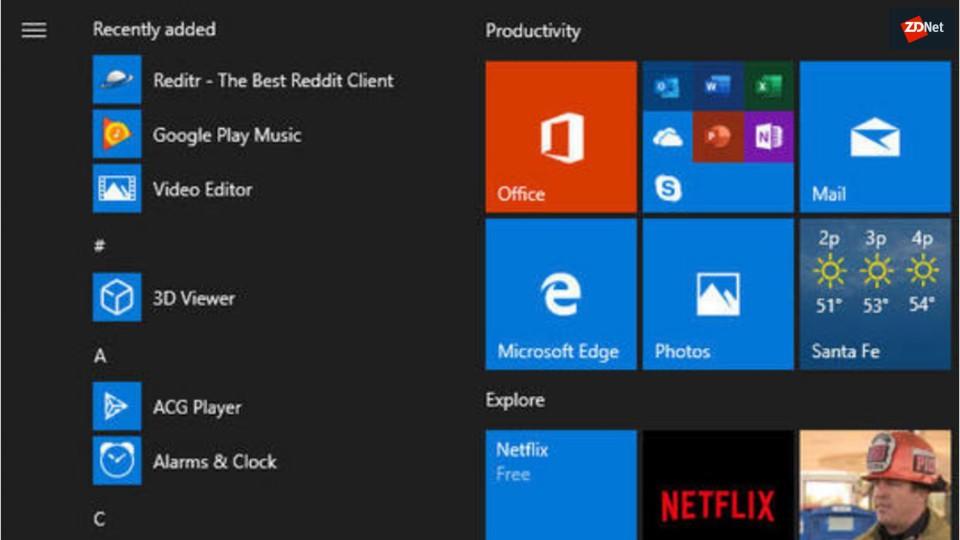
Let's talk Windows. Windows went through a rough period during its Windows 8 generation. Microsoft removed the Start menu, forcing users to rely on gestures to find features and launch applications. Microsoft also introduced a limited version of Windows called Windows RT, which only allowed Windows Store apps and didn't run on the Intel platform.
Three years later, in 2015, Microsoft introduced Windows 10, a substantially improved version of Windows that returned the Start menu. Microsoft improved the user interface, streamlined many of the settings, and eliminated the odd inconsistencies that had haunted Windows 8. Windows 10, which has had some substantial interim upgrades, is a truly strong Windows release.
By most accounts, Windows runs on roughly 90 percent of PCs worldwide, with desktop Linux usage accounting for a very low single digit percentage of usage and MacOS making up the rest. In developed markets like the US, the Mac percentage is considerably higher, at around 20 percent. But corporate usage, with the exception of some companies like IBM, is almost all Windows. For most people, Windows is the default choice.
WINDOWS MEANS CHOICE
That means if you want a Windows computer that's really a tablet with a detachable keyboard, an all-in-one, a super-beefy tower machine with lots of blinking colored lights, or even a system on a USB thumb drive, along with so many more options, there's a Windows machine for you.
When it comes to customization, that choice increases exponentially. If you want to build a machine yourself, you can add nearly any configuration of cards and features you want. Do you want four beefy graphics cards working in tandem? Windows can do it. Do you want on-board instrumentation inputs? Windows can do it. Do you want to be able to run 10 drives internal to the machine? Well, of course, Windows can do it.
There are downsides to all this flexibility, of course. Getting all these independently produced components to work together can be challenging. Finding exactly the right mix of drivers that don't conflict with or break each other can often be a hair-pulling experience.
But if you're building something this custom, you've probably been down this road before. Most Windows users will buy pre-built laptops where all the drivers generally get along with each other and (again, generally) have been pre-tested at the factory before shipping.
VARIABLE QUALITY AND VARIABLE COST
Another big benefit of Windows is cost. While machines from mainstream manufacturers like Dell, Microsoft, and Lenovo have prices comparable to Apple products, it's also possible to buy a Windows laptop for under $200. It'll perform like a dog, but it will run. You can also build a $100,000 PC, if the urge strikes you.
Because of the vast number of Windows suppliers, product quality can be inconsistent. If you purchase a machine built for a business buyer from a top-tier vendor, you're almost sure to get excellent quality, better components, pre-shipment testing, and long-term support -- at a higher purchase price. But if you purchase a less expensive machine from a white box reseller or many of the lower-cost off-branded suppliers, component quality, support, and testing can range from unpredictable to downright unavailable.
As you might imagine, as the platform with the largest market share, Windows also offers the most applications. When you choose a machine, it's about the apps you need to run. This is a much bigger factor than the operating system or even the cost.
In my experience, the applications on Windows range from excellent to some that are, to be kind, are barely workable. This, of course, is not unique to just Windows, but because there are so many developers, you see a wider range of spotty apps along with a wider range of apps for almost any purpose.
To improve on Windows app quality, Microsoft has instituted the Windows Store. Developer participation is optional, so not all apps are distributed through the Store. That said, Microsoft has been diligent in keeping an eye on quality, eliminating apps that are unsafe for users as they find them.
But there's one Windows disadvantage. Because there are so many more Windows users, malware, spyware, and ransomware are far, far more prevalent on Windows than on MacOS or Linux. The vastly larger total number of potential targets provides a considerably larger return on investment for ransomware and similar attacks. Nearly all breaches, including the vast corporate breaches, are initiated through a phishing or malware attack that gains a foothold on an individual's Windows PC and then makes the jump into a corporate network.
ENTERPRISE AND GAMING
For corporate users, Windows-based authentication integrates "out of the box" with Active Directory-based corporate servers. You can accomplish the same thing with Mac and Linux machines, but you'll need to get extra add-on software to do so. With Windows, corporate networking is built in -- at least as long as you're running the Pro versions. Windows Home does not come with corporate connectivity. There will be an additional upgrade fee.
For home users, gaming is huge on Windows-based PCs. While there are never-ending debates over whether consoles have more gaming power than beefy gaming PCs, there's no doubt that gaming PCs offer a level of gaming involvement and customization that nothing can top. Not only can Windows PCs be equipped with incredible power, there's also an entire submarket in providing RGB lighting effects for everything from motherboards to memory sticks. If you're a gamer and you want to get your bling on, nothing beats PC gaming.
Getting to know MacOS
If you could reach back in time 35 years ago and gently pluck an original Macintosh user from 1984 and put her in front of a brand new 2019 Mac, she would be able to operate today's machine. The file system would look the same. The menu bar would look the same. Even the trash would look the same.Sure, instead of just a few thousand black and white pixels, the screens would be in glorious high-resolution color, and the speed, breadth, and depth of the applications would be mind-boggling, but the fundamental interface would be understandable.
No OS other than MacOS has had that level of continuity. Macs have undergone fundamental processor changes, jumping from 68000-based devices to PowerPCs, migrating to Intel chips, and -- probably in the next few years -- migrating to Apple's own silicon. But to the users, every single change in how the Mac has evolved has had a level of internal consistency and predictability unrivaled by any other platform.
Interestingly, even though some aspects of the system remain effectively unchanged for more than three decades, that doesn't mean that MacOS feels particularly dated, although, as nearly every Mac user will admit, it does have its quirks.
Although Macs have historically suffered far fewer malware threats than Windows machines, there has been a small rise in malware variants targeting MacOS users -- mostly for the contents of cryptocurrency wallets. While it's not as existentially necessary to run an anti-malware program on a Mac, it's generally a good idea. Microsoft has recently starting bringing its Defender software to Macs, but right now, that's limited to enterprise use.
THE MACINTOSH ECOSYSTEM
We can't discuss MacOS without discussing Macintoshes. The two go together. While Windows can run on thousands of different machines from hundreds of different vendors, MacOS is distributed by Apple to run solely on Apple hardware. There is a small, intrepid group of Hackintosh builders who source Macintosh compatible hardware and build their own systems, but they're outliers, and the process of building a Hackintosh takes some work.
Where PCs are cheaper is when you're not looking at brand-name or spec-for-spec comparisons. You can absolutely get cheaper laptops and desktops for Windows than Macs. Additionally, if you're willing to sacrifice Mac's legendary design and go for a traditional tower Windows PC, you can generally get more performance for the dollar.
Although the buy-in cost for Apple hardware is often more expensive, many have found that the overall cost of ownership over the lifetime of the system is less expensive with Macs. IBM did a study before the company decided to standardize on Macs, where they found that:
PCs drive twice the amount of support calls. They're also three times more expensive. That's right, depending on the model, IBM is saving anywhere from $273 to $543 per Mac compared to a PC, over a four-year lifespan.
Macs are also appealing because of their design and integration. MacOS is tightly integrated with iOS, to the point that you can even share clipboards between a Mac and an iPhone, or use an iPhone to take a picture that drops directly into a Mac application.
LEGENDARY EASE OF USE
Although some Windows users may dispute this, many Mac users believe that MacOS is easier to install and update, offers faster updates with less hassle, and allows applications to be installed and managed with greater ease than Windows.
Out of the box, MacOS also comes with a deep range of applications for free, including the music composition tool GarageBand, video editing application iMovie, and a complete productivity package consisting of Pages (word processing and layout), Numbers (spreadsheet), and Keynote (presentations). The MacOS Preview app provides a wide range of features, including editing PDFs.
While MacOS is often touted as an easy-to-use operating system, it also greatly appeals to design and development professionals. Under the hood, MacOS has a UNIX foundation, which means that the UNIX command line is a mere terminal window away. MacOS also has AppleScript, which can be used to automate complex workflows.
RUN MAC, WINDOWS, AND LINUX APPS
If you sufficiently equip your Mac (and by this, I mean an i7 processor or better, 16GB of RAM or better, and definitely SSD instead of hard drive), you can use Parallels or another virtualization application to provide multiple operating systems on the Mac. This is a big appeal for me. I use a well-equipped Mac with Parallels, and I'm able to run Windows and Linux side by side with MacOS applications, even dragging and dropping across operating systems. This level of flexibility is unmatched on any other OS.
It's important to note that most Macs can't be upgraded. When you spec out your CPU, memory and storage, that's what you'll have to live with. While the new, 2018 Mac mini does allow RAM upgrades, it is a complex, tedious, and delicate process. Other machines, like the insanely expensive iMac Pro, allow RAM to be upgraded, but it requires a highly skilled technician to remove the permanently glued display and case to get at the machine's innards, voiding the warranty in the process..
Finally, there are some applications that run solely on MacOS, like the high-end video production tool Final Cut Pro X. With a virtualized copy of Windows, a Mac can be used to run any application you might need (including Windows and Linux programs), where if you're running on a Windows machine, MacOS applications are not available.
Keep in mind, though, that you're limited to the hardware produced by Apple. If Apple chooses not to update a form factor or model for a few years (as has happened a lot in recent years), you're out of luck for that hardware unless you decide to build a Hackintosh. But with the advent of the T2 security chip last year, and the expected move to Apple-designed CPU chips, it may not be possible to home-build a Hackintosh for much longer.
Looking at Linux
I have three Raspberry Pis running the OctoPi distribution of Linux controlling my 3D printers. I have a Debian distribution running my home server. Out on the Internet, I have at least 10 CentOS distribution virtual machines running my websites. And in my various home devices, I have an uncountable number of Linux instances running, driving everything from my smart TVs to my Internet router.
Linux is renowned for its versatility, particularly in servers and embedded solutions. But in this article, we're talking about desktop Linux implementations, where you'd use Linux with a keyboard and mouse to, at the very least, check your email.Unlike either Windows or MacOS, Linux is an open-source operating system, originally developed by Linus Torvalds back in 1991. Because it's open source, it can be modified and extended by anyone; a virtual army of loosely affiliated coders have been working on it for nearly 30 years.
OPEN SOURCE
Also because it's open source, different variants (called distributions) have been released, containing everything from different core functionality to a wide variation of settings and configuration options, to different user interfaces, and even different fundamental purposes. The OctoPi distribution running on my $30 Raspberry Pis was built entirely around managing 3D printers.
MANY LINUX DISTROS
For our desktop comparison though, let's focus on the truly practical. What can it do for you today? Well, first, as we've established, there's no "it." This is no one true Linux. You'll need to choose a distro (shorthand for "distribution"). We'll make that easy for you. Our in-house Linux guru, Steven J. Vaughan-Nichols, recommends Linux Mint, calling it "The better-than-ever Linux desktop."
There was a time when the graphical user interface of Linux wasn't up to Windows or MacOS standards. Now, there are many different Linux GUIs, and the ones that come with Mint are every bit the equal of Windows' Explorer interface or the Mac's Finder.
Although Linux is considerably more secure than Windows and even somewhat more secure than MacOS, that doesn't mean Linux is without its security flaws. Linux doesn't have as many malware programs, security flaws, back doors, and exploits, but they are there. But they're a whole lot less than the virtual flood of malware that infects Windows users on a daily basis. Network administrators and developers like this more minimal security footprint, but it's likely that using MacOS would provide a similarly low-risk profile, with a lot more software compatibility.
With a few exceptions, mostly from Dell, you're not going to buy a PC that already runs Linux. The vast majority of users retrofit a former Windows PC with a Linux OS or build a PC from parts and load a Linux distro. This is not hard. Linux installers have also come a long way. My wife, who is technically inclined but had never used Linux, installed Linux Mint on an old laptop in just an hour or so, with no help.
A VERY HANDS-ON OPTION
That said, the usability of Linux isn't just the desktop. Much of the complexity results in trying to get corporate solutions to work in a Linux environment. For example, the webcast software we use requires true PowerPoint files. Even though there are Linux substitute solutions for slide preparations, making it all work on a workflow deadline can often be time-consuming.
There are compatibility solutions like WINE and Crossover, but once again, you're spending time fiddling for compatibility when you might otherwise be getting your job done. Another common approach is to use cloud-based software such as Google Docs or Office 365. Yes, Office 365 will run on Linux via Chrome (although the web version does sacrifice some functionality).
You also have an enormous range of devices that support Linux. For example, if you have an HDMI-equipped TV, an old USB keyboard and USB mouse, you can set up a moderately workable Linux desktop on a Raspberry Pi for less than $80.
Application selection is a bit of an issue for Linux users. Linux runs the Chrome browser (among others), so any web-based app is fully functional on Linux. But if you're a die-hard Microsoft Office or Adobe Creative Cloud user, you might have to find substitute solutions.
That's the key with Linux applications. There are substitute (usually free) solutions for nearly any MacOS or Windows app you might choose to use. They don't always work the same. Some are rougher around the edges, not having had the polishing effects of professional product management. While mostly file-format compatible, they're not identical.
That said, regardless of whether you want office apps, media production apps, or coding tools, there are Linux versions available -- usually without any fee or subscription.
While there has been some push for Linux gaming, the fact is that both MacOS and Linux lag behind Windows when it comes to gaming selection. If you're a hard-core gamer, you'll want to investigate carefully which games are available.
The Chromebook option
Chromebooks are basically the Chrome browser baked into the hardware of a notebook computer. Ranging from a few hundred bucks to over a thousand dollars, Chromebooks come in various power and sleekness levels, depending on your budget.
Chromebooks run on Chrome OS, which is a variant of the open source Chromium OS, which is based on Linux.
In general, when you're running a Chromebook, you're limited to apps that you can access from your browser. For many, that's enough. But for those who need to run native Linux apps, it's possible to run an integrated Linux environment in a VM, right within Chrome OS.
Which OS is right for you?
If you were stuck on a deserted island with good Internet, and all you had was one of the above OSes, you'd be fine. You could generally get anything done that you'd want to get done with Windows, MacOS, or Linux. To some degree, that's why OS choice has become something of a minor "religious" war because instead of tangible differences, the OS choice becomes one of the preferences.
That said, there are some reasons you might want to choose one OS over another. Here are a few if-then decision recommendations that might help.
- If you have an old PC and you want to update it to a fully modern OS for free, go with Linux.
- If you want to be able to choose from any hardware configuration you want with zero restrictions, go with Windows.
- If you want to run MacOS, Windows, and Linux apps all on the same machine, run MacOS.
- If you want super-tight integration between iOS and your desktop OS, with carefully tuned hardware, go with MacOS.
- If you want to get a notebook computer for less than $1,000, get a Windows machine or a Chromebook, or retrofit Linux on an older laptop.
- If you want to play Triple-A PC games, get Windows.
- If you want to brag about how much better your machine is than everyone else's, get a Windows machine… or a Mac… or a Linux machine. There's a lot to brag about with each of these OSs.
What do you think? Which OS do you run and why did you make your choice? Comment below. And, hey, be nice. We all have different opinions. Let's be friendly and keep things practical and not ideological. No one needs more bile these days.
READ MORE:
Wednesday, March 13, 2019
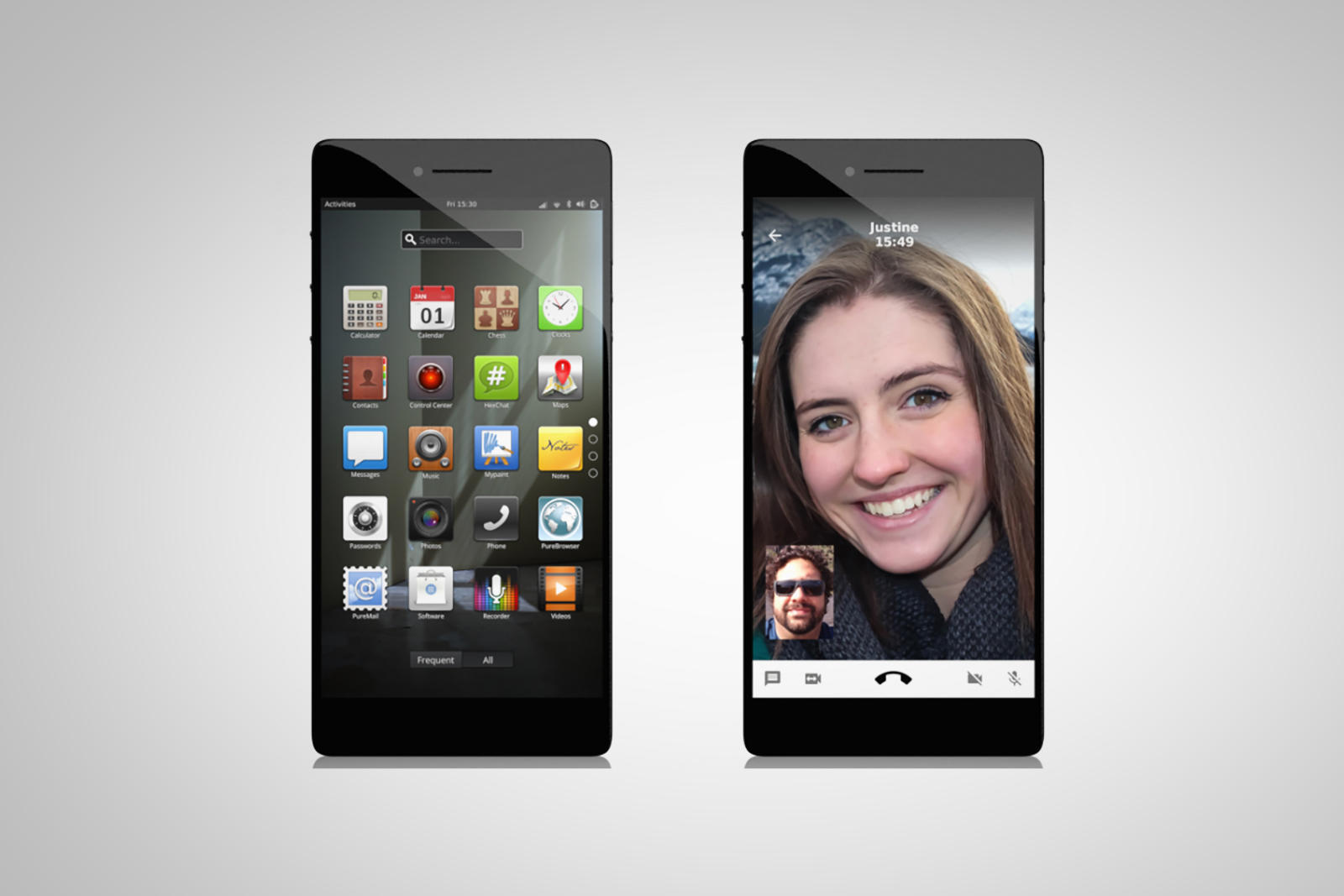
PureOS: One Linux for both PCs and smartphones
One operating system for two platforms? It's an old idea, which has never worked out, but the Linux laptop and smartphone company Purism is giving it another try.
There are quite a few people out there who want the same Linux on both their smartphone and their PC. Perhaps the best known of them is Canonical's Mark Shuttleworth. He tried for years to ignite a market for Ubuntu Linux running on tablets, smartphones, and PCs. It didn't work. After years of effort, Canonical gave up on its one operating system for all platforms plans. Dreams don't die. Now, Purism, the open-source laptop and smartphone vendor, is bringing the idea back to life with future releases of its PureOS Linux distribution.
Convergent? Foster explained it means the operating system and its applications will have a "consistent look and feel, as well as the exact same functionality for apps that run on your phone and your computer."
That's easier said than done.
"It turns out that this is really hard to do unless you have complete control of software source code and access to hardware itself. Even then, there is a catch; you need to compile software for both the phone's CPU and the laptop CPU which are usually different architectures. This is a complex process that often reveals assumptions made in software development but it shows that to build a truly convergent device you need to design for convergence from the beginning," Foster said.
Since Purism builds both its own hardware and software, it's in a good position to tackle these inherent problems. Purism started in 2015 as a free-software, crowd-sourced laptop manufacturer. It's hardware is designed to be as free as possible of any proprietary firmware or binary code, popularly known as blobs. PureOS, itself, is a Debian Linux-based operating system. On it, PureOS supports the GNOME and KDE Plasma Mobile interfaces.
Put it all together and Purism has more control of the complete device stack from the chips on up to the interface than any of its competition except for Apple. But, even Apple, which has macOS for its computers and iOS for its tablets and iPhones, doesn't try to run one operating system on both hardware platforms.
With Debian as its foundation, Purism claims PureOS can run on both laptops' power-hungry and fast CPUs and smartphones' power-aware and battery-saving CPUs. It also means, Foster claimed, that "there is a large set of packaged software that 'just works' on many different types of CPUs."
Of course, just because a single application can run on different architectures without re-engineering only gets you so far. For example, an application that looks great on a laptop's 15-inch display won't be so pretty on a smartphone's 5-inch display with its very different aspect ratio.
Purism knows this. To meet the problem, Purism is using "adaptive design." Foster explained, "Purism is hard at work on creating adaptive GNOME apps -- and the community is joining this effort as well -- apps that look great, and work great, both on a phone and on a laptop. Combining the work of the free software ecosystem with Purism's contributions means we can target convergence for all our Librem hardware line: both the 13- and 15-inch laptops and the 5-inch phone."
With PureOS's adaptive code as the window resizes, the column width dynamically changes to preserve a legible line width, until the sidebar and message view don't fit at the same time. At this point the leaflet folds, only the message view is visible, and a back button is added to the header-bar, to allow navigation to the room list.
Developers will also be able to customize their applications for PureOS by using the open-source libhandy. This is a GTK+ and GNOME mobile and adaptive presentation library. It's packaged in PureOS and Debian. Programmers can also use it in flatpaks, simply by including it in your Builder flatpak manifest.
READ MORE:
Saturday, March 2, 2019
Thunderclap flaws impact how Windows, Mac, Linux handle Thunderbolt peripherals
Thunderclap vulnerabilities allow the creation of highly dangerous malicious peripherals that can steal data from OS memory.
Windows, Mac, Linux, and FreeBSD systems are all impacted by a new vulnerability that was disclosed this week at the NDSS 2019 security conference.
The vulnerability --named Thunderclap-- affects the way Thunderbolt-based peripherals are allowed to connect and interact with these operating systems, allowing a malicious device to steal data directly from the operating system's memory, including highly sensitive information.
The research team behind this vulnerability says that "all Apple laptops and desktops produced since 2011 are vulnerable, with the exception of the 12-inch MacBook."
Similarly, "many laptops and some desktops, designed to run Windows or Linux produced since 2016 are also affected," as long as they support Thunderbolt interfacing.
WHAT IS THUNDERBOLT?
Thunderbolt is the name of a hardware interface designed by Apple and Intel to allow the connection of external peripherals (keyboards, chargers, video projectors, network cards, etc.) to a computer.
These interfaces became wildly popular because they combined different technologies into one single cable, such as the ability to transmit DC power (for charging purposes), serial data (via PCI Express), and video output (via DisplayPort).
The technology was initially available for Apple devices but was later made available for all hardware vendors, becoming ubiquitous nowadays, especially thanks to the standard's latest version, Thunderbolt 3.
WHAT IS THUNDERCLAP?
Thunderclap is a collection of flaws in the way the Thunderbolt hardware interface has been implemented on operating systems.
At the core of this vulnerability, researchers say they are exploiting an OS design issue where the operating system automatically puts faith in any newly connected peripheral, granting it access to all of its memory --a state is known as Direct Memory Access (DMA).
Thunderclap flaws allow attackers to create malicious, but fully-working peripherals that when connected via a Thunderbolt-capable port can perform their normal operations, but also run malicious code in the operating system's background without any restriction from the operating.
This makes the Thunderclap attack highly dangerous, as it can be easily hidden inside any peripheral.
The Thunderclap vulnerabilities are even capable of bypassing an OS security feature known as Input-Output Memory Management Units (IOMMUs) that hardware and OS makers have created in the early 2000s to counter malicious peripherals that abuse their access to the entire OS memory (in what's known as a DMA attack).
The reason why Thunderclap vulnerabilities work against IOMMU is either because operating systems disable this feature by default, or, in cases the feature has been enabled by the user, the OS leaves user data in the same memory space where the malicious peripheral runs its exploit code, making IOMMU useless.
What's being done about it?
Researchers from the University of Cambridge, Rice University, and SRI International discovered the Thunderclap issues back in 2016, and they've been working with hardware and OS versions for three years in complete silence to have them fixed.
However, despite the almost three-year warning, OS makers have been slow to react, with most of the Thunderclap attack variations described in a research paper published today still working. Here's the current state of patches, according to researchers:
Windows - "Microsoft have enabled support for the IOMMU for Thunderbolt devices in Windows 10 version 1803, which shipped in 2018. Earlier hardware upgraded to 1803 requires a firmware update from the vendor. This brings them into line with the baseline for our work, however the more complex vulnerabilities we describe remain relevant."
macOS - "In macOS 10.12.4 and later, Apple addressed the specific network card vulnerability we used to achieve a root shell. However the general scope of our work still applies; in particular that Thunderbolt devices have access to all network traffic and sometimes keystrokes and framebuffer data."
FreeBSD - "The FreeBSD Project indicated that malicious peripheral devices are not currently within their threat model for security response. However, FreeBSD does not currently support Thunderbolt hotplugging."
As the table below shows, most Thunderclap flaws are still unpatched.
Thunderclap flaws still working
Image: Markettos et al.
In the meantime, users are advised to disable Thunderbolt ports via BIOS/UEFI firmware settings and to avoid plugging in peripherals from untrusted sources.
Technical details about the Thunderclap flaws are available in a research paper entitled "Thunderclap: Exploring Vulnerabilities in Operating System IOMMU Protection via DMA from Untrustworthy Peripherals," available for download in PDF format from here and here, with more details here.
The research team also released the "Thunderclap platform" on GitHub, which is a collection of ready-made proof-of-concept code to create malicious Thunderclap peripherals.
Extra details are also available on a dedicated website and in this blog post.
READ MORE: