Breaking

Showing posts with label Google Assistant. Show all posts

Sunday, October 18, 2020

10/18/2020 01:00:00 PM

Latest News: Forgotten that song? If you'll hum it, Google Assistant can now play it

Latest News: Forgotten that song? If you'll hum it, Google Assistant can now play it

Latest News: Forgotten that song? If you'll hum it, Google Assistant can now play it


Most of the time

Google Assistant
(Image credit: Google)

Ever wanted to concentrate on a song but not be ready to remember what it’s called? in fact, you've got, we all have, and now Google Assistant is making that an entire lot easier, as a recent update means you'll hum thereto.

Simply launch Google Assistant (or tap the mic icon on the Google Search widget) and ask “what’s this song?” then start humming. Hum for around 10-15 seconds and Google Assistant will then use machine learning to undertake and identify the song.

It will provide you with a variety of likely matches, so albeit you don’t hum it perfectly there’s an honest chance one among the choices is going to be right.

It really works

In our limited testing, it seems to figure well – it correctly identified Modern Love by David Bowie, Blue (Da Ba Dee) by Eiffel 65, and Happy Birthday. It did not recognize Losing My Religion by R.E.M., but which may say more about our humming than its abilities.

Google’s machine learning models are trained to spot whistling and singing too, so a method or another it's an honest chance of identifying a track. and therefore the humming feature isn’t limited to Android – it also works on iOS (though only in English, while the Android version supports quite 20 languages).

Though iOS users have an identical tool powered by Siri, allowing the assistant to acknowledge spoken or sung lyrics to songs, so this Google feature could perhaps be a response thereto.

This new feature is one among a flurry of announcements from Google. The tech giant also announced that it’s massively expanding the live busyness information feature of Google Maps – a tool that’s all the more important during a socially distanced world.

And it’s launching a replacement spelling algorithm that will improve its ability to know misspelled words in Search, also as bringing improvements to the shopping tools on Google Lens. except for those like us who can only remember around 20 song names, the humming feature is certainly the highlight.


Monday, December 31, 2018

12/31/2018 04:24:00 PM

Google: 9 things Google Assistant can do that you may not know about

Get your Assistant working smarter for you


While Apple has Siri and Amazon has Alexa, there’s a third big player in the voice-assistant game: Google's very own voice-activated effort, Google Assistant.

It might not have captured the public's imagination in the same way as its counterparts, and Alexa in particular, but it’s no less useful. In fact, there are some things this handy little tool can do that most users don’t even know it’s capable of.

So to make sure you’re making the most of your trusty voice-activated partner, we’ve gathered together nine handies but not necessarily obvious Google Assistant features that will help to make it genuinely useful in loads of situations you might not have expected.

Find your way home (and check for traffic updates)

Drawing on the sheer breadth of information at Google’s search engine fingertips, it’s safe to say Google Assistant has a lot of potential uses, including the ability to find the best route to a certain location.

Just say “Get me home” and it will draw information from Google Maps to show you (or tell you) the best route based on your current location.

You can also use the voice-activated element to check traffic updates and get the latest information on diversions and closures. This feature is especially useful if you primarily use Google Assistant on the move.

Make a shopping list… with your voice


Google Assistant has been designed to assist you, after all, so it makes sense that something as mundane (yet important) as making a shopping list can be done with your voice.

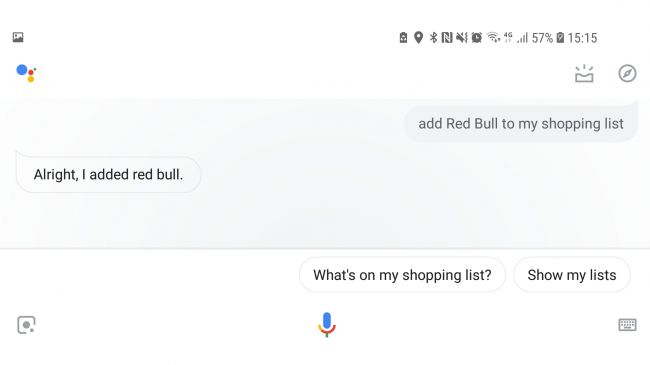
No more scrabbling for a piece of paper (only to lose it) or typing one out in your drafts – you just need to say “Add [item] to my shopping list.”

Not only does Google Assistant collate all those items into one place, but it will also even read back what’s on your currently saved list to ensure you haven't left anything out, enabling you to go about your day with one less thing to worry about.

Listen to the latest news headlines


Most of us are so busy these days that even taking the time to browse the latest stories on Twitter or your chosen RSS feed can feel like a drag on your time.

So why not use Google Assistant to read them out for you? It’s not an obvious feature, but if you say “Play the news” Assistant will start reading out stories from your preferred news sources.

You can ask it to stop, pause and play at any time, and you can even ask it to read stories from a specific source or specialist media site. If you’re running around the house trying to find your keys while grabbing a piece of toast before work, it’s a great way to keep up to date.

Control your smart home


If you’re like us and you’ve started to slowly add more and smarter devices to your home – be they thermostats, light bulbs or ovens that preheat themselves – then you can use Google Assistant to connect you to them via a single voice-controlled hub.

Open Google Assistant, press the menu icon in the upper-right corner of the screen and select Settings. From there you can add any compatible smart devices (and many devices are compatible) that are currently active in your home.

From Philips Hue lightbulbs to Honeywell thermostats, plenty of gadgets will respond to your voice-activated commands.

Convert money, measurements and more


Whether you’re looking to check how many dollars you can get to the pound or wondering how many inches there are in a kilometer, you can rely on your voice-activated servant to do the math for you.

Google Assistant can perform almost any conversion calculation, and it will read out the answer.

The same goes for translations. If you’re wondering what the word for ‘Hello’ is in Swedish, you just have to say “What’s the Swedish word for ‘hello’?” and Assistant will instantly respond with the correct answer: “Hej!”

Screen your phone calls


Tired of getting dogged with cold calls from automated messages and companies trying to sell you a dodgy service? Well, Google Assistant can help with that, too.

If you happen to own a Google Pixel 3 or Pixel 3 XL, the voice-activated service includes a feature that will answer certain calls on your behalf.

It’s one of the many ways Google is evolving Assistant, with the Call Screen feature enabling you to leave Assistant to answer the call and even record a transcript of the conversation so you can review it later. Telemarketers, beware...

Queue up your favorite shows on Netflix


Netflix has made its way onto most our smart devices, and whether you’re still mourning the cancellation of Daredevil or looking for a belly laugh or two with Brooklyn Nine-Nine, Google Assistant can help connect you to your favorite TV shows and films, all with voice commands.

Simply say, for example, “Play Mowgli: Legend of the Jungle on Netflix” and – as long as Netflix is set up on your Android device, you’re signed into the app and you've connected it up – Google Assistant will queue up the show/film and start playing it in a matter of seconds.

This is handier on a TV with Google Assistant built in than on some other devices, but it’s a simple way to call up a movie to watch on your phone too.

Check appointments and emails


If you're using Google Assistant there’s a good chance that you use some of Google’s other services, including Gmail and Google Drive, so why not use Assistant to connect to some of these apps?

If you use Gmail as your work account, you can ask the utility to check through your emails for certain keywords or bring up an appointment that’s been added to your Calendar app.

You can even use Google Assistant to take notes with Google Keep, should you need to jot down a quick thought or idea while you’re busy with other tasks. This feature is especially useful if you need to catch up any new emails you’ve yet to read or respond to.

Let Assistant entertain you


Struggling to find someone to enjoy a quick game with? Want to test your grey matter while you have a few minutes to spare? Well, Google Assistant can help on both accounts by challenging you to a game of solitaire or naughts and crosses/tic-tac-toe.

It can also tell you some awful jokes or puns, and even read out an inspirational quote or message if you need of a little motivation – you can even ask Assistant to find something funny for you to watch by checking currently trending videos on YouTube.


SOURCE:

Friday, November 9, 2018

11/09/2018 01:00:00 AM

This Technology Could Make Alexa and Google Assistant Better Listeners

Sounds good to us


Speech recognition tech is playing an increasingly important role in our lives, whether we’re asking our Amazon Echo to play our favorite Spotify playlist or getting a run-down of the news from the Google Assistant built into our smartphones.

Although speech recognition technology has existed in some form since the 1950s, it’s only in the last few years that it has found a practical application in the form of voice assistants built into smartphones, speakers and more.

The latest wave of speech recognition innovation has come about thanks to the leaps and bounds made in artificial intelligence in recent years, with tech giants like Google, Amazon, and Apple touting their use of neural networking in the development of their voice assistants.

Machine learning

What sets voice assistants like Amazon Alexa, Apple’s Siri, and Google Assistant apart from early iterations of speech recognition technology is the fact that they are constantly learning, picking up your speech patterns, vocabulary, and syntax with every interaction.

Most voice assistants these days also have voice recognition, which makes it possible for them to distinguish between different users – and with the might of these huge tech companies and search engines behind them, voice assistants are getting better all the time.

However, while the technology has irrefutably improved since it first made its way onto consumer devices, limitations with artificial intelligence and machine learning has meant that voice assistant as still relatively crude in terms of the sounds they can interpret and respond to.


Sounds plausible

This could be in part due to the emphasis of speech recognition over sound recognition; after all, a large amount of the sonic information our brains take in on a daily basis comes from nonverbal sounds, like the honking of car horns or a dog barking.

Although the origin of language is thought to predate modern humans, potentially even spanning as far back as Homo Ergaster (1.5-1.9 million years ago), our ancestors were able to identify and process sound long before that.

While verbal communication plays a large role in our rational understanding of the world around us, it’s a nonverbal sound that often elicits an emotional, evolutionarily ingrained response – we know with the very little context that a growling animal is warning us to back off, while a crying baby needs attention. A loud bang makes us feel frightened, and we flinch, bringing our hands up to protect our heads.

Not only that, but nonverbal sound plays a huge role in the way we communicate with each other; for example, in response to the crying baby, a parent might make soothing cooing noise, just as we might shout at a growling animal to try to scare it away.

So, if a nonverbal sound is so important to our understanding of the world and the way we communicate, why are voice-activated assistants so hung up on language?

Audio Analytic’s mission


One British business thinks the time has come for our connected devices to learn about the art of listening to pure sound – Audio Analytic is a Cambridge-based sound recognition company that is dedicated to improving smart technology in the home.

Led by CEO and founder Dr. Chris Mitchell, Audio Analytic’s research into sound recognition and AI mean that voice assistants like Amazon Alexa could soon be given an important extra layer of auditory information: context.

After completing a Ph.D., focusing on teaching computers how to recognize musical genres, Mitchell realized that there were no companies working primarily in sound recognition. So he started with a list of all the sounds he could think of and their characteristics and with that, set up Audio Analytic.

Although Audio Analytic was born into the field of corporate security, Mitchell told us that “the company found a market in the consumer electronic space” as connected devices became more commonplace in the average household.

With so many connected microphones entering our homes through smart speakers like the Amazon Echo, Google Home, and Apple HomePod, a “world of possibilities” suddenly opened up for the company – with a particular focus on smart home security.

How does it make my home safer?

So, how can sound recognition technology improve smart security devices? Well, one example is if a burglar tries to break into your house, smashing a window in the process. If your smart speaker has the ability to interpret sound and correctly identify the amplification, wavelength, and sonic frequency of glass breaking, it can then send you a notification, as well as sending a signal to other connected devices in the home.

This works particularly well when you have smart security devices like the Hive Hub 360, which has Audio Analytic’s sound recognition technology built in. This means it can recognize sounds as varied as your dog barking to the sound of your windows breaking, and as a result, can activate other Hive devices.

So, if a window breaks in your home, you can automatically set your Hive Lights to switch on and scare off a potential intruder. The really clever thing about this technology is that it doesn’t notify you about every sound in your home, only the ones it deems important, thanks to the sorting of different sounds or ‘ideophones’ into huge sonic libraries by Audio Analytic.

Best smart locks: secure your home with a modern smart lock

What about AI assistants?

Aside from home security, the other result of improved sound recognition technology is smarter, more empathetic voice assistants, as Mitchell explains: “If I could give a voice assistant a sense of awareness, well-being, and all the other things I know come from sound, then their personalities can be extended, as well as their responsiveness and their usefulness.”

Think back to the crying baby, and imagine you have Audio Analytic’s sonic library built in to the Amazon Echo Dot in your child’s room. It’s 1am and you’re tucked up in bed when you get a notification on your smartphone telling you the Echo Dot has detected the sound of a baby crying.

Alexa then turns on the lights in your hallway so you can find your way in the dark, while the Echo Dot plays soothing music in the baby’s room. Maybe Alexa even talks to the baby, reassuring her that you’re on your way, or perhaps it reads her a bedtime story, calming your child until you get there and rock her back to sleep.

Whether you find this sweet, or dystopic to the extreme, largely depends on your feelings towards AI technology, but clearly sound recognition has the potential to make voice assistants like Alexa more understanding, more human, and infinitely more intelligent.

Looking to the future


You can take the crying child analogy even further when you consider the connection between different sounds. Although Audio Analytic’s focus so far has been on individual sound, Mitchell believes the future of the company lies in the identification and contextualisation of multiple sounds together.

“Imagine the baby’s crying, and she’s been coughing a lot, and sneezing a lot… you suddenly start to build up a much richer picture… so, the combinations of all of these sound effects and the context [they] paint could enable some really helpful features,” he says.

If a voice assistant can identify the sounds of crying, coughing, and sneezing, it’s not a huge leap to suggest that it might one day be able to link those sounds together and deduce a possible cause – in this case, the voice assistant might suppose the baby is unwell with a cold, and could suggest remedies, bring up the number for the doctor, or order you some cough medicine.

This kind of rational thought comes naturally to human beings, but it’s still early days for artificially intelligent entities; however, provide AI assistants with the right tools (i.e., expansive sonic libraries), and there’s no reason why this couldn’t be a possibility in the future.

The problem with AI

Of course, the idea of a voice assistant making diagnoses will trigger alarm bells for many people – after all, artificial intelligence is nowhere near a match for the human brain in terms of reasoning and emotional intelligence.

Artificial intelligence can’t rival millions of years of evolution and social conditioning, and implicit bias at the level of data and algorithmic models means that voice assistants pick up race, gender, and ideological prejudices, making it difficult for us to place our trust in them completely.

Still, voice assistants powered by machine learning are improving every day, and it may not be long before we see Alexa become a little more human, particularly if its algorithms are better trained to interpret sonic as well as linguistic data.

And if that means no more tripping over toys in the dark, then count us in.


SOURCE:

Friday, October 5, 2018

10/05/2018 01:09:00 AM

Google Assistant to Sell In-App Purchases and Digital Content Through Voice Alone

Spend that money without waving your wallet


Google Assistant can already control your TV, smart home and understand multiple languages at once, but it's going to have to do more than that to keep its position as the smartest voice helper on the planet. And courting money-making app developers aren't going to hurt it.

Google has announced that it'll soon be letting you make purchases of digital goods through something called Actions.

While the online giant has let Google Assistant take your cash for physical products for a long time, this is the first time that you'll have been able to nab things like in-app purchases, such as subscriptions and game expansions, through the helper.

Easy sign-in


To make securing purchases safe and seamless, Google is also bringing the Google Sign-In account log-in method to Assistant. This allows users to make new accounts or enter details with voice, taking the strain off devs needing to build their own account systems.

All this comes alongside a richer visual experience for Google Assistant, as the voice helper expands to more screen-based home devices. With a revised Amazon Echo Show on the horizon, it's a timely update.

Google Assistant is the smartest of all voice helpers, says the new study.


SOURCE TechRadar:

Saturday, September 1, 2018

9/01/2018 11:30:00 PM

You can now talk to Google Assistant in two languages at once

And it could, one day, be trilingual


If you’re multilingual then you might already have been annoyed by the inability of AI assistants to understand both the languages you speak, but now with select languages, Google Assistant can understand. 

It's a feature that was announced earlier this year but has only now arrived on the platform.

You can now choose any two languages out of English, German, French, Spanish, Italian and Japanese, and Google Assistant will be able to understand queries spoken in either one of them - though you can't switch language mid-chat.

Previously you’d have to manually change your language settings if you wanted to ask the Assistant something in a different language, which isn’t practical if you’re naturally switching between languages.

This change should make Google Assistant a lot more helpful for multilingual families, or for anyone trying to learn a new language – as long as it’s one of the languages above.

More to come

Want to use languages that aren’t supported as part of this bilingual update? Right now you can’t (not without manually changing your language each time you switch between them) but Google claims that it plans to add more languages in the coming months, so yours might come soon.

And if you’re trilingual there’s promising news there too, as while right now you can only select two languages, Google says it’s working on teaching Google Assistant to process more than two languages at once.

It might take a while though because this is more than just flipping a switch. Google’s blog post explains that even getting it to understand two languages simultaneously was a multi-year effort, which required getting Assistant to not just identify multiple languages, but understand them, and then optimizing the recognition.

Given how much work this was it might also be a long time before Amazon Echo devices or Siri become multilingual too.


Monday, April 23, 2018

4/23/2018 10:31:00 PM

LG’s upcoming G7 ThinQ could have a dedicated button for Google Assistant

“Hey, Google, how do I reassign this button?”


LG's next flagship handset, the LG G7 ThinQ, could be getting a dedicated Google Assistant button, according to a new report from CNET. 

Set to be revealed in New York on May 2, 2018, the G7 ThinQ will reportedly include a physical button on the left side of the phone that will launch Google Assistant when pressed. 

The featured button is very similar to what competitor Samsung has implemented on each of its flagship phones since last year's Galaxy S8, all of which sport a dedicated (and somewhat controversial) button for the company's own proprietary AI voice assistant, Bixby.

Better than Bixby?

Though it pioneered the dedicated voice assistant button, not everyone is a fan of Samsung's approach with Bixby, with stories explaining how to disable the Bixby key still being quite common over a year after its launch. 

If accurate, the LG G7 ThinQ will be the first product with a dedicated button for launching Google Assistant — we just hope LG also offers the ability to disable or remap the button, because nothing is more frustrating than the accidental launch of a voice assistant. 

The South Korean electronics giant appears to be doubling down hard on artificial intelligence this year — it's the company's second 2018 handset to boast its AI-focused ThinQ branding after the LG V30S ThinQ.


Saturday, February 10, 2018

2/10/2018 05:30:00 PM

Atmos to announce the touchscreen that Alexa and Google Assistant have been missing

With some API magic and a few strategic partnerships, Atmos combines touch and voice in a way that goes beyond solutions from Amazon, Google, Apple, and Samsung.


While smart home tech is supposed to automate, simplify, and make the functionality of your living space more efficient, integrating more than two or three products quickly becomes a complicated mess--demanding a bunch of smartphone apps and an IT integrator's troubleshooting skills to manage it all.

The big tech vendors want to solve the fragmentation by, of course, wedging you into their ecosystem.

A new smart home startup called Atmos--not to be confused with Dolby Atmos--has come up with a solution that combines:

  • A 7-inch multitouch control console
  • A hub with radios that can connect to Wi-Fi, Bluetooth, Zigbee, Z-Wave, infrared, and proprietary hardware
  • Software integrations with most of the major smart home products
  • A unified UI that controls all major functions--without loading mobile apps
  • Voice control that senses location inside the home and adapts automatically
  • Built-in camera, microphone, and speakers
  • A stylish aluminum chassis


Essentially, the addition of a unified touch interface that can talk to lots of different gear is what Atmos is counting on to make a difference.

"We all thought to get an Amazon Echo was going to solve all of our [smart home] problems, but so many people have reached out and said, 'Yeah, we'd really like to have something we could touch, because voice works well for a few things but it's not a complete solution," said Atmos CEO and co-founder Mark Lyle, in an interview with ZDNet.

The Atmos Smart Home Control System will cost $249 and Lyle told ZDNet that it's going to open for pre-orders at the end of February and will launch in the summer of 2018. On the Atmos site users can sign up to be notified when pre-orders go live.

What Atmos integrates with

Some of the smart home products and platforms that Atmos works with include:

  • Nest
  • Philips Hue
  • SmartThings
  • Wink
  • Lutron
  • Insteon
  • LIFX
  • Lightwave RF
  • Belkin Wemo
  • Chamberlain MyQ
  • Somfy
  • Fibaro
  • Vera
  • HomeSeer
  • MicroBees
  • IFTTT


In most cases, the Atmos team has integrated these platforms using public APIs and developer kits. But in a few cases, they've had to work with some of the vendors more closely.

"Frankly, it's surprising to me that nobody's tried to solve it on the level that we have by now, because the tools are already there," said Lyle.

"We just feel like the right solution isn't a phone with a whole bunch of apps--or even a phone with a single app then having to add another piece of hardware in the form of a hub to your home," he said. "We felt like a single device should be able to make everything work together."

While providing a touch-based home console where anyone can control the functions of smart home devices without having to fish out their phone was important, the Atmos team acknowledged that voice is also making things easier in plenty of scenarios. So they looked for ways they could add value to what was already being offered by Alexa, Google Assistant, and Siri.

"We take it a step further," said Lyle. "Using some voice location technology that we've developed, we sense what room you're in and turn on the appropriate lights with the simple voice command, 'Okay Atmos, lights on,' and it will just turn on the appropriate room lights based on where you are."

To get the right lights to turn on with the Amazon, Google, and Apple solutions, you typically have to name your rooms and use keywords with your voice prompts.

At CES 2018, Samsung announced that it was consolidating all of its Internet of Things devices onto the SmartThings platform, as TechRepublic reported in an interview with SmartThings CEO Alex Hawkinson.

Samsung's move could be seen as competitive to what Atmos is trying to accomplish--since SmartThings is an open platform that connects to many of the same products--or it could be seen as a wave that Atmos might be able to ride.

"SmartThings was really the first to recognize this [fragmentation] 
the ...While SmartThings does integrate a lot of your devices potentially, there isn't really an integrated user interface," said Lyle. "I see us being the interface that SmartThings never became."

For Atmos, the video is also an important part of the equation.

"Whether it be a Ring smart doorbell, or a smart baby monitor, or security cameras, so many of our smart devices incorporate video now. So, it made sense to have a screen to be able to access those devices," said Lyle.

The Atmos touchscreen will have the capability of automatically popping up a video feed when triggered by someone at the door or movement from an indoor or outdoor IoT camera.

What Atmos does best

While Atmos is going to be able to connect to a lot of different stuff right out of box, there are two things that it's likely to excel at:

Lighting
Music

It's easy for smart home customers to end up with a combination of different lighting solutions--from smart light bulbs to smart light switches to smart plugs for traditional lamps. Atmos integrates all of them into a single interface that it's designed to simplify setup and daily use. As mentioned earlier, it's also attempting to simplify voice control of lighting by layering in location sensing, so that you can tell it to turn on lights and it does it in the room you're in.


Atmos Expand Smart Switch

The Atmos focus on lighting can also be seen in the fact that it's releasing its own smart switch (right) that features a touch panel about the size of smartphone screen.

"We integrate with all of the major smart home lighting brands, but we want to be as intuitive as possible," said Lyle. "So, we not only have our Smart Home Control Panel, but also have our Smart Light Switch product that we are debuting at the same time."

The product's official name is the Atmos Expand Smart Light Switch and Lyle told ZDNet that it will cost $129 and will be available only as a single-gang switch at launch, but they are working on two- and three-gang switch versions as well. In addition to the touch-based lighting controls, the smart switch will also let users control other smart home functions like playing and pausing music or turning down the thermostat, directly from the light switch.

"We're trying to give you access to your most frequently used controls in any room in the house," said Lyle.


Atmos Surround Smart Speaker

Similarly, the company is also releasing the Atmos Surround Smart Speaker, which will cost $179.

"We wanted to develop a higher end speaker that was still intelligent, because Echos are famous for being pretty bad speakers," Lyle said. "We have a small touch screen on top of the smart speaker that gives you access to some of the core smart home functions... So you don't have to add a smart switch to every room. You could add a smart speaker to a couple of rooms."

For sound, Atmos will do some integrations with Spotify, Sonos, Apple TV, Amazon FireTV, and a few others. But since some of the users' music is going to have to come out of closed ecosystems that don't have APIs, users will likely have to connect to mobile devices via Bluetooth to stream from services like Apple Music, Google Play Music, and Amazon Music.

What Atmos is missing

The biggest thing that Atmos won't have in the 1.0 release is integration with security systems. That's a big deal since security is always at the top of the list of the reasons people invest in smart home technology. Still, the smart home customers that Atmos is most likely to appeal to at first is early-adopter DIY enthusiasts who already have a lot of smart home gear and want a better interface. And since it will connect with security cameras and display them on-screen, it does have a few security capabilities.

Nevertheless, Lyle admitted that deeper security system integration will have to come later on the roadmap.

"We don't necessarily want to market ourselves as a complete security solution right out of the box," he said. "We'll go through those integrations with Simplisafe, Alarm.com, Ring and so forth. Those are very much on our radar... but we don't want to add a huge amount of complexity to our first release."

The road ahead

Lyle has a background in hardware, software, and automation engineering. He's built satellite guidance systems for NASA, cellular infrastructure equipment, factory automation robots, and tablet and smartphone apps. He previously co-founded a radio frequency communications startup that was acquired by a public company in 2008.

In early 2016, Lyle started working on Atmos with co-founder Chris Ladwig, an award-winning art designer and product design specialist. Ladwig has spent a lot of his time working in creative agencies and digital marketing, specializing in branding and packaging. Lyle credits Ladwig for the UI design that Atmos is counting on to streamline the smart home experience.

Lyle said he plans to grow the team to five over the next month as they gear up for manufacturing.

One of the ways that the company is seeding interest in Atmos ahead of the opening for pre-orders and the official product launch mid-year is with an international equity crowdfunding campaign on StartEngine. Unlike Kickstarter or Indiegogo, people who subscribe to a campaign on StartEngine become legal investors in the company. The StartEngine investors from level three upwards will also get an early look at a pre-release beta version of the Atmos console. The campaign has quietly raised over $75,000 (from a goal of $10,000-$107,000) and will remain open through March 19.


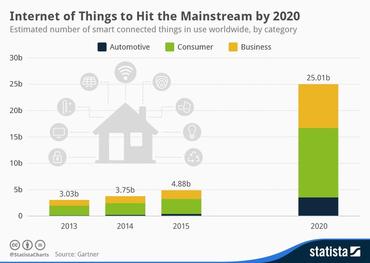
With IoT devices on track to reach $25 billion in sales by 2020 (and $13B of that going to home devices), there's room in the market for Atmos to establish itself as the connective tissue between a lot of these solutions. Still, going up against the brand power and market awareness of Apple, Amazon, Google, and Samsung is an uphill task. The best hope for Atmos at the start is probably riding along with the open platform mojo that Samsung is fueling with SmartThings.

Lyle admitted, "It's pretty ambitious what we are trying to accomplish, but we feel like it really is the biggest problem in the space."