Breaking

Showing posts with label Quantum. Show all posts

Wednesday, March 6, 2019

3/06/2019 07:42:00 PM

IBM hits quantum computing milestone, may see 'Quantum Advantage' in 2020s

IBM said its latest Q System One has double the Quantum Volume of its predecessor. If Quantum Volume doubles annually for nearly a decade quantum computing will become way more practical.


Foldable phones: Why they won't change the shape of the smartphone industry
IBM is outlining another milestone in quantum computing -- its highest Quantum Volume to date -- and projects that practical uses or so-called Quantum Advantage may be a decade away.

Big Blue, which will outline the scientific milestone at the American Physical Society March Meeting, made a bit of a splash at CES 2019 with a display of its Q System quantum computer and has been steadily showing progress on quantum computing.

In other words, that quantum computing buying guide for technology executives may take a while. Quantum Volume is a performance metric that indicates progress in the pursuit of Quantum Advantage. Quantum Advantage refers to the point where quantum applications deliver significant advantages to classical computers.

Quantum Volume is determined by the number of qubits, connectivity, and coherence time, plus accounting for gate and measurement errors, device cross talk, and circuit software compiler efficiency.

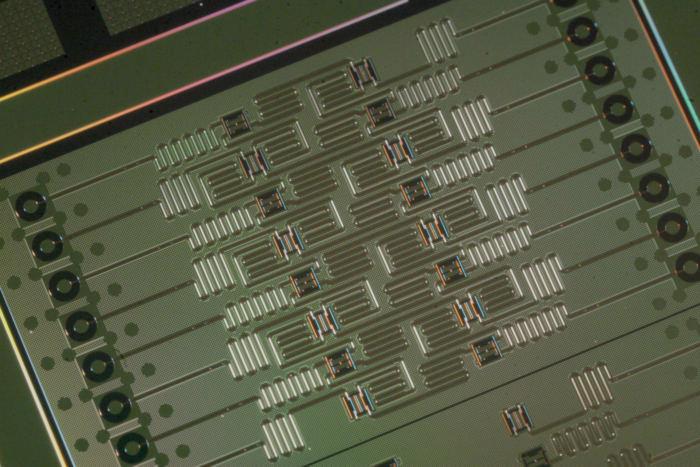
IBM said its Q System One, which has a 20-qubit processor, produced a Quantum Volume of 16, double the current IBM Q, which has a Quantum Volume of 8. IBM also said the Q System One has some of the lowest error rates IBM has measured.

That progress is notable, but practical broad use cases are still years away. IBM said Quantum Volume would need to double every year to reach Quantum Advantage within the next decade. Faster progress on Quantum Advantage would speed up that timeline. IBM has doubled the power of its quantum computers annually since 2017.

Once Quantum Advantage is hit, there would be new applications, more of an ecosystem and real business use cases. Consumption of quantum computing would still likely be delivered via cloud computing since the technology has some unique characteristics that make a traditional data center look easy. IBM made it's quantum computing technology available in 2016 via a cloud service and is working with partners to find business and science use cases. 

Here's how quantum computing and classic computing differs via our recent primer on the subject.

Every classical electronic computer exploits the natural behavior of electrons to produce results in accordance with Boolean logic (for any two specific input states, one certain output state). Here, the basic unit of transaction is the binary digit ("bit"), whose state is either 0 or 1. In a conventional semiconductor, these two states are represented by low and high voltage levels within transistors.

In a quantum computer, the structure is radically different. Its basic unit of registering state is the qubit, which at one level also stores a 0 or 1 state (actually 0 and/or 1). Instead of transistors, a quantum computing obtains its qubits by bombarding atoms with electrical fields at perpendicular angles to one another, the result is to line up the ions but also keep them conveniently and equivalently separated. When these ions are separated by just enough space, their orbiting electrons become the home addresses, if you will, for qubits.


READ MORE:

Friday, January 18, 2019

1/18/2019 11:15:00 PM

IBM’s quantum announcement is a big step in a 1,000-mile journey

Does IBM’s announcement of its new quantum computing system mean that quantum computing must be on your technology roadmap?


IBM unveiled a complete "quantum computing system," IBM Q System One, last week. What's more, it chose to do it at CES in Las Vegas. Should you take IBM's claim of a "commercial" quantum computing system to mean that it is time to put quantum on your tech road map? The short answer is "no" -- but, as always, there are exceptions. Since there is a lot of confusion on quantum computers (QC), we think the market needs help to stay grounded in reality.

Here is my take on the announcement: It is a big step forward, but QCs are taking baby steps and the journey is a thousand miles long. To understand this, you need to let go of a bunch of assumptions. After that, you need to appreciate why IBM's announcement is significant without losing sight of the long road ahead of us. Let me break these down for you briefly.

START BY LETTING GO OF YOUR (DIGITAL) ASSUMPTIONS

As I've been diving deeper into quantum computing, I've discovered that I have been making a lot of assumptions because the things that work for classical computing turn out to be different for QCs. Let me help you avoid the same mistakes.


  • Universal QCs don't have RAM or CPU clocks. Digital computing power is measured by how many 1s and 0s you can process and how quickly bitsets are processed in and out of CPUs using RAM as a storage buffer. QCs work with states between 1 and 0; however, there is no way to write these rich, complex intermediate quantum states to "quantum RAM." Thus, you can't think of QCs as working the same way that digital computers do because QCs cannot do sequential processing.
  • Universal QCs today are batch problem solvers, not general-purpose programmable systems. We naturally assume that a universal QC is programmable and can do many different things using instructions, loops, or object calls. In fact, QCs require a completely different approach to programming logic. Without RAM, QCs are more like batch problem solvers. Digital data goes in, quantum magic happens, and digital data comes out that represents a probable answer to the input problem. This is good for computationally intensive tasks in optimizations, materials, and chemistry, some machine-learning tasks, engineering, etc. It's not good for software as we typically understand it.


WHY Q SYSTEM ONE IS A BIG DEAL (AND WHY IT'S NOT)

With this information as background, you can start to see why IBM's announcement is significant and why it's not the bombshell that some media outlets imply. First, because it's a completely new computing paradigm, it's best to think of our current state as somewhere between Turing's WWII machine and the first mainframe. There is a lot of system and software engineering foundation that needs to be developed and given time to mature.

Here is what I think is significant about IBM's announcement and what is perhaps a bit of hype:


  • Significant: It's a system. This is the most important thing about IBM's announcement. Up until now, quantum computing systems have been stitched together the same way we built computers in our garages back in the 1980s. IBM is claiming that it now has a fully integrated computing system. This is very important because instead of optimizing components, IBM can how to start to optimize the system as a whole. Until we can start engineering integrated quantum computing systems, we really can't drive consistent increases in power.
  • Significant: It's modular. Not only is it a system, IBM claims that it's modular. That means components can be upgraded separately, which is big because it starts to make the quantum system commercially viable. If you wanted a more powerful version, you don't have to buy a whole new multimillion-dollar box. Given the exponential effects that could dramatically increase quantum computing's power over the next few years, being able to swap out for new components to increase performance is a good thing.
  • Hype: It's the "first commercial QC." This is where I urge caution. IBM likes to tout being the first at things. And many times, it is -- but its claims also rev up the market, sometimes too far in advance. I can see the sense in IBM's claim because (A) you can buy it if you have deep pockets and (B) its systematic approach and modular design make it more commercially viable. However, IBM's claims can be interpreted as "ready for primetime"problem-solving. That's far from true, as I cover next.


HOW FAR WE HAVE TO GO

We have a long way to go before quantum computers can solve real problems that businesses have. No QC today (universal or annealing) can do anything better than a digital computer simulating a quantum computer. That is very, very important.

No quantum computer today can do anything better than a digital computer simulating a quantum computer.

What's more

Researchers don't know when QCs will be commercially useful. The technical term is "achieving quantum value." This means that on a cost-for-performance basis, QCs can solve a problem more economically than a classical computer. All the work being done today is searching for quantum algorithms that might someday (hopefully sooner rather than later) be commercially viable. In our report, "A First Look At Quantum Computing," we estimate that it will be three to five years before we see mainstream applications exploiting QCs to solve a few select business problems.

It's likely to take 10 to 20 years before QCs can break PKI encryption. The holy grail of quantum computing is something called error-corrected universal quantum computers. Today, universal QC qubits only stay stable for a short time. Due to the reasons mentioned above, you must solve your problem in that time or go back and start over. If vendors can design sufficient redundancy, they can theoretically create a stable, logical, error-corrected qubit. For reasons, I lay out in my report, "Quantum Is Not An Immediate Security Threat," this is likely to take 10 years. Until then, we won't have QCs that can factorize sufficiently large numbers to threaten PKI encryption.

Quantum machine learning is still largely theory. One of the most exciting use cases for QC is its application to improve machine learning. However, machine learning today involves a lot of optimization and vector math operations that QCs, because of their limitations, don't do very well. Experts are searching for quantum machine-learning algorithms that replace or supplement traditional iterative approaches, but this work is a very early stage. My point is: Researchers don't know exactly how transformational QC will be with AI. On the other hand, Google's quantum moonshot is called the Google Quantum AI Lab, so we know what the tech giant thinks.

What should the smart CIO do? First, read our previous research to get your team smarter, then give us a call to help you identify opportunities to investigate further.


SOURCE:

Tuesday, November 13, 2018

11/13/2018 03:58:00 PM

What a Quantum Computer Is, and Why It Needs to Be More

It would be the harbinger of an entirely new medium of calculation, harnessing the inexplicable powers of subatomic particles to obliterate the barriers of time in solving incalculable problems. Your part in making it happen may simply be to convince yourself that black is white and up is down.


A quantum computer is -- or, perhaps more accurately phrased, would be -- a wholly different order of mechanism than anything the human species has ever constructed. Today, there are working machines that perform some small part of what a full quantum computer may eventually do. Depending upon whom you ask, these are either quantum computing prototypes or "prologues" -- stepping stones toward the real thing.

The goal of quantum computing research is to discover a means of expediting the execution of long waves of instructions. Such a means would exploit an observed phenomenon of quantum mechanics that, when you write it down on paper, doesn't appear to make sense.

If this goal is achieved -- if everything that physicists are certain works theoretically, ends up working in the real world -- then mathematical problems that require days' worth of calculation even on today's supercomputers, and some that are not solvable even now, may be solved instantaneously. Climate change models, estimates of the likelihood of Earth-type planets in the observable galaxy, models of the immune system's capability to destroy cancer cells -- the most difficult and challenging problems we face today may suddenly yield results within no longer than an hour after launching the program.

Granted, these results may not come in the form of a complete solution, but instead, a probability table pointing to the most likely solutions. But even such probabilities, up to now, have been unattainable even with the highest-performing supercomputers on the planet.

What quantum computing would accomplish

If you've ever programmed an Excel macro, you've personally experienced the following: You add input rows to the bottom of a worksheet whose columns serve as inputs for a long formula. Each time the formula recalculates, the time consumed is longer and longer. If you're on a slow enough computer, you can witness this phenomenon for yourself: As the number of input rows grows linearly, the time consumed by the macro grows exponentially.

If you've ever written a program for a supercomputer, you've witnessed exactly the same phenomenon. The scale may be different, but the effect is the same. And if you read through the supercomputer's logs, you can verify this observation personally. There's a point in time in which every algorithm, no matter how simple, simply becomes unworkable on account of the overwhelming weight of its input data.

This is the phenomenon that quantum computing would eliminate. A fully-functional quantum computing would become more capable exponentially by scaling its computing capacity linearly. As a result, for each increase in the number of steps in a quantum algorithm, the amount of time consumed during execution increases by a smaller amount, until eventually, the time gap between exponentially different workloads becomes so small as to be immeasurable.


Prof. John Preskill, Caltech

"What it means is that the difference between hard and easy problems," explained John Preskill, the Feynman Professor of Theoretical Physics at Caltech, during a 2017 speech, "the difference between problems we'll be able to solve someday with advanced technologies, and the problems that we'll never be able to solve because they're just too hard -- that boundary between 'hard' and 'easy' is different than it otherwise would be, because this is a quantum world, not a classical world."

THE QUANTUM TRADEOFFS

To be very clear: It would be inaccurate to say that a quantum computing runs programs faster than a PC or an x86 server. A "program" for a quantum computing is a very different order of beast than anything ever produced for a binary processor. The translation between a mathematical problem intelligible by college professors into a binary program, and the translation between the same problem into a quantum computing program are as different from one another as "20 Questions" is from billiards.

There are several fundamental compromises when you move into the realm of quantum computing. Here's one that's daunting just by itself: Solutions will rarely be exact or definitive. A quantum computing is not a deterministic machine; in other words, there is no singular solution for which any other result would be an error. Instead, a quantum computing will tend to render sets of answers with their respective probabilities.

If that doesn't discourage you, get prepared for this: The atom-level device that actually performs the quantum calculations will, as a result of its work and as is its nature, self-destruct when it's done. A quantum computing mechanism would actually be a machine that automatically builds the computing device out of atoms (calcium atoms are good candidates), sustains the operating conditions of that device for the duration of its program, applies the program, allows it to execute, looks the other way (because quantum logic gates are shy and will explode if anyone sees them), interprets the final state of its registers as the final probability table of results, then resets itself to rebuild another mechanism all over again.

Imagine if Alan Turing's incredible machine that cracked the Nazi "Enigma" code, was guaranteed to explode after every run. (quantum computing engineers prefer the term "collapse," but let's call it what it is: Explode.) And if Turing, an ingenious engineer, devised an automated manufacturing operation that rebuilt that machine out of new parts, each and every day. Every quantum computer engineer has done more than imagine such a scheme but built a plan for such a device on the quantum scale. Indeed, such hypothetical "on paper" schemes are called "Turing machines." Quantum engineers believe their computers can and will work because their Turing machine experiments give them cause for faith.

What a quantum computer may be good for

Are there real-world applications of quantum computing technology, or some derivative of it, that people are putting to good use right now? Put another way, what does quantum actually do, and whom does it directly serve?


  • Navigation: A GPS system cannot work everywhere on the planet, particularly underwater. A quantum computing requires atoms to be supercooled and suspended in a state that renders them particularly sensitive. In an effort to capitalize on this, competing teams of scientists are racing to develop a kind of quantum accelerometer that could yield very precise movement data. One promising effort to that end comes from France's Laboratoire de Photonique Numérique et Nanosciences: An effort to build a hybrid component that pairs a quantum accelerometer with a classical one, then uses a high-pass filter to subtract the classical data from the quantum data. The result, if realized, would be an extremely precise quantum compass that would eliminate the bias and scale factor drifts commonly associated with gyroscopic components.
  • Seismology: That same extreme sensitivity may also be exploited to detect the presence of oil and gas deposits, as well as potential seismic activity, in places where conventional sensors have to date been unable to explore. This according to QuantIC, the quantum imaging technology hub led by the University of Glasgow. In July 2017, working with commercial photonics tools provider M Squared, QuantIC demonstrated how a quantum gravimeter detects the presence of deeply hidden objects by measuring disturbances in the gravitational field. If such a device becomes not only practical but portable, the team believes it could become invaluable in an early warning system for predicting seismic events and tsunamis.
  • Pharmaceuticals: At the leading edge of research into tackling diseases such as Alzheimer's and multiple sclerosis, scientists have been utilizing software that models the behavior of artificial antibodies at the molecular level. Last year, neuroscience firm Biogen began partnering with IT consultancy Accenture and quantum computing research firm 1QBit to frame a new molecular simulation model in such a way that it can be executed on classical platforms, as well as present and future quantum platforms. One methodology developed by 1QBit's researchers involves translating traditional molecular diagrams into graphs full of dots, lines, and curves that, while seemingly more confusing on the surface, map more directly to a quantum model of vectors and relationships.
  • Now to the more controversial question: Assume someone built a mechanism that successfully leaps over the hurdles imposed by quantum physics, producing a full quantum computer capable of performing all the tasks currently relegated to the realm of theory and simulation. What do experts in this field think a quantum computer should be able to do, assuming every phenomenon that physicists have theorized and that scientists have observed and verified, is ultimately exploitable?


Prof. Richard Feynman, Caltech, approx. 1983

Physics: This one should be obvious enough. It's actually the reason for the concept's very existence. During a 1981 speech at Caltech, Prof. Richard Feynman, the father of quantum electrodynamics (QED), suggested that the only way to build a successful simulation of the physical world at the quantum level would be with a machine that obeyed the laws of quantum mechanics. It was during that speech that Prof. Feynman explained, and the rest of the world came to realize, that it would not be enough for a computer to generate a probability table and, as it were, roll dice. Moreover, it would take a mechanism that behaved along the same lines as the behavior it would purport to simulate, to produce results that physicists themselves wouldn't dismiss as apocryphal.

Machine learning: If and when quantum computers ever become stable enough to support thousands of qubits, algorithms for machine learning are standing by, having been thoroughly tested on paper and in simulators. The basic theory among proponents is that quantum systems may be geared to "learn" patterns of states in huge, concurrent waves rather than successive, sequential scans. If you were awake for the preceding paragraph, you already know what the problem is here: Paper, like electronic computers, is a classical system. Conventional mathematics can circumscribe a set of probable quantum outcomes, as vectors in a wildly configurational space. Yet it cannot -- as Richard Feynman made clear from the very beginning -- simulate how those outcomes may be attained. The first signs of general doubt among experts that quantum machine learning may even be possible were gently seeded into a report from MIT last October on a panel convened with IBM, where experts admitted that even after quantum computing become reality, several more years may pass before enough stable qubits make quantum machine learning feasible.

Decryption: Here, at last, is the breakthrough that cast the first bright spotlight on quantum computing. What makes encryption codes so difficult even for modern classical computers to break is the fact that they're based on factors of extremely large numbers, requiring inordinate amounts of time to isolate by "brute force." An operational quantum computing should isolate and identify such factors in mere moments, rendering the RSA system of encoding effectively obsolete. In 1994, MIT Professor Peter Shor devised a quantum algorithm for factoring values, which experimenters building low-qubit quantum systems have already tested successfully, albeit with rather small quantities. When large-qubit quantum computing are successfully built, few doubt the power of Shor's Algorithm to knock down all current public key cryptography.

Encryption: But herein, some say, lies an opportunity: A concept called quantum key distribution (QKD) holds out the theoretical hope that the kinds of public and private keys we use today to encrypt communications may be replaced with quantum keys that are subject to the effects of entanglement. Theoretically, any third party breaking the key and attempting to read the message would immediately destroy the message for everyone. Granted, that may be enough mischief right there. But the theory of QKD is based on a huge assumption which has yet to be tested in the real world: That values produced with entangled qubits are themselves entangled and subject to quantum effects wherever they go.

Who is in the race to build quantum computers?

Despite certain people's best efforts, the modern economy remains global. The laboratories, universities, and manufacturers with an interest in quantum have their own interests across the globe. So there is no genuine country-versus-country "arms race" to build the first complete quantum computing.

One private firm with real contracts, including with US Government agencies, that produces devices that perform one form of quantum computing, called quantum annealing, is D-Wave Systems Inc. Today, D-Wave produces a commercial system which it claims is capable of sustaining 2,048 qubits -- substantially greater than other researchers claim thus far. While some continue to openly dispute this claim (specifically, they cast doubt on the "quantum-ness" of its results) it's worth noting that D-Wave's partners in the Quantum Artificial Intelligence Laboratory (QuAIL) are NASA and Google; and its partners in the Quantum Computation Center (QCC) are Lockheed Martin and the University of Southern California.

Microsoft participates in quantum research laboratories worldwide, including areas in which you wouldn't think Microsoft would have an interest, such as materials for quantum computing substrates. The company funds and actively support quantum computing research through its Quantum Architectures and Computation (QuArC) group. To promote the concepts of quantum algorithms, in December 2017, Microsoft released a quantum simulator and development kit, complete with a domain-specific programming language called Q#, all of which are freely downloadable and may be integrated with Visual Studio or VS Code.


IBM's Think Q team working at its Watson Research Lab in New York. (Image: IBM)
IBM lays a valid claim to having built several functional quantum processing devices, though limited at present to a 20-qubit array at best. Like Microsoft, IBM offers an open source developers' kit called Qiskit, and invites individuals to experiment with producing quantum algorithms using its 32-qubit simulator. Its plan for 2019 is to conduct experiments with constructing quantum computing at its Thomas J. Watson Laboratory [shown above], using experimental materials recently synthesized by researchers at Princeton University and the University of Wisconsin.


The socket end of an Intel prototype quantum computing chip. (Image: Intel)

Intel has been working to fabricate quantum computing devices like the 17-qubit prototype at left, using processes that would not be significantly different from fabricating conventional superconductors. The catch is that Intel would seek to replace the conventional model of the qubit, which is superconductive and thus requires supercooling, with a more temperature-tolerant alternative it calls a spin qubit. Last June, at the company's D1D fabrication facility just outside of Portland, Oregon, it produced a test chip it claims is capable of sustaining qubits at the much milder temperature of -460 degrees Fahrenheit. Such a chip cannot yet, however, be considered a full quantum processor.

In April 2016, the European Union launched a project it calls Quantum Technologies Flagship, with the aim of boosting quantum computing research and development throughout Europe. Last October, as part of this effort, the Flagship announced the start of some 20 related projects for this effort, including one called the Quantum Internet Alliance (QIA). Its goal is no less than the conceptualization of a fully entangled global network, theoretically enabling the instantaneous transmission of qubits between repeating stations.

What a quantum computer probably is

The word "computer" here has a very basic context -- not a handheld device or a cooled server with a processor and memory. Think of a computer the way Charles Babbage or John von Neumann considered it: As a mechanism guaranteed to deliver a certain output given a specific set of inputs and a defined configuration. At the deepest microscopic levels of a modern microprocessor, one logic unit is what these fellows would have called a computer.

BITS AND QUBITS

Every classical electronic computer exploits the natural behavior of electrons to produce results in accordance with Boolean logic (for any two specific input states, one certain output state). Here, the basic unit of transaction is the binary digit ("bit"), whose state is either 0 or 1. In a conventional semiconductor, these two states are represented by low and high voltage levels within transistors.

In a quantum computer, the structure is radically different. Its basic unit of registering state is the qubit, which at one level also stores a 0 or 1 state (actually 0 and/or 1, which I'll confuse you within a moment). Instead of transistors, a quantum computing obtains its qubits by bombarding atoms with electrical fields at perpendicular angles to one another, the result is to line up the ions but also keep them conveniently and equivalently separated. When these ions are separated by just enough space, their orbiting electrons become the home addresses, if you will, for qubits.

SPIN, ONE WAY OR THE OTHER

While a conventional computer focuses on voltage, a quantum system is (passively) concerned with one aspect of electrons at the quantum level, called spin. Yes, this has to do with the electron's angular momentum. The reason we use the term "quantum" at the subatomic level of physics is because of the indivisibility of what we may observe, such as the amount of energy in a photon (a particle of light). Spin is one of these delightfully indivisible components, representing the angular momentum of an electron as it orbits the nucleus of an atom. The spin of an electron is always, as physicists calculate it, 1/2; the only difference here is polarity, which very simply may be either "up" or "down."

It's the "up" or "down" state of electron spin that corresponds to the "1" and "0" of the typical binary digit. Yet it's here where quantum computing makes a sharp turn into a logical black hole, through a tunnel of white noise, and jettisons us helplessly into a whimsically devious universe whose laws and principles seem concocted by the University of Toontown.

SUPERPOSITION AND WHY YOU CAN'T SEE IT

A qubit maintains the quantum state for one electron. When no one is looking at it, it can attain the "1" and "0" state simultaneously. If you look at it, you won't see this happen, and if it was happening before, it immediately stops. (This is literally true.) Yet the fact that the qubit's electron was spinning both directions at once, is verifiable after the fact. Quantum mechanics calls this simultaneous state of both here and there superposition. It is impossible to witness an electron in a state of superposition because witnessing requires the very exchange of photons that causes such a superposition to collapse.

As one Fordham University lecturer put it, "We don't understand this, but get used to it."

There are multiple possible states of superposition. Here is why each additional qubit in a quantum system is more influential than the last: In a system with n qubits, the number of possible superposition states for each qubit is 2n. If you remember the history of binary computers, when 16-bit processors were first replaced with 32-bit processors, suddenly a byte's maximum unsigned value was no longer 65,535 but 4,294,967,295. In a quantum system, each qubit in a 32-unit rack of atoms would have 4,294,967,296 possible superposition states.

Why does this matter, if the final state only collapses to 0 or 1 anyway when someone or something takes the bold step of just looking at the thing? Because before that collapse takes place, each of these states is a valid, possible value. (This is why you don't hear a lot about quantum computers needing much memory.) During that strange, black-box period where it can work unobserved and undisturbed, a quantum processor is capable of performing real algorithmic functions on units that are much less like binary digits than they are like wheels in one of Charles Babbage's difference engines -- except with billions of settings rather than just 10.


Licensed under Creative Commons

Instead of giant wheels, quantum engineers have chosen a better way of representing qubits' spin states. More specifically, they borrowed it from a Swiss emigrant physicist to the US, Felix Bloch, who shared the 1952 Nobel Prize in physics for discovering the principle of nuclear magnetic resonance. If you can imagine a billiard ball with one dot, and an imaginary line from the core of the ball through the center of the dot and outward as a vector, then you can picture a Bloch sphere like the one shown at right. Each superposition state a qubit may take may be represented by a vector in a Bloch sphere, which you can think of in terms of angles along the x and y-axes of the sphere. Using ordinary geometry, the vector may be expressed as a function of the cosine of that angle to the z-axis, added to the sine of that angle to the z-axis.

WHAT THE FIRST QUANTUM PROGRAMS WILL LOOK LIKE

The trick in writing a quantum algorithm is to imagine that you could actually see, or measure, qubits in their superposition states so that you can instruct them as to what happens next and cause adjustments to those states. In reality, the very act of attempting to witness superposition results in decoherence -- the reversion of qubits to their classical 0 or 1 states. Decoherence always happens eventually to a quantum system, often after a few minutes, or if you're lucky, in under an hour.

The whole point of a quantum program becomes to take full advantage of the ability to manipulate which way all these billiard balls are pointing while no one is looking, prior to their decoherence. There are two types of quantum programs, which function very differently from one another:


  • A program using quantum gates follows Richard Feynman's original suggestion: That there are other forms of logic within the quantum space. With a binary computer, an AND or an OR gate would take two discrete voltage inputs as bits and yield one certain output. With gates in a quantum circuit -- the quantum counterpart of a classical electrical circuit -- several qubits may be used as inputs, and the result may be some form of a superposition state, which the Bloch sphere representation breaks down into mathematical values -- including, quite likely, complex numbers.
  • A quantum annealing system, such as the kind D-Wave currently produces, takes a very different route. Instead of establishing a quantum circuit, an annealer translates formulas (called "Hamiltonians") that describe the physical state of the quantum system, into actual physical states. While any quantum computing may use one Hamiltonian to describe the initial state, an annealer uses successive Hamiltonians to represent minute changes in the desired state of the system, in very incremental steps along the way to the final desired state. Each step knocks the qubits around, in such a way that their state at the final step represents the set of probabilities that form the final solution. (One researcher likened this to shaking marbles around in an egg crate, with each shake perfectly programmed.) Skeptics of this process are wont to point out that this is not the system Feynman first proposed, and thus either directly assert that an annealing system is not a true quantum computing, or indirectly suggest that no real quantum computing presently exists. It's fair to assume such skeptics do not presently have contracts with NASA, Google, or Lockheed Martin.


The real prospects for a quantum ecosystem

If every "revolutionary" technology were guaranteed financial or market success, you'd be holding in your hand today a voice-controlled edge processor with 3D transistors powered by a dime-sized superconductor with a half-century lifespan, rather than whatever it is you're using now.

Quantum computing will not truly succeed, even when it does completely exist, unless there's a viable business model for it. It's often presented with enough bombast that you might think customers would form queues around city blocks waiting for it to arrive. But because a full quantum computer is not, nor ever will be, portable (unlike a quantum compass, where detecting disturbances is the actual goal), the only way to make it commercial is by offering it as a service, similar to how laboratories and universities offer supercomputer services today.

It would not be a "quantum cloud." Cloud computing implies some kind of tenancy, a leasing of virtual computing capacity or, in the case of so-called serverless technology, the use of a solution. There is no division of tenancy in the quantum space; it sets up the Hamiltonian situation, runs the algorithm or the annealing pattern, lets the system blow up, and renders the results as likelihoods. Time is not a factor; a harder problem may not take measurably longer than a simpler one -- so leasing on a per-minute basis is pointless.

Which leaves the per-solution option, similar to serverless. But since solutions are probabilities rather than certainties, and subject to variations, inevitably customers will question the value of the solutions they're getting. If they have to pay by the solution, they're not looking for a deal like "Bertie Bott's Every Flavor Beans" where one flavor may be blueberry and the next earwax. At some point, quality of service will inevitably enter the discussion.

It would appear quantum computing's early adopters would probably include all those folks looking to demolish RSA-based cryptography at the first opportunity. But for the makers of quantum computers to start profiting from them, they'll want a more stable customer base than just wannabe hackers or former superpower countries with unresolved grief issues. They'll need to foster communities of scientific and educational developers willing to learn the rules and practices of a completely new universe so they can contribute solutions to the previously unfathomable problems facing our own world.


SOURCE:

Wednesday, February 14, 2018

2/14/2018 09:34:00 PM

Q# language: How to write quantum code in Visual Studio

Microsoft is making a big bet on a quantum computing future. Here’s how you are going to write code that uses those new machines.


The future of the computer isn’t silicon; we’re already at the limits of Moore’s Law in terms of the performance we can get from traditional transistors. We’re also working on much bigger problems, especially when it comes to cryptography and in mathematical modeling; problems that require days of computing time even on the largest supercomputers.

So where do we go from here? Microsoft Research, like Google and IBM, has been investing heavily in quantum computing. Much of its research has been in basic physics, working with universities around the world to produce efficient low-temperature environments and stable quantum computing environments. But creating a qubit—the probabilistic quantum bit that essentially replaces the 0’s and 1’s of a traditional bit—is only part of the story. What’s also needed is a way to program a quantum computer and interpret the qubits’ probabilistic state.

Constructing quantum computers

The architecture of a quantum program is relatively simple: A traditional program gets values from user input or from other code. It then passes those values to a quantum application that sets the qubits in a quantum processor, using one of many quantum algorithms, before passing the results back to the parent application.

It’s a process very similar to the one I used at my first programming job, writing Fortran finite-element analysis code that used a vector processor attached to a supercomputer to handle matrix algebra. The vector libraries I used to build and solve my 3D electromagnetic models worked on both that specialized hardware or on a math coprocessor in a desktop workstation so I could test my code before using expensive supercomputer time.

Microsoft recently released its Quantum Development Kit, built around its new Q# language. Designed to use familiar constructs to help program applications that interact with qubits, it takes a similar approach to working with coprocessors, providing libraries that handle the actual quantum programming and interpretation, so you can write code that hands qubit operations over to one Microsoft’s quantum computers.

Bridging the classical and quantum computing worlds isn’t easy, so don’t expect Q# to be like Visual Basic. It is more like using that set of Fortran mathematics libraries, with the same underlying assumption: that you understand the theory behind what you’re doing.

One element of the Quantum Development Kit is a quantum computing primer, which explores issues around using simulators, as well as providing a primer in linear algebra. If you’re going to be programming in Q#, an understanding of key linear algebra concepts around vectors and matrices is essential—especially eigenvalues and eigenvectors, which are key elements of many quantum algorithms.

Getting started with Q#

The development kit downloads as a Visual Studio extension, so you can use it with all versions of Microsoft’s main development environment, including the free Community edition. The installer includes the Q# language, a local quantum simulator, and libraries that support embedding Q# modules in yours.Net code. Once installed, you can connect to Microsoft’s Q# Github repository to clone and download the sample code and additional libraries. It’s a quick process; the installer takes a couple of minutes to download and run on a reasonably powerful development PC. The libraries are hosted on Nuget, so you can quickly update to the latest versions.

With a working quantum computer still a few years away, the Quantum Development Kit is limited to working with simulated quantum computers. Microsoft’s research systems have yet to produce a working topological qubit, but results have been promising. So, until there are published results and Azure gets its quantum coprocessors, you’re limited to experimenting with local- and cloud-hosted simulators. Because they’re limited to using traditional programming techniques, they’re not going to handle the full range of complex mathematical operations that quantum computing promises. But they do give a feel for what a small number of qubits can do.

Much of the work you need to do in building a quantum program is in constructing a quantum computer out of qubit transformations. The Q# language handles the process for you because it includes expressions for many quantum gate structures, as well as common quantum algorithms. The language itself will feel familiar to.Net developers, with a structure that’s somewhere between C# and F#.


A test run of a quantum teleportation app on a simulator running in Visual Studio.

Quantum programming basics

You’ll find most Q# programs relatively simple because what you’re doing is setting up arrays of qubits and applying mathematical transformations to them. Although the underlying problem is complex (or at least likely to take a lot of computing time using traditional computing resources), you’re relying on the quantum computer to handle the work for you, and its quantum algorithms mean you can use a small number of connected qubits to solve your problem.

One important thing to note is that some quantum languages, like the one used by DWave in its quantum computers, are designed to work with quantum annealing, not the gate model used in Microsoft’s quantum hardware.

Where the Q# language differs from the familiar is in its support for quantum algorithms. This starts with types: Q# is a strongly typed language, adding new types that represent qubits and groups of qubits. Another key difference is between Q# operations and functions. Operations contain quantum operations, while functions are purely for classical code, though they can work with the results from a quantum operation.

Quantum algorithms and libraries

Q# also includes specific operation types that work with quantum algorithms, including those that calculate the adjoint results of a matrix of qubits, and others that help construct qubit circuits, triggered only if control qubits are correctly set.

It’s important to remember that where Q# uses Zero and One in results as variables to handle qubits, they’re not the same as binary 0 and 1. Instead, they’re representations of the eigenvalues of the vectors stored in the qubits.

You use the Q# standard libraries to build and construct your quantum applications. These include a set of quantum primitives that define the gates you’re building out of your qubits, as well as applying quantum operators and measuring the results. The libraries are divided into two parts: the prelude for setting up your quantum computer, and the canon for operating the machine. It’s important to understand the differences between these two parts of the libraries because they need to kept separate in your code. Using the canon operators runs the quantum machine, with operators that handle specific quantum algorithms; for example, applying a Quantum Fourier Transform or finding common divisors of two numbers.

Q# isn’t a language for beginners. Although it simplifies some quantum operations, it does depend on having a knowledge of how a quantum computer operates, as well as understanding the basics of quantum computation. If you’ve worked with linear algebra and probabilities, you’ll have a head start, but it’s still worth spending time first with Microsoft’s tutorials and samples.


Saturday, December 16, 2017

12/16/2017 09:18:00 PM

Microsoft discharges free review of its Quantum Development Kit

Microsoft is revealing a see of its guaranteed Q# dialect, compiler, and test system to enable designers to get an early take a gander at how quantum figuring functions.


Microsoft is making accessible a free see variant of its guaranteed Quantum Development Kit. 

The unit incorporates the Q# programming dialect and compiler and a neighborhood quantum figuring test system and is completely coordinated with Visual Studio. There's additionally an Azure-based test system that enables designers to reenact more than 40 consistent qubits of registering power, in addition to documentation, libraries, and test programs, authorities said in their December 11 declaration. 

Microsoft declared its aims to make accessible apparatuses for quantum registering amid its Ignite gathering in September. 

Quantum PCs are intended to process in parallel, therefore empowering new sorts of utilizations over an assortment of workloads. They are intended to bridle the material science of subatomic particles to give an alternate approach to store information and take care of issues contrasted with customary PCs, as my ZDNet partner Tony Baer clarifies. The outcome is that quantum PCs could take care of certain superior processing issues all the more proficiently. 

Microsoft authorities have said applications that engineers make for use with the quantum test system at last will chip away at a quantum PC, which Microsoft is creating. Microsoft will likely form out a full quantum registering framework, including both the quantum processing equipment and the related full programming stack. 

Microsoft isn't the only one in attempting to fabricate a quantum figuring framework. IBM conveyed a 17-qubit model processor in May and said it's surrounding a 50 qubit processor model..


Friday, December 1, 2017

12/01/2017 11:48:00 PM

Accenture puts resources into quantum figuring startup 1QBit

The minority stake is a piece of 1QBit's $45 million Series B round drove by Fujitsu Limited.


Accenture's wander arm has made an undisclosed interest in quantum processing startup 1QBit. The minority stake is a piece of 1QBit's $45 million Series B round drove by Fujitsu Limited. 

Situated in Vancouver, British Columbia, 1QBit utilizes a group of more than 50 analysts and programming engineers attempting to create machine learning calculations and programming for quantum processing. 

The startup says it works with customers "confronting computationally escalated issues" over the life sciences, vitality and fund ventures, including DowDuPont and Biogen. 

Accenture said its speculation will enable the organization to extend its progressing work in quantum registering examination. 

Accenture and 1QBit worked together not long ago with Biogen to build up a quantum-empowered sub-atomic correlation application intended to accelerate tranquilize revelation for neurological conditions, for example, different sclerosis, Alzheimer's, Parkinson's, and Lou Gehrig's illness. 

Accenture has likewise recorded numerous patent applications around quantum registering innovation, including strategies to upgrade the flight way of an automaton framework. 

"Quantum figuring is a turbocharger for investigation and the formation of new insight," said Narendra Mulani, boss examination officer for Accenture Analytics. "We see gigantic potential for utilizing the 1QBit stage in the interest of our customers to seek after quantum-motivated investigation, which will enable us to open considerably more esteem caught in their information and find new chances to change their organizations."


Wednesday, October 11, 2017

10/11/2017 09:57:00 PM

What will you really utilize quantum computing for?

There's dependably a blue sky innovation holding up in the wings, and for big business registering, quantum processing plays that part. With Satya Nadella meeting a board of Microsoft's best physicists toward the finish of his Ignite gathering keynote, it's reasonable time to ask, what will this intend to the endeavor and to what extent will the selection bend take?


With a tip of the cap to our Big on Data brother George Anadiotis, this week, we're parting from our typical routine of the without further ado to take a gander at what's coming next. Say the words quantum registering, and your initial introduction is that we're most likely going to gush sci-fi. 

So what is quantum processing? It outfits the material science of subatomic particles to give an alternate approach to store information and take care of issues contrasted with ordinary PCs. In particular, it absolutely turns the universe of customary paired figuring on its side since quantum registering bits, or qubits, can speak to different states on the double, as opposed to only 0 or 1. The outcome is that quantum PCs could take care of certain HPC-like issues all the more productively. 

Gracious and coincidentally, did we say that quantum PCs must keep running at 4 degrees Kelvin? That is 4 degrees above total zero, far colder than interstellar space. 

It's enticing to reject quantum PCs as what might as well be called Warp Speed out of Star Trek. Of course, it was scarcely a couple of months prior where we saw SAS organizer James Goodnight conversing with Alexa to gin up a SAS investigation keep running similarly that Captain James T. Kirk addressed his PCs. 

So why are we having this discussion? 

Our consideration was aroused by a chain of occasions over the previous month. IBM first gathered an investigator call around a forthcoming article in the logical diary Nature indicating how a quantum registering displaying issue for complex sub-atomic conduct would be reported in a Jupyter notepad. (On the off chance that you need to get specialized, it was about how to determine the most minimal vitality condition of a particle of beryllium hydride.) 

At that point, Satya Nadella gathered a board of Microsoft specialists to close his Ignite meeting keynote with a session on unadulterated hypothetical material science that cruised straight finished the leaders of the business expert and engineer crowd. Luckily, the IBM call was far more straightforward, tending to how quantum PCs could be connected to regular business issues, and where the innovation stands today. 

Turns out, quantum PCs speak to propels that would look commonplace to veterans of huge information examination where you could inquiry the greater part of the information, not only an example. It would likewise look comfortable to those working with chart processing where you could factor the intricacy of many-to-numerous connections that would somehow or another require unlimited joins with social information models. 

Quantum figuring fits any advancement issue where the mix of what-uncertainties, and every one of the changes related with them, would just overpower an ordinary parallel PC. That fits an expansive trove of unremarkable business and operational issues that are shockingly well-known. 

For example, on the off chance that you endeavor to enhance a store network, odds are, you are narrowing down the issue to handle the dozen in all likelihood situations. With the assets of quantum figuring, you could augment and develop the examination to essentially all conceivable situations. The same runs with unmistakable business challenges like overseeing money related hazard when you have an unpredictable tangle of interlocking exchanging frameworks over the globe. Or, then again envision, amid tranquilize testing, that a clinical research group could demonstrate all the potential associations of another medication with for all intents and purposes the whole wicker container of meds that a particular patient accomplice would be likely additionally be taking? What's more, from that point, could the genuine customized drug be long ways behind? 

Be that as it may, quantum registering improvement is as yet embryonic. A little Canadian startup, D Wave Systems, is offering units on a constrained premise today. IBM is putting forth machines from of about six 5 - 17 qubits in the cloud while Google is creating designs that could scale up to 49. So it's not shocking that quantum still reaches the stopping point with classes of issues that require mind boggling, iterative preparing (which, incidentally, is the thing that Spark exceeds expectations at). 

A decent case of the kind of issue that for the time being is quite recently distant is encryption/decoding. As the calculations develop more mind-boggling, it implies figuring bigger and bigger prime numbers. Turns out, the associations between qubits (which is called quantum ensnarement) could alternate way such issues by taking the square foundation of the quantity of sections, and decreasing the quantity of steps in like manner. The bottleneck is memory; such calculations would require putting away of state or break comes about, much like a Spark or MapReduce issue. The issue is that, while improvement of process chips is in progress, no one yet realizes what genuine quantum memory would resemble. 

That would suggest that for a few issues, a division of work where quantum factors the changes, while traditional scale-out frameworks handle the iterative preparing, may be a between time (or long haul) step. 

There are a shockingly sizable number of associations as of now seeking after quantum registering. At the present time, a large portion of the activity is fundamental government-financed R&D, albeit a few reports appraise VC speculation in the course of recent years adding up to generally $150 million. On one hand, it is anything but difficult to get excessively idealistic on close term prospects for advancement given the rate at which innovations, as shifted as shrewd cell phones, Internet of things, enormous information examination, and distributed computing, have bloomed from essentially nothing 10 years back. 

In any case, the boundaries to the appropriation of quantum are both physical and scholarly. 

There is the physical need to super-cool machines that, in periods past, would have postured tremendous hindrances. Be that as it may, the cloud will probably improve the situation quantum machines what they are as of now improving the situation GPUs: give the financial matters to scale-out. 

That leaves a few more imposing obstacles. The material science of scale-out still require essential as opposed to connected research - despite everything we have to make sense of how proportional such an expansive, delicate framework. Be that as it may, the hardest test is probably going to be scholarly, as it will probably require an alternate state of mind to conceptualize a quantum processing issue. That recommends that the onramp to quantum will probably demonstrate more continuous contrasted with the breakout innovations of the most recent decade.


Wednesday, August 23, 2017

8/23/2017 09:37:00 PM

Silicon Quantum Computing propelled to popularize UNSW quantum work

The new organization will quicken the college's push towards a 10-qubit framework.


Another organization named Silicon Quantum Computing (SQC) has been propelled to exploit and popularize the work done by the University of New South Wales (UNSW) in the quantum space. 

SQC will work out of new labs inside the Center for Quantum Computation and Communication Technology (CQC2T) at UNSW, and is slated to contract 40 staff individuals - made up to some extent by 25 post-doctoral scientists and 12 PhD understudies. 

The board for SQC will comprise of educator Michelle Simmons, who has been the main impetus behind CQC2T; Telstra boss researcher Hugh Bradlow; Commonwealth Bank of Australia (CBA) CIO David Whiteing; and Secretary of the government Department of Industry, Innovation and Science Glenys Beauchamp, with corporate legal counselor Stephen Menzies to fill in as its between time seat. 

Reported on Wednesday as another investor, yet not taking a board situate, was the NSW government, which subsidized the organization to the tune of AU$8.7 million from its Quantum Computing Fund. 

The state government subsidizing takes after CBA contributing AU$14 million, Telstra infusing AU$10 million, the government apportioning AU$25 million more than four years, and UNSW putting $25 million towards CQC2T. 

SQC is focusing on having a 10-qubit machine marketed by 2022. 

Menzies disclosed to ZDNet that the formation of the organization would abbreviate an opportunity to advertise by three years, and take into account a patent portfolio to be constructed. He said the organization is looking for three more financial specialists to finance it at comparable levels to Telstra and CBA, and is right now on the chase for a CEO. 

"We will support equipment, however from that we will build up a patent pool which we expectation will be without peer on the planet," Menzies said amid the dispatch. 

"In the initial five years, we are extremely engaged, the marketable strategy is centered around the licenses related with a built 10-qubit gadget. In any case, past that, we see that we have a phase on which we create crosswise over Australia and crosswise over Australian establishments, an expansive quantum industry." 

Priest for Industry, Innovation and Science Arthur Sinodinos said quantum figuring was vital to the nation's future. 

"Whatever division of development, we need to be better than average in, we should be world mixers," he said on Wednesday. 

"We need to have the capacity to make an upper hand, charge a premium, and you do that by exploring new territory, something that others think that its difficult to reproduce, or it sets aside them opportunity to imitate and when they have repeated it, you've proceeded onward to something unique." 

Beforehand, Simmons said she trusts the work finished by CQC2T to create silicon-based qubits will win out in the race to a 30-qubit framework. 

"We do trust that silicon is the one that has life span; it's a manufacturable material, and it has a portion of the most noteworthy quality qubits that are out there," Simmons said in June. 

"That is the reason it's exceptionally energizing for Australia. We really trust this can go the distance, and we trust we can assemble it in Australia." 

Telstra boss researcher Bradlow repeated on Wednesday that Telstra sees itself offering quantum registering as an administration. 

"I can guarantee you they are not going to stroll in on the very first moment and know how to utilize these things," he said already. 

"We need to have the capacity to offer it as-an administration to them ... they will require a great deal of hand holding, and they are not going to run the hardware themselves, it's convoluted." 

As far as concerns its, CBA is planning for a quantum future by utilizing a quantum processing test system from QxBranch. 

"The contrast between the emulator of a quantum PC and the genuine equipment is that we run the test system on traditional PCs, so we don't get the advantage of the accelerate that you get from quantum, yet we can reproduce its conduct and a portion of the wide qualities of what the possible equipment will do," QxBranch CEO Michael Brett told ZDNet in April. 

"What we give is the capacity to individuals to investigate and approve the utilizations of quantum processing so that when the equipment is prepared, they'll have the capacity to apply those applications and get the advantage instantly of the extraordinary points of interest of quantum figuring."