Breaking

Showing posts with label Chrome. Show all posts

Tuesday, October 18, 2022

10/18/2022 01:11:00 PM

Chromecast free Android 12 update will cause movies to appear noticeably more appealing, with the right television

The edge rate matching component is a major one for film buffs

Chromecast's free Android 12 update will cause movies to appear noticeably more appealing, with the right television

The Chromecast with Google television is currently ready to get an update to Android 12, which adds an assortment of new elements, including a choice that will be particularly welcome to film sweethearts.

The overhaul is carried out now (through FlatpanelsHD(opens in new tab)) and incorporates more protection highlights, security updates, choices to control HDR and encompass sound arrangement settings, and edge rate coordination.

The remainder of these is the large one - we'll make sense of the specialized subtleties further down, however it will imply that the Chromecast can transform from its standard 60 edges each subsequent video result to 24 casings each second (right for motion pictures) on the fly at whatever point you start a film. This implies that you can have smooth true-to-life movement on your television without requiring any movement handling… as long as you have a 120Hz television.

The Apple television 4K has had this component for some time, and it's one reason we rate it as the best streaming gadget generally - so this update assists the Chromecast with getting up to speed regardless of being a lot less expensive.

Past the abovementioned, the Android 12 update vows to crush bugs and upgrade the execution of the 4K Chromecast with Google television assuming you update. (The fresher, less expensive HD Chromecast with Google television accompanied Android 12 currently on it.)

Examination: 24fps and 120Hz Explained


Chromecast's free Android 12 update will cause movies to appear noticeably more appealing, with the right television

Getting the ideal true-to-life movement on television is tied in with the timing. Motion pictures are made at 24 casings each second. More seasoned or less expensive LCD/OLED televisions invigorate (ie, show another picture on) their screen 60 times each second.

Fast mathematicians will quickly see the issue here: 60 doesn't partition flawlessly by 24. This implies that it's unimaginable for the planning of the edges of the film to match up impeccably with how frequently the Programs another picture, so some film casings will be displayed for longer than a 24th of a second, and some will be displayed for more limited.

You can truly see this during any sluggish, consistant development, for example, a camera panning across a scene - rather than looking smooth, it'll be marginally juddery, in light of the fact that the timing from one casing to another isn't equivalent.

For this reason you for the most part shouldn't turn movement handling as far as possible off on these televisions - at a low level, it ought to assist with limiting this judder.

Notwithstanding, the presentation of 120Hz televisions gave us a method for finishing this. 120Hz televisions revive their screens 120 times each second, and that implies they're viable with anything that used to work at 60 edges each second (since it's a flawless multiplying of the invigorate rate), yet they can likewise match up impeccably with 24fps films since 120 partitions perfectly by 24.

So in principle, with a 120Hz television, you can watch 24fps movies and turn the movement handling off to get regular true-to-life movement.

Notwithstanding, that possibly works assuming what you're getting from your decoration is really 24fps - yet many send the video over HDMI at 60fps, in light of the fact that that makes life simpler with 60Hz televisions. This implies that regardless of whether you have a 120Hz television, you actually don't get the advantage of normal film movement - however, a few televisions had a component intended to recuperate the first 24fps movement as well as could be expected (on LG televisions, this is called 'Genuine Film' for instance).

So the mark of the Chromecast's 'Match content casing rate' include is to do the decoration changes its result from 60fps to 24fps over HDMI when it identifies that you're watching a film, and changes back to 60fps for Programs or whatever else.

At long last, you can partake in the movement of a film about how fate has smiled down from heaven, on perhaps of the best television or best 4K projectors, with your 4K Chromecast.


Wednesday, August 24, 2022

8/24/2022 08:19:00 PM

Chrome users are warned of bugs by the Indian government - here what you need to do

Chrome users are warned of bugs by the Indian government - here's what you need to do


Chrome users are warned of bugs by the Indian government - here's what you need to do


The Indian Computer Emergency Response Team (CERT-In), which goes under the IT Ministry, has cautioned clients of various weaknesses in Google Chrome which could permit a distant aggressor to execute erratic code on the designated framework.

Expressing that the seriousness rating is 'high', CERT-In said that a distant aggressor could take advantage of the weaknesses by sending uniquely created demands on the designated framework.

"These weaknesses exist in Google Chrome because of purpose after free in FedCM, SwiftShader, ANGLE, Blink, sign-in stream, Chrome OS shell; Heap support flood in downloads, lacking the approval of untrusted input in goals, deficient strategy requirement in treats and improper execution in augmentations API," the organization added(opens in new tab).

Prior, it additionally exhorted clients against weaknesses in Apple iOS, iPadOS, and macOS. "This weakness exists in the Apple iOS, iPadOS and macOS because of beyond the field of the play write in the Kernel and WebKit part. A distant assailant could take advantage of this weakness by captivating a casualty to open a uniquely created record," the organization said.

The most effective method to refresh the Google program is to avoid bugs

The thing isn't all Google Chrome clients are in danger. CERT-In said Google Chrome variants before 104.0.5112.101 are in danger. Assuming you are running an old variant of Google Chrome, refreshing the program rendition on your system is encouraged. Clients have been coordinated to apply the essential fixes that are important for the overhaul.

Being the world's main program, Chrome is likewise the greatest objective, with endless danger entertainers hustling to track down new zero-day weaknesses. Under two months prior, Google fixed one such weakness for the Windows variant, that was purportedly being taken advantage of in nature.

The high-seriousness bug followed as CVE-2022-2294, is a pile-based cushion flood shortcoming.

Refreshing Google Chrome(opens in a new tab) is a straightforward activity:

Sign in to your Google Chrome program

At the upper right of the program's window find a three-spot menu

Select Help, and go to About Google Chrome

Assuming an update is accessible, you can tap on the Update Google Chrome button

After updating, restart your program

On the off chance that assuming you have empowered programmed update, you will find a sign close to the three-spot menu that an update has been introduced You simply have to restart the program.

Monday, October 19, 2020

10/19/2020 01:30:00 AM

This new tab feature for Chrome and Edge may be a lifesaver for the foremost chaotic users

This new tab feature for Chrome and Edge may be a lifesaver for the foremost chaotic users

This new tab feature for Chrome and Edge may be a lifesaver for the foremost chaotic users


Scrollable tabs could change the sport surely Chrome and Edge fans
 
Chrome and Edge
(Image credit: Softulka / Shutterstock)

Google is within the process of developing a replacement feature that will allow users of Chromium-based web browsers - like Chrome and Edge - to more effectively select and navigate between open tabs.

Traditionally, when many sites are open directly, each tab becomes smaller in order that they can all be accommodated on screen, to the purpose at which only favicons are visible. this will make it difficult to seek out the tab you’re trying to find - especially on small, low-resolution displays.

However, Google is tackling this issue head-on with a replacement feature that introduces scrolling to the tab bar at the top of the browser. the power to scroll through open pages means not all tabs need be displayed on-screen directly and therefore the standard tab size and visibility is preserved.

While Google has already implemented the feature in Chrome test builds, it's now become clear that users of other Chromium-based browsers also will enjoy the upgrade.

While users that never have quite a couple of sites open directly won't find much use for scrollable tabs, the feature could prove a boon for the more chaotic users among us. 

For these people - who often have tens of tabs open at any given time - the power to more easily identify which tab is which could prove transformative.

It is not clear precisely when scrollable tabs will arrive for all Chrome and Edge users, but the feature is already available to sample in test builds (also referred to as Canary builds).

Users can enable the feature in Edge Canary using the subsequent steps:

  • Right-click on the sting Canary desktop shortcut
  • Open Properties
  • Add command "-enable-features=ScrollableTabStrip" after "ms edge.exe"

And enable scrolling tabs in Chrome Canary by with these steps:

  • Enter "chrome://flags/#scrollable-tabstrip" into Chrome Canary URL bar
  • From the drop-down next to Scrollable TabStrip, select Enabled
  • Restart Google Chrome
  • Here's our list of the simplest anonymous browsers immediately

Hindi Translation:

\
क्रोम और एज के लिए यह नया टैब फ़ीचर अग्रणी अराजक उपयोगकर्ताओं के लिए एक लाइफसेवर हो सकता है

स्क्रॉल करने योग्य टैब खेल को निश्चित रूप से क्रोम और एज प्रशंसकों को बदल सकते हैं
 
क्रोम और एज
(छवि क्रेडिट: सॉफ्टुलका / शटरस्टॉक)

Google एक प्रतिस्थापन सुविधा विकसित करने की प्रक्रिया के भीतर है जो क्रोमियम और वेब ब्राउज़र जैसे क्रोम और एज के उपयोगकर्ताओं को अधिक प्रभावी ढंग से चुनने और खुले टैब के बीच नेविगेट करने की अनुमति देगा।

परंपरागत रूप से, जब कई साइटें सीधे खुली होती हैं, तो प्रत्येक टैब क्रम में छोटा हो जाता है कि वे सभी स्क्रीन पर समायोजित किए जा सकते हैं, जिस उद्देश्य से केवल फेविकॉन दिखाई दे रहे हैं। इससे आपको उस टैब को ढूंढना मुश्किल हो जाएगा, जिसे आप खोजने की कोशिश कर रहे हैं - विशेष रूप से छोटे, कम-रिज़ॉल्यूशन डिस्प्ले पर।

हालाँकि, Google इस मुद्दे को एक प्रतिस्थापन सुविधा से निपट रहा है जो ब्राउज़र के शीर्ष पर टैब बार पर स्क्रॉल करने का परिचय देता है। खुले पृष्ठों के माध्यम से स्क्रॉल करने की शक्ति का मतलब यह नहीं है कि सभी टैब को ऑन-स्क्रीन सीधे प्रदर्शित करने की आवश्यकता है और इसलिए मानक टैब आकार और दृश्यता संरक्षित है।

जबकि क्रोम टेस्ट बिल्ड में Google ने पहले ही इस सुविधा को लागू कर दिया है, अब यह स्पष्ट हो गया है कि अन्य क्रोमियम-आधारित ब्राउज़र के उपयोगकर्ता भी अपग्रेड का आनंद लेंगे।

हालांकि जिन उपयोगकर्ताओं के पास कभी भी एक-दो साइटें नहीं होती हैं वे सीधे स्क्रॉल टैब के लिए बहुत अधिक उपयोग नहीं करते हैं, यह सुविधा हमारे बीच अधिक अराजक उपयोगकर्ताओं के लिए एक वरदान साबित हो सकती है।

इन लोगों के लिए - जिनके पास किसी भी समय दसियों टैब खुले होते हैं - अधिक आसानी से पहचानने की शक्ति कि कौन सा टैब परिवर्तनकारी साबित हो सकता है।

यह स्पष्ट नहीं है कि सभी क्रोम और एज उपयोगकर्ताओं के लिए स्क्रॉल करने योग्य टैब कब आएगा, लेकिन यह सुविधा पहले से ही परीक्षण बिल्ड (जिसे कैनरी बिल्ड भी कहा जाता है) में नमूना लेने के लिए उपलब्ध है।

उपयोगकर्ता बाद के चरणों का उपयोग करके एज कैनरी में सुविधा को सक्षम कर सकते हैं:

  • स्टिंग कैनरी डेस्कटॉप शॉर्टकट पर राइट-क्लिक करें
  • खुला गुण
  • "Ms edge.exe" के बाद कमांड "-enable-features = स्क्रॉल करने योग्य टैबस्ट्रिप" जोड़ें

और इन चरणों के साथ क्रोम कैनरी में स्क्रॉलिंग टैब सक्षम करें:

  • क्रोम कैनरी URL बार में "क्रोम: // झंडे / # स्क्रॉल करने योग्य-टैबस्ट्रिप" दर्ज करें
  • स्क्रॉल करने योग्य टैबस्ट्रिप के आगे ड्रॉप-डाउन से, सक्षम का चयन करें
  • Google Chrome को पुनरारंभ करें
  • यहाँ तुरंत सबसे सरल अनाम ब्राउज़रों की हमारी सूची दी गई है


Saturday, September 19, 2020

9/19/2020 02:30:00 AM

Browsers: Google is making an enormous change to tabs in Chrome – here's what you ought to know

Browsers: Google is making an enormous change to tabs in Chrome – here's what you ought to know

Browsers: Google is making an enormous change to tabs in Chrome – here's what you ought to know


Chrome will group tabs automatically so you do not need to 

(Image credit: Shutterstock)

It's hard to recollect just how we coped within the times before web browsers supported multiple tabs. But while the power to possess multiple sites opens within the same browser window has proved to be a huge boon, it's introduced a replacement problem – that of tab overload.

In recent times, Google has made various changes to tab in Chrome, beginning with making it possible to 'pin' them as always-available tabs, shrunk right down to take up less room. Then the corporate introduced tab grouping and coloring to assist with organization. Now the grouping process are often automated.

Google is currently testing an automatic tab grouping feature called Tab Groups Auto Create. It's experimental at the instant, but the thought is that Chrome will intelligently create tab groups and organize open tabs as you open them.

Very little is understood about just how the automated processor, or what criteria Google is using to power grouping during this way. the corporate says of the feature: "Automatically creates groups for users, if tab groups are enabled". It works within the macOS, Windows, and Linux versions of Chrome, also as Chrome OS.

If you would like to undertake out this new automated tab grouping feature, you'll get to be running the newest Canary build of Chrome. This build of the browser is meant for developers to undertake out, but it also can be employed by anyone who likes to measure on the leading edge. you'll download it here, but bear in mind that it'd not be entirely stable, so you'll want to run it alongside the most release version of Chrome instead of using it as your main browser.

With Chrome Canary installed, you'll enable tab grouping using the subsequent steps:

  • Launch Chrome and pay a visit to chrome://flags
  • Search for Tab Groups Auto-Create, then use the menu to pick Enabled
  • Restart Chrome and you're able to go


Wednesday, June 17, 2020

6/17/2020 04:00:00 PM

Windows 10 May 2020 Update is now causing problems for Google Chrome users

Reports suggest gamers using Battle.net also are suffering from login issues

Windows 10 May 2020 Update is now causing problems for Google Chrome users

Windows 10 May 2020 Update is causing more problems, this point for those using the favored Chrome browser, who are being logged out of their account whenever they reboot their PC – and this is often reportedly happening with other software too, like Battle.net.

As Windows Latest spotted, there are multiple reports of this bug on Google’s own support forum (linked here: 1, 2, 3) and on Reddit, with anecdotal indications that this gremlin not only affects the Chrome browser, but also Battle.net, and possibly Edge.

So it seems that this is often a problem with Windows 10 and therefore the latest upgrade, instead of with Chrome. Browser cookies are apparently being deleted randomly, and users are being logged out of their account(s), and made to log back in repeatedly.

As one person observed: “I have an equivalent issue. Chrome, also Battle.net application sort of a previous poster mentioned. What’s going on? Every day once I start my computer I’m logged out of everything.”

Sync is additionally being errantly paused for Chrome, and another user has said that the login problem manifests with Microsoft Edge also sometimes (although a special complainant alleges that his Edge browser is ok, whereas Chrome most definitely isn’t).

Spanner within the works

So it appears to be a rather flaky bug, and indeed folks are reporting that it happens to them whenever they close Chrome, as against whenever they activate (or restart) their Windows 10 PC.

It would seem, then, that there’s a reasonably hefty spanner within the works somewhere, and hopefully, both Google and Microsoft are looking into this issue, and we’ll hear more about what’s happening, and maybe a possible solution, soon.

We’ve contacted Microsoft to ask if the corporate is conscious of or investigating the reported login disruptions, and can update this story if we hear back.


Source URL

Thursday, June 11, 2020

6/11/2020 02:30:00 PM

Google is shaking up one among Chrome's most vital features on Android

Google is shaking up one among Chrome's most vital features on Android


Online shopping is close to getting much easier

Google is planning a serious redesign for one among Google Chrome's most vital features on Android: autofill.

If you have ever shopped online using Chrome, you will be conversant in the tool that automatically completes forms for you, allowing you to enter your name, address, telephone number, and other details with one tap instead of typing them call at full. It is often a true time-saver (particularly at the instant, when numerous stores are closed and even more of our regular shopping is occurring on our phones).

However, the way Autofill looks at the instant isn't perfect. Currently, once you tap a field during a form, Chrome will present an inventory of suggestions in a floating menu that obscures a part of the webpage. It's usable, but not ideal – for now.

Filling the blanks

Following the update, Autofill suggestions will instead appear just above the keyboard in your browser, allowing you to scroll through them and choose the right one without blocking your view of the shape itself.

The new design also will provide three icons, which you'll tap to manage passwords, payment methods, and addresses respectively. Currently, these options are only accessible if you open the browser's settings menu and scroll right down to 'Basics'.

As XDA Developers notes, the new design has been accessible in Chrome Canary and Dev builds for a few time now, but as long as you enabled certain flags (switches that allow users to toggle experimental features that are not yet ready for release). Now it's available in those pre-release versions of Chrome without being activated manually, suggesting it'll arrive for all users of the browser very soon.

Any change that improves accessibility may be a welcome one, and we'll keep you updated if and when it's unrolled fully.


Source URL

Thursday, November 7, 2019

11/07/2019 07:09:00 PM

Internet: Chrome was concealing another major zero-day flaw

Kaspersky analysis uncovers vulnerability with links to Lazarus cluster


Users of Google Chrome are warned to observe their security protection following the uncovering of a brand new zero-day within the standard browser.

Security researchers from Kaspersky have detected a brand new vulnerability that will hijack a user's browser to inject malware that would result in their entire system being placed in danger.

The attack targets users of the Korean-language version of Chrome, each in the Republic of Korea and overseas, doubtless departure various customers in danger.


  • Google Chrome keeps crashing? it would be your antivirus
  • Check out our guide to the most effective net browsers
  • Stop exploitation obsolete software system like Windows seven, Kaspersky says


The attack used a waterhole-style exploit to inject malicious JavaScript code into the Chrome main page. This then uses an identification script to analyze the victim's system and user credentials to check if version sixty-five or later of Chrome is put in.

The researchers say that the attack, that it named Operation WizardOpium, bears a variety of similarities to the massively damaging Lazarus attacks that sweptback the world last year.

"The finding of a brand new Google Chrome zero-day within the wild all over again demonstrates that it's sole collaboration between the protection community and software system developers, similarly as constant investment in exploit bar technologies, which will keep America safe from unforeseen and hidden strikes by threat actors,” same Anton Ivanov, a security knowledgeable at Kaspersky.

Kaspersky says it's knowledgeable Google of its findings, and a patch has been free. the corporate is urging users to put in the patch as presently as doable and guarantee their security software system remains updated to the newest version.


source:

Thursday, July 4, 2019

7/04/2019 04:43:00 PM

Chrome is making spending easier by filling out card details without syncing

Pick a card – any card


If Amazon Prime Day didn't make it easy enough to flex your credit cards, Chrome is now enabling your impulse shopping habit further by automatically entering your payment details without the need to sync your browser.

Until now, credit card details could be stored in Chrome along with bookmarks, passwords and settings, but they'd only be accessible on a different device if you activated Chrome Sync

Google is now rolling out a change that will let Chrome autocomplete payment details previously saved to your Google account without any input on your part. You'll only need to enter the CCV code (the last three numbers on the back of your card) to go ahead with your shopping spree.

According to Google's Chromium blog, this requirement means you're "always in control", but it could be alarming to see your card number and expiry date automatically entered on a new device if you're not expecting it.

That syncing feeling

The new feature will only work if you've signed into your Google account in Chrome, and it won't cause your bookmarks and other settings to be synchronized.

"Every time you open your browser, you have a task in mind to accomplish. We’ve built Chrome to help you do that as quickly and safely as possible, whether you are completing a search, viewing a website, or making a purchase," said Google.

The fact that automatically completing card details reduces friction between seeing an ad in Google Search and handing over your cash is probably just a happy coincidence.


READ MORE:

Monday, March 25, 2019

3/25/2019 08:47:00 PM

Further details spilled on Chromium-based Edge browser – along with a download link

Everything is shaping up very nicely, it would seem…


Some more details have been spilled about Microsoft’s new version of the Edge browser, built on Chromium (the same engine as Google’s Chrome browser) – and an apparent full (preview) build of Chromium-based Edge has been leaked online.

Let’s deal with the latter leak first, which (as spotted by Neowin) comes from the PCBeta forum (via Aggiornamenti Lumia). You can download the setup EXE from the linked Chinese forum, but we have to point out – you do so very much at your own risk, with this being a source we wouldn’t be at all confident about ourselves.

A safer route is to consider the aforementioned spilled details, and these come from The Verge, which got an early look at the new browser thanks to an ‘anonymous’ source.

And apparently, the revamped Edge already looks slick, feels polished, and performs speedily when surfing the web.


  • Anyone will be able to test Microsoft’s new Edge browser
  • Former Edge intern hints Google made changes to mess with Microsoft’s browser


How to fix Google Chrome

Many features from the original Edge browser remain, although overall, the new effort is a mix of Chrome and Edge, as you might expect. After all, Microsoft needs to make it seem different enough to persuade folks to give it another chance, and it will inevitably have Chrome influences.

However, the developers are implementing animations and visual touches to ensure that the Chromium-powered Edge will feel like a Windows browser, which is obviously vital for Microsoft to do, as well.

Another area of importance is extensions – which add extra bits of functionality to the browser – and we’ve already heard that the new version of Edge will have a plentiful library of add-ons, as Microsoft calls them, thanks to the Microsoft Edge Insider Add-ons web page which popped up recently.


The Verge further observes that as well as those extensions, you can flip a switch in settings to let you install Chrome extensions straight from Google’s web store – the tech site tested out a number of these, and they already work just as they do in Chrome.

Microsoft had confirmed support for Chrome extensions late last year, but it’s obviously good news to see the actual realization of this feature and the fact that it’s already easy-to-use, and apparently working well, even in an early version of the new browser.

On an overall level, this means folks will have plenty of choice for their add-ons, with Microsoft determined not to fail on this front like the initial incarnation of Edge (which famously didn’t carry support for extensions when it first launched, and this crucial feature took a long time to arrive – and even when it did, numbers were very thin on the ground).

Syncing Feeling

Sync support is also incoming for extensions, although that isn’t live yet, and apparently won’t be available straightaway, but in the ‘coming months’. For now, the only thing you can sync across your devices is favorites.

So, in short, it seems that Edge v2 is shaping up very nicely, and could well be a viable alternative for those who want a Chrome-like browser, but would prefer their strings attached by Microsoft rather than Google.

Certainly, more choice in the browser world won’t hurt – although there are those who argue that Microsoft switching Edge to Chromium is further playing into the hands of Google effectively monopolizing the web in the overall big picture.

So arguably we might have less choice in some respects, but the point is we have more viable options – because the problem with Edge as a standalone product was that it simply wasn’t reliable enough as an everyday browser, and suffered some compatibility bugbears (because everyone builds their sites primarily for Chrome, as it’s by far the most popular browser out there).


READ MORE:

Tuesday, March 19, 2019

3/19/2019 07:52:00 PM

Chrome will soon make it harder for websites to spy on you

More private browsing


A new feature coming to Chrome in the near future will allow users to limit the kind of data certain websites collect about them by blocking access to motion and light sensors on their device.

Laptops, smartphones, and tablets have a number of sensors, such as gyroscope, accelerometer and light sensors, which websites can access to collect data about what kind of device you’re using, where you’re using it and even how you’re using it.


  • How to fix Google Chrome
  • The best Chrome VPN extensions
  • Chrome prepares major ad blocker update


For anyone who is uncomfortable with websites accessing this kind of information, there’s some good news: Google is working on adding a feature to its popular Chrome web browser that will allow users to quickly and easily block access to these sensors.

Coming soon

The new feature appears in the latest Chrome Canary build, which is an early version of Chrome that allows people to test out upcoming releases and check for any bugs or issues.

The feature will alert you if you visit a website that wants to access your sensors. A pop-up window will appear saying “This page is using motion or light sensors” and offers you the choice of allowing access to the sensors or blocking access on a page-per-page basis.

Chrome allows you to block websites accessing your device's sensors (Image Credit: TechRadar)

This is on the desktop version of Chrome, which is used on laptops and PCs. There is also an option for blocking access to the sensors on Android, but at the moment this is only a simple switch that blocks access for all websites, not just ones you’ve selected.

If you’re using Chrome Canary, you can access the settings at chrome://settings/content/sensors. According to MSPowerUser, the feature should be coming in Chrome 75, which will be made public in a few months.


READ MORE:

Friday, March 8, 2019

3/08/2019 04:58:00 PM

Virus Alert: Update your Chrome browser right now – or run the risk of malware infection

To fix a gaping zero-day vulnerability that’s being actively exploited


If you’re using Google’s Chrome browser – and the vast majority of folks are – then you need to make sure it’s on the latest version, otherwise you may be vulnerable to an exploit which is out there in the wild, and can be used to deliver all sorts of nastiness.

This hole in the browser’s security – given one of the usual catchy codenames: CVE-2019-5786 – is a zero-day vulnerability which could be leveraged by a malicious web page and used to install malware directly onto your PC. It affects the browser across all desktop operating systems – Windows, Mac, Linux, Chrome OS – as well as Android.


  • Check out the best VPN browser extensions of 2019
  • And these are the best antivirus apps out there
  • We’ve also got a ton of advice on how to stay safe online


Justin Schuh, who heads up the Chrome team, tweeted that in no uncertain terms, you should make sure your browser is updated right now.

The Chrome team noted a week ago that the stable channel had been updated to this latest version, on Windows, Mac, and Linux, and that it would be rolling out “over the coming days/weeks”. The team further observed that the fix was important because: “Google is aware of reports that an exploit for CVE-2019-5786 exists in the wild.”

In other words, this is being actively exploited, so it’s a definite danger which you could potentially run into now in your daily web browsing activities, or via a malicious link sent to you in an email, for example.

Don’t hang about

Chrome should update itself to the latest version automatically – or you may see a prompt top-right telling you that the browser is ready to be updated, in which case, close down Chrome, and reopen the browser to apply the patch.

You can find out which version of Chrome you’re running by clicking on the three vertical dots icon top-right, selecting Help, and then clicking on About Google Chrome from the resulting fly-out menu. That will also check for updates, and let you know that your browser is officially up-to-date (assuming it is).

As to the nature of the bug, it is apparently a memory management flaw in the FileReader API portion of Chrome. However, no harder details have been released regarding the vulnerability, because at this point, a number of web browsing folks may still be at risk from the security hole.

The other issue is whether this problem affects other Chromium-based browsers. In the case of Opera, it’s not clear at this point – but it might do. Another Chromium-powered browser, Vivaldi, issued an updated version on March 4 to squash the bug, so evidently was affected.

And you can bet Microsoft is watching this with some interest as well, given that Edge is shifting to be based on Chromium (we got a good look at some leaked screenshots of the new version of Microsoft’s browser earlier this week, incidentally).

We’ve highlighted the best web browsers of 2019


READ MORE:

Sunday, December 23, 2018

12/23/2018 07:31:00 PM

Doodle and paint directly in your browser with the new Chrome Canvas app

No plugins necessary


With an uncharacteristic lack of fanfare, Google has released a drawing app for Chrome that allows you to doodle and sketch with realistic art media.

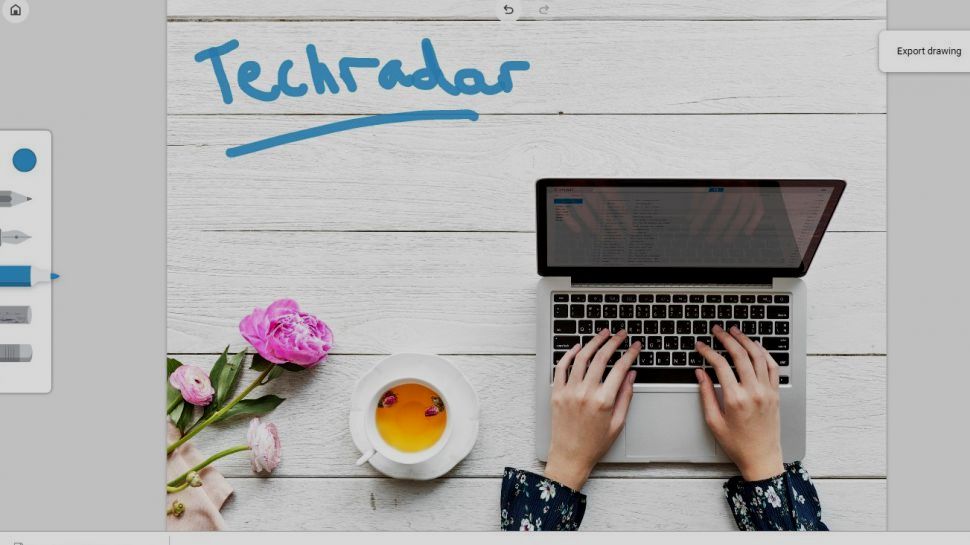
Visit https://canvas.apps.chrome/ to open Chrome Canvas and you can begin drawing with virtual pencils, chalk, markers and fountain pens (with an eraser to undo any mistakes). There are no plugins or other downloads necessary, and it works on any operating system.

You can create your own artworks from scratch on a blank canvas, or import an image to draw over, making Chrome Canvas an easy way to annotate images without loading a photo editor.

Quickdraw

When you've finished your masterpiece, you can export it to your device using the button at the top right, and if you're logged into your Google account, it will be made available in a gallery that appears next time you visit Chrome Canvas (on any device).

As Chrome Unboxed notes, Google's lack of an announcement means it's impossible to know how long Canvas has existed, but it works smoothly with little latency and seems like it's pretty much ready for a public release.

We've picked out the best web browsers.


SOURCE:

Saturday, July 7, 2018

7/07/2018 07:25:00 PM

Chrome continues to dominate the browser world, while Edge gets left behind

Windows 10’s browser is floundering in fifth place behind Safari

You’re likely aware that Chrome is king of the browser world, but the extent of the lead that Google’s effort currently enjoys over its closest rival – Mozilla’s Firefox – might surprise you.

Going by the latest figures from Statcounter, Chrome stands atop the browser hill with a desktop PC market share of 66.87% – that’s very nearly six times greater than Firefox’s share, which stands at 11.44%.

The third-place browser remains Internet Explorer on 7.13%, but the other interesting story here is the fact that Microsoft’s newer browser, Edge, which the firm is trying to push hard alongside Windows 10, seems to be flailing badly (at least according to these stats).

In fact, Edge has actually fallen behind Apple’s Safari, with the latter in fourth place on 5.38%, more than a full percentage point ahead of Microsoft’s browser for Windows 10. Edge is on a rather lowly 4.16% and doesn’t seem to be making any meaningful headway at all, which is doubtless frustrating for Microsoft.

Losing its Edge?

As mentioned, Microsoft is trying to push and constantly improve its new browser, particularly on the security front, although at the same time, we’ve also seen incidents where Edge has fallen short in terms of security – from losing out to hackers through to more recent criticisms of Microsoft’s response to reports of vulnerabilities.

And perhaps there is something of a reaction against a product being ‘pushed’ by Microsoft, anyway, looking back to some of the controversial tactics used to attempt to persuade folks that they needed to take the free upgrade to Windows 10.

Microsoft continues to work extensively on Windows 10’s browser, though, and in recent preview versions of the operating system, we’ve seen a whole raft of tweaks aimed at honing the UI of Edge in various ways.


READ MORE TechRadar

Friday, May 18, 2018

5/18/2018 10:33:00 PM

Google pushes harder for HTTPS with new security notifications for Chrome

HTTPS? We should think so too


Google is continuing its effort to increase uptake of HTTPS, and will soon make it much more obvious if you're visiting an insecure site.

Starting with Chrome 69 (due for release in September), sites using HTTPS will no longer receive a pat on the head in the form of a green padlock icon in the address bar. That's the very minimum that Google expects.

Things will get even stricter with the release of Chrome 70 (scheduled for October). Instead of a subtle grey notification in the address bar, non-HTTPS sites will be flagged up with a bright red warning triangle – the same one it currently uses if there's a problem with a site's security certificate.

"Users should expect that the web is safe by default, and they’ll be warned when there’s an issue," Google said in a blog post.

Red alerts

Google's first stab at labelling non-encrypted sites came in the form of a discreet 'i' icon, which users could click to find out more. It wasn't terribly intuitive and was easy to miss.

The browser began labelling non-HTTPS sites more clearly early last year, starting with pages that transmit passwords and credit card details. These warnings were designed to help Chrome users avoid 'man in the middle' attacks, where data is intercepted by a third party.

Google's ultimate goal is for all sites to use HTTPS encryption. "We hope these changes continue to pave the way for a web that’s easy to use safely, by default," it says.


Wednesday, May 16, 2018

5/16/2018 10:05:00 PM

That Chrome update that blocks auto-playing audio? It's been delayed

Update not ready for prime time


It's no secret that Google is on a mission to make intrusive ads a thing of the past, and while a recent Chrome update which aimed to prevent auto-playing audio in web pages seemed like the step in the right direction, it, unfortunately, came with some unexpected side effects. 

According to a story by Waypoint, the Chrome 66 update has majorly impacted countless web projects and games that rely on audio, causing Google to temporarily remove the autoplay policy for the Web Audio API.

QWOP designer Bennett Foddy told Waypoint that he "cannot think of a comparable moment where one team of developers killed so much internet culture in one unilateral move."

A mute point

"We’re doing this to give Web Audio API developers (e.g. gaming, audio applications, some RTC features) more time to update their code," explained Google product manager John Pallett in a post to developers.

He continued, "The team here is working hard to improve things for users and developers, but in this case, we didn’t do a good job of communicating the impact of the new autoplay policy to developers using the Web Audio API."

If you were one of the many people who welcomed the prospect of Chrome blocking audio from annoying ads, fear not – Google's autoplay policy will be re-applied to the Web Audio API in Chrome 70, which is set to drop in October 2018.


Wednesday, June 7, 2017

6/07/2017 09:47:00 PM

Take full advantage of Google Chrome with these tips and traps

Would you like to wind up noticeably a Google Chrome control client? Read on!


Do you utilize Google Chrome? Would you like to end up plainly a Google Chrome master? Read on! 

What takes after are a gathering of tips, traps, and instruments to enable you to take full advantage of Google Chrome. There are tips on accelerating the program and making it expend less RAM, approaches to expand your protection, and expansions that you can introduce to enable you to accomplish more in your day. 

Take note of: These tips work for both Mac and Windows (and many even work for Linux!). 

GIVE GOOGLE CHROME A TUNE-UP 

Web programs buckle down, and generally get little in the method for care and consideration. Be that as it may, a little tune-up can go far to making Google Chrome speedier and more effective. 

#1: Update your Google Chrome program 

In the event that you've not shut Google Chrome in a while - presumably in light of the fact that you have an entire group of tabs you're keeping open - then maybe there's a refresh sitting tight for you. You can without much of a stretch tell if there's a report on later arrivals of Chrome in light of the fact that the menu catch (the three vertical dabs right of the address bar) will change from green to yellow and afterward red to give you a visual indication of how outdated the program you are running is. 

To constrain Chrome to check for a refresh sort chrome://help into the address bar and take after the prompts. 

#2: Get freed of undesirable augmentations 

Sort chrome://expansions into the address bar and cripple any undesirable augmentations. Either uncheck the container to debilitate the expansion or tap on the junk can symbol to erase it. 

Take note of that in the event that you erase an expansion you lose every one of the information related with it (this does not occur on the off chance that you debilitate it) 

#3: Get freed of undesirable modules 

Sort chrome://modules into the address bar and debilitate any undesirable modules. Simply tap the connection to impair. 

#4: Take control tabs with custom augmentations 

The measure of tabs you have open at any one time directly affects the execution of Chrome, and additionally the amount RAM the application devours. Luckily, it's conceivable to have a considerable measure of tabs open and monitor memory utilization with a few expansions. 

Here are a determination for you to browse: 

  • Tab Wrangler
  • One Tab
  • The Great Suspender 


Something else you can do is strip the page down to only the content utilizing an augmentation, for example, Text Mode or Minimalist. 

There are a great deal of marvelous Google Chrome expansions out there. I've recorded a couple in the exhibition beneath (in spite of the fact that I don't suggest that you introduce every one of them!). 

#5: Install the Data Saver augmentation 

On the off chance that your issue is connected more to a poor web association than it is to a slow program, at that point one way you can cause enhance transmission capacity is to introduce the Google Data Saver augmentation. This expansion utilizes the Google servers to pack and enhance website pages before they are conveyed to your program. 

#6: Close your program! 

You truly don't need to have your program running the entire time! Truly, you don't. You can modify Google Chrome to revive precisely where you were the point at which you shut it. 

Sort chrome://settings and under On startup you'll see three choices: 

  • Open the New Tab page
  • Proceed the last known point of interest
  • Open a particular page or set of pages 


In the event that you need Google Chrome to start up where you cleared out it, pick Continue the latest relevant point of interest, or on the off chance that you need to fire up from a custom arrangement of pages, pick Open a particular page or set of pages and select those pages. 

Single word of alert - be cautious on the off chance that you have numerous program windows open, on the grounds that exclusive the tabs from the last window you shut will be revived. 

Tip: If you incidentally shut a tab, you can recuperate it by squeezing Ctrl + Shift + T on Windows or Linux, or ⌘ + Shift + T on a Mac

#7: Run with the default subject 

You can do a considerable measure of altering of Google Chrome, including changing the topic. Be that as it may, subjects eat RAM, so on the off chance that you need the speediest conceivable program, keep running with the default topic. 

Sort chrome://settings and under Appearance, if the Reset to default topic catch isn't turned gray out then you're running a custom topic. Tap the catch to backpedal to the default. 

#8: Smoother looking over 

Sort chrome://banners into the address bar and discover Enable quick tab/windows close. This alternative accelerates Chrome by enabling it to close windows separate to any JavaScript code that may be running. 

After you've rolled out improvements tap the RELAUNCH NOW catch at the base of the screen to apply the setting. 

Take note of this is a trial highlight and make certain to peruse the notices at the highest point of the settings page in Chrome. To fix any progressions tap the Reset all to default catch. 

#9: Clear your store 

In case you're getting low on circle space then you may discover Chrome will accelerate on the off chance that you clear the store. 

Sort chrome://settings/clearBrowserData into the address bar and I'd recommend picking just the Cached pictures and documents alternative. On the other hand, you can nuke everything and begin with a fresh start. 

For best outcomes clear things from the earliest starting point of time. 

#10: Check your framework for spyware and other garbage 

Windows clients can make utilization of Google's Software Removal Tool. It may likewise be a smart thought to examine the framework utilizing something, for example, Malwarebyte's Anti-Malware. 

Macintosh clients can look at Malwarebyte's Anti-Malware for Mac (don't trust the hogwash that Macs can't have infections or malware - that may have been genuine 10 years prior, yet it's not genuine today). 

Control UP GOOGLE CHROME WITH EXTENSIONS 

Google Chrome is far beyond a web program. It's a stage, and with a couple key augmentations introduced you can change it into a war room for your everyday work. 

Regardless of whether it's efficiency, security, or improved mechanization you are after, there's an expansion that can enable you to accomplish that objective. 

MAKE GOOGLE CHROME EAT LESS BATTERY 

Here's one for all you parents who utilize portable workstations and tablets. 

While I'm a major aficionado of Google Chrome, I'm likewise the first to concede that it isn't without its defects, and one of those being that it can be a lot of a battery hoard. 

Here are a progression of tips to enable you to get control over Google Chrome's hunger for power! 

Brisk GOOGLE CHROME TIPS 

Here are a group of Google Chrome tips that will fill your heart with joy less demanding and life more profitable. 
  • One of the most ideal approaches to wind up noticeably an aggregate Google Chrome control client is to figure out how to control the program utilizing alternate route keys.
  • You can choose numerous tabs for dragging - hold down Ctrl on Windows or ⌘ on the Mac and tap on the tabs you need to choose.
  • Revive a tab you've inadvertently shut with Ctrl + Shift + T on Windows or ⌘ + Shift + T on the Mac (you can revive up to ten already shut tabs).
  • You can play any media record on your PC that is upheld by Google Chrome by dragging it into a program window.
  • Google Chrome has its own particular assignment chief - tap the menu catch that lives to one side of the address bar (the catch with the three vertical spots), go to More Tools and after that pick Task Manager.
  • You can utilize the spacebar to look down a site page, and you can look move down by squeezing Shift + Spacebar. 
  • You realize that T-Rex Google Chrome demonstrates to you when you lose association with the web (you can get to the page by going to chrome://organize mistake/ - 106 )? On the off chance that you press the spacebar, the T-Rex will bounce and commence a basic diversion where you need to hop over prickly plants, Mario-style. 


Need A TL:DR? HERE YOU GO! 

In the event that all that appears like excessively to take in, and you simply need a sensible modest bunch of tips to make Google Chrome quicker and more steady, here you go!


Saturday, June 3, 2017

6/03/2017 09:43:00 PM

WebAssembly wins! Google pulls plug on PNaCl

Refering to the requirement for cross-program similarity, Google picks WebAssembly to run local code in Chrome


For Google, the time has come to ring out the old and ring in the new with regards to running local code in the program. To this end, Google is making the WebAssembly convenient code organize its answer for local code going ahead, uprooting the organization's Portable Native Client (PNaCl). 

PNaCl did not have the coveted cross-program similarity offered by WebAssembly, the organization said. PNaCl support will be expelled ahead of schedule one year from now aside from in Chrome Apps and Extensions. Google said utilization of PNACl is sufficiently low to warrant censure and that WebAssembly has a lively biological system, improving it a fit. "Verifiably, running local code on the web required a program module. In 2013, we acquainted the PNaCl sandbox with give a methods for building sheltered, compact, superior applications without modules," Google's Brad Nelson, programming engineer on NaCl, PNaCl, and WebAssembly, said. "In spite of the fact that this functioned admirably in Chrome, it didn't give an answer that worked consistently over all programs." 

The switch speaks to more energy for WebAssembly, a cross-program arrange that can possibly enhance the execution of web applications and empower different dialects past JavaScript in programs. All real program merchants—Apple, Google, Microsoft, and Mozilla—have taken part in its advancement. Cross-program agreement has been come to on an underlying adaptation of WebAssembly, including the API and parallel arrangement. "Applications utilizing WebAssembly as of now keep running in different programs: Chrome and Firefox bolster WebAssembly locally and Edge and Safari bolster WebAssembly in review renditions of their programs," Nelson said. 

PNaCl accumulates C and C++ code to a subset of JavaScript called asm.js. Google is putting forth suggestions for relocating PNaCl to WebAssembly, guidance that incorporates utilizing the Emscripten compiler from the PNaCl SDK for most utilize cases. Programming interface relocations likewise are exhorted. Google has offered a guide for WebAssembly bolster, with a SharedArrayBuffer capacity due in August that sets the phase for interoperable WebAssembly strings. A WebAssembly True-Async ability, likewise due in August, will take into consideration foundation WebAssembly assemblage. WebAssembly Content Security Policy support is made arrangements for Chrome in September.


6/03/2017 09:12:00 AM

Google is adding an advertisement blocker to Chrome in 2018

Be that as it may, just to annoy promotions


Google will quit demonstrating all advertisements on culpable sites in its Chrome program beginning one year from now, the pursuit monster declared today. 

Weeks of theory that Google wanted to present its own particular promotion blocker for Chrome prompted today's legitimate declaration, with Senior Vice President, Ads and Commerce Sridhar Ramaswamy sketching out the organization's thinking to square all advertisements for distributers that don't get in line. 

While recognizing, "by far most of online substance makers support their work with publicizing," Ramaswamy additionally noticed that "irritating, nosy promotions" have driven clients to piece commercials by and large by means of augmentations and different apparatuses. 

Google's approach is to empower better notices that both distributers and guests can live with. The inquiry mammoth has joined the Coalition for Better Ads and will utilize its Better Ads Standards as a rule for best promoting rehearses. 

"In an exchange with the Coalition and other industry gatherings, we plan to have Chrome quit demonstrating advertisements (counting those claimed or served by Google) on sites that are not agreeable with the Better Ads Standards beginning in mid 2018," Ramaswamy said. 

What are awful advertisements? 

As per the Better Ads Standards, cases of awful desktop promotions incorporate pop ups, auto-playing video advertisements with sound, "presitial" advertisements with commencements (advertisements that don't let you onto a page until a clock runs out) and substantial sticky advertisements. 

On versatile, cases of culpable advertisements incorporate a considerable lot of the same and in addition promotions with a thickness higher than 30%, full-screen scrollover advertisements and glimmering enlivened advertisements. Google's promotion blocker is said to take a shot at both desktop and cell phones. 

Google is giving distributers at any rate a large portion of a year months to prepared themselves for the promotion blocker instrument take off, as indicated by sources talking with the Wall Street Journal. 

The distribution reports promotion blocking will be on as a matter of course, and will prevent all advertisements from showing up on sites that have an excessive number of that outcome in a negative client encounter. 

Google is treating the new instrument more like a channel than a legitimate promotion blocker, the Wall Street Journal says. 

Go along or... 

Google is likewise giving assets to distributers so they don't all of a sudden lose all their promoting (and related income). 

The organization has distributed an Ad Experience Report to help site proprietors distinguish whether advertisements they serve abuse the Better Ads Standards. Google gives cases screenshots and recordings of irritating advertisement encounters and in addition a prescribed procedures direct for what constitutes satisfactory promotions. 

Another apparatus Google is presenting is called Funding Choices. This gives distributers a chance to present an altered message on clients going to their site with an advertisement blocker turned on. Clients will have the alternative to either permit advertisements or make an installment to sidestep all promotions. Exchanges will be finished through another new device called Google Contributor. 

Subsidizing Choices is as of now accessible in North America, the UK, Germany, Australia and New Zealand, Ramaswamy stated, with a take off in more nations gotten ready for not long from now. 

It's nothing unexpected Google is presenting this advertisement "channel" as it guarantees a few promotions are served up as opposed to no advertisements by any stretch of the imagination. 

Be that as it may, there's certain to be push back as distributers depend on advertisement income keeping in mind the end goal to demonstrate their substance for nothing. Additionally, with Google a definitive authority of good and awful promotions, the pursuit monster might be viewed as using excessively control – more so than it does now – in the internet publicizing diversion. 

Related item: Google Chrome 

Our Verdict: 

In case you're not stressed by the protection concerns related with Google, this is the best web program available. 

(+)FOR
(-)AGAINST
Unendingly extendable
Security concerns on account of Google connections
Parts and heaps of tweaking alternatives
Extremely memory hungry
Beta forms accessible 
Not the quickest entertainer out there