Breaking

Showing posts with label Android "O". Show all posts

Friday, August 10, 2018

8/10/2018 01:16:00 AM

Oreo is Coming to Many Mid And Low-End Samsung Mobiles, But Not Until 2019

And some updates have been delayed

Android Oreo

While Android Pie has now been announced and will be headed to various high-end and high-profile handsets before too long, those using mid-range and low-end Samsung phones will in many cases still be waiting for Android Oreo. 

But we now know that update is coming to many of them – though not until 2019.

SamMobile has spotted that Samsung’s latest update roadmap lists various devices, such as the Samsung Galaxy J7 (2017), Samsung Galaxy Tab A (2017), Samsung Galaxy C9 Pro and others (all shown in the image below), as getting Android Oreo in January 2019.

However, for many of these devices this seems to be a delay, as a previous roadmap had them listed for December 2018. And some will be waiting even longer, with the Galaxy J7 Max down for a February update and the Galaxy J7 (2016) not scheduled to get Oreo until March.

However, the Galaxy J7 Neo at least seems to be sticking with the old schedule and getting a December 2018 update.

Mobiles List 

This is Samsung's current Oreo roadmap. Credit: SamMobile

Making exceptions

It’s also worth noting that the Galaxy J7 (2016) is an oddity here as it has already had one major Android update and usually Samsung’s budget devices are only eligible for one. Whether this is an exception or a sign that this policy is changing is unclear.

Given that this roadmap has changed once, don’t be surprised if it changes again, so the wait might be even longer for some of these devices or they might not get the update at all. Indeed the roadmap notes that “if a review finds that certain models cannot ensure optimal usability, they may be excluded from the OS update.”

Further complicating things is the fact that the schedule can vary by region. We wouldn’t expect massive differences, but if you have a Samsung phone you can check for yourself in the Samsung Members app.


Thursday, June 28, 2018

6/28/2018 04:36:00 PM

Raspberry Pi-style Renegade Elite runs Android Oreo on six-core, 4K board

If you're specifically not looking for a Raspberry Pi, the Renegade Elite could be the board of choice.


The Renegade Elite will run on the Rockchip RK3399.

Libre Computing, the maker of a Rockchip-powered Raspberry Pi-shaped board called Renegade, will soon launch a beefed-up model dubbed Renegade Elite.

Whereas the $35 Renegade competed with the Raspberry Pi on price and maintained its form factor, the Renegade Elite is a board of a different sort.

It will launch on an Indiegogo crowdfunding campaign for $100 in July and then will be available in August generally for about $120, according to Liliputing. With accessories, the board could cost around $200.

Compared with the Renegade, the Renegade Elite features a faster Rockchip processor, more ports, additional Type-C ports, and, instead of a single 40-pin header, it has a 60-pin PCI-E expansion header and a 60-pin low-speed header.

The six-core Rockchip RK3399 CPU in the Renegade Elite consists of two ARM Cortex-A72 cores and four ARM Cortex-A53 cores, as well as a four-core ARM Mali-T860 GPU. The original Renegade featured a slower Rockchip RK3328 chip.

The Renegade Elite is the latest in a string of higher-powered 2018 boards to use the Rockchip RK3399, including the RockPro64 and the $100 Odroid-N1.

However, the Odroid-N1 has just been canceled due to problems with RAM supplies from Samsung and SK Hynix. An N2 board is now in the planning and may have a new, faster processor that hasn't been announced yet.

Other core features of the Renegade Elite include 4GB DDR4 RAM, two USB Type-C ports both of which support DisplayPort for two-display setups, while one supports power delivery.

There's also an HDMI 2.0 port, Gigabit Ethernet with optional power-over-Ethernet support, three USB Type A ports, a microSD card slot, an infrared receiver, and real-time clock with battery backup.

Libre Computer says the board can run Android Oreo or Linux 4.19 and above, or a Rockchip variant with the Linux kernel 4.4.


Friday, March 2, 2018

3/02/2018 10:17:00 PM

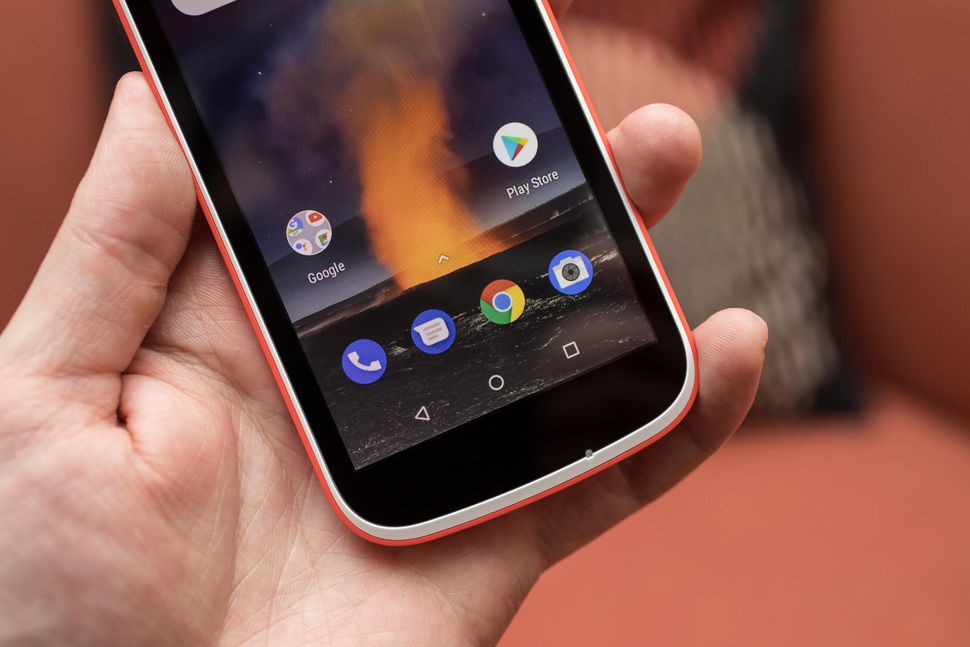
Android Oreo vs Android One vs Android Go: All their differences, explained

We look at the three different Android platforms Google is now managing and explain where each one fits in the mobile industry.


Google now has three different approaches to Android it's currently deploying, with the help of hardware partners throughout the world.

In February, Android Oreo (Go Edition) made its formal debut, with hardware announcements from some well-known smartphone manufacturers such as ZTE, Alcatel, Huawei, and HMD Global (Nokia). Originally announced as Android Go, Google said that every Android release would have an Android Go configuration.

So, now, Google has rolled out Android Oreo (Go Edition). But it joins two other Android deviations: the main Android OS, which is currently Android Oreo, and Android One. Here's what you need to know about all three.

ANDROID OREO
What is Android Oreo?

Each year, Google updates Android, and the version number and name changes. In early 2017, Android 8.0 was announced, with the letter O up next in its naming scheme. Toward the end of the year, Google announced Android 8.0 Oreo and released it to vendors to be used in devices.

As the main version of the operating system, Google doesn't target any sort of device specifications with Android. Instead, it's up to hardware partners to decide how much memory or storage and what processor is used in a device running the latest release of Android.

What does Android Oreo feature?

Without having to worry too much about specifications and resources available, Android Oreo is where Google is able to push mobile devices. Here are a few features -- which Android Oreo currently has -- that push the limits of a smartphone:

Picture-in-picture mode: Gives users the option to watch a video or keep Google Maps running via a thumbnail in a corner of the screen, while simultaneously using another app.

Split-screen apps: Android Oreo is capable of displaying two apps, with adjustable windows, allowing a user to reply to an email in Gmail while using Google search in Chrome.

Google Daydream: Converts an otherwise normal smartphone in a Daydream-certified virtual reality headset for games, movies, and educational apps.

Which devices run Android Oreo?

Google uses Android Oreo on its own flagship line of Pixel smartphones. This is also the same core version of Android that manufacturers and third-party companies use in their own tablets, televisions, and similar products.

Outside of Google's own devices, Android Oreo is used on a wide number of phones and tablets. The newly announced Samsung Galaxy S9 and Galaxy S9 Plus, for example, are both powered by Android Oreo. Huawei Mate 10 Pro, the OnePlus 5T, and the bulk of Motorola's 2017 lineup all run Android Oreo, too.

ANDROID ONE
What is Android One?

Google announced Android One in 2014. It positioned the new program as a means to provide emerging countries with affordable access to Android devices -- and, by extension, the internet.

Since then, Android One has done just that, but it has also grown up. Instead of only releasing low-end smartphones with a barebones version of Android, device makers have begun to push toward mid-range devices. These have respectable specifications and are backed by Google's Android One program across the globe, including the US.

What does Android One feature?

According to Google, all Android One products come with a few guarantees:

  • Regular security updates for three years.
  • Android OS updates for two years.
  • The core Android interface and Google services.
  • Approved hardware based on performance tests.


In other words, Android One is a vanilla Android experience -- free of any proprietary skins, interfaces, or unnecessary apps from hardware manufacturers. On top of that, an Android One device won't stop receiving updates for up to three years.


Both of those promises answer a lot of complaints about the Android ecosystem as a whole. For example, Samsung and LG each make modest changes to the overall look and feel of Android -- but not all those changes actually improve the experience. Furthermore, Samsung has a reputation for being slow when it comes to releasing software updates.

Which devices run Android One?

Expect to see a wide range of specifications -- from mid-range to flagship-level -- on Android One devices.

Some examples of Android One devices include the Motorola Moto X4, HTC U11 Life, Nokia 8 Sirocco, and the Xiaomi Mi A1.

ANDROID OREO (GO EDITION)
What is Android Oreo (Go Edition)?

Originally announced in May 2017, Android Go picks up where Android One left off. This stripped-down OS is built to run on devices with 1GB of memory or less.

Google's goal is for devices to be priced as low as possible.

What does Android Oreo (Go Edition) feature?

Now referred to as Android Oreo (Go Edition), every core Android app, from Gmail to Google Maps to Assistant, has been rebuilt and stripped of any unnecessary bloat. By streamlining the operating system and core apps, Android Oreo (Go Edition) provides more storage to the end user, even on a device with only 8GB of storage.

Moreover, Google's Data Saver service helps users -- where mobile data plans are slow and expensive to use -- save data, by providing tools to restrict background data access.

Which devices run Android Oreo (Go Edition)?

We got our first glimpse of Go Edition handsets at MWC 2018.

ZTE announced the ZTE Tempo Go, a Go Edition phone that's unlocked and will sell for $80. HMD revealed the Android Oreo Go Edition Nokia 1, which is priced at $85. Alcatel announced the 1X, a phone that will cost $120.

All these devices have 1GB of memory, either 8GB or 16GB of storage, and an entry-level processor (Qualcomm Snapdragon 210 or similar). Again, the purpose of Go Edition phones isn't to provide a robust hardware experience with blazing-fast processors and 128GB of storage.


Sunday, May 14, 2017

5/14/2017 01:38:00 AM

Android O discharge date and engineer see highlights

The following Android refresh gets dismembered


Android O is the following adaptation of Google's super mainstream versatile working framework set to discharge this Summer. 

Until then, it's as of now amidst an engineer review, which you can join on the off chance that you have a Google Pixel , Google Pixel XL , Nexus 6P , Nexus 5X or Pixel C . 

This enormous Android refresh for 2017 will proceed with its developed beta after its official Google IO 2017 uncovering and will probably make a big appearance in full first on the Google Pixel 2 . 

Try not to have a Google-marked telephone? The organization declared Project Treble , an activity that will guarantee that Android O comes to numerous a bigger number of gadgets than past working framework refreshes. 

We've as of now observed a solid rundown of new elements out of the designer review, both visual and execution based, that merit getting amped up for regardless of the possibility that the new form doesn't roll out historic improvements like Material Design did in Android Lollipop. 

Stay tuned in the months ahead as we reveal numerous all the more new components in future engineer sneak peaks. Be that as it may, for the present, take after along as we plunge into a rundown of affirmed elements, some of which are accessible right now in the dev review. 

On the off chance that you need to attempt Android O out for yourself, don't hesitate to take after the guidelines in the connection underneath, however be cautioned that the designer review in expected for engineers (henceforth the name). 

Affirmed Android O highlights:


Picture in Picture (PiP) mode 

As is now observed on the iPad and some bespoke outsider launchers for Android, this would locally enable you to have one upheld application stay lay on top of another different application. 

This is a minor component, yet one that makes multitasking to a lesser degree a trade off than split-window mode and to a greater degree a casual affair. Tragically, while settings for PiP do show up in the main engineer see, the component doesn't appear to fill in as planned presently. 

Limited foundation exercises 

This is a power-sparing element that de-organizes application capacities running out of sight, which thus implies that your battery is going to potentially last any longer than it right now does on Android Nougat . 

Matched with likely upgrades to the Doze work that shrewdly spares battery amid down-time, it's plausible that Android O could help crush an additional modest bunch of hours out of your telephone. 

Warnings 

Each new form of Android appears to convey along a refresh to warnings and O is no special case. Nougat enabled you to make a move appropriate inside the notice board and as we've found in the primary engineer see, now designers can allow considerably more prominent energy to clients to flip settings that as a rule require burrowing through menu after menu. 

Albeit affirmed, we've yet to see this element in full blossom. The main engineer see demonstrates that the settings have been reconfigured, yet these progressions appear to lay the structure for the new changes to descend the line. 

We'll likely observe Google speak more about this one soon, as it could truly make life simpler for the individuals who get covered in warnings. 

Versatile application symbols 

As the name proposes, Google has presented strict plan rules for designers to stick to that will make a brought together visual style crosswise over more applications. 

Moreover, these new application symbols will vitalize in light of client connection and...have you seen the liveliness demo? Gaze upward. It looks marvelous, no?


Supported sound execution 

The Samsung Galaxy S8 is the main Android telephone to come introduced with Bluetooth 5 , an innovation that will augment the transfer speed and bring as far as possible up in the remote pipeline for your substance to go through and along these lines, improve the nature of sound substance sent remotely between your telephone and earphones. 

And keeping in mind that numerous gadgets will go with the same pattern, sound quality on Android will get yet another lift because of Android O's local support for LDAC, Sony's hello there res Bluetooth sound codec. 

In the engineer alternatives, we're now observing huge amounts of choices for tweaking the bitrate for sound and we anticipate that more progressions will descend the line. This one could be a major ordeal, particularly for those holding out on becoming tied up with the best remote earphones.


Application symbol identifications 

An oldie that has been thumping around for quite a long time on iOS and some outsider launchers, this would bring an initially notice number rises to application symbols on the homescreen as a local Android highlight. 

In the warning settings, we saw that there is a recognize that inquires as to whether clients need to show an identification. Odd that Google didn't through and through report this element, however perhaps this is on account of it doesn't fill in as expected in the primary dev see.