Breaking

Showing posts with label Xiaomi. Show all posts

Monday, January 18, 2021

1/18/2021 07:00:00 PM

Phone News: Xiaomis foldable phone was spotted publicly and its got an enormous problem

Phone News: Xiaomi's foldable phone was spotted publicly and it's got an enormous problem

Phone News: Xiaomis foldable phone was spotted publicly and its got an enormous problem


Creasey does it

It's a busy season for cool rollable and foldable phones immediately, as CES 2021 has given us closer looks at previously-teased rollable from TCL and LG, which is why we got excited at the news that a Xiaomi foldable phone was spotted publicly. However, after seeing the phone, we're not so sure about it.

These images come from a user of Chinese social media platform Weibo, taken of somebody employing a Xiaomi foldable phone during a subway car. you'll tell it is a Xiaomi phone because it's clearly running MIUI, Xiaomi's Android overlay. the pictures have since been taken down, but MyFixGuide managed to save lots of them first.

In the pictures, we will see someone employing a book-style foldable, just like the Samsung Galaxy Fold, and clearly, a special thing to the foldable Xiaomi previously teased, which had two hinges. Unfortunately, this new design features a big problem.

It must be de-creased

A big metric for judging foldable phones is how apparent the crease, where the device folds, is on the screen. If it's extremely obvious and stands proud from the display, it is often an impediment to using the handset, and that we found this for several early foldable.


This Xiaomi foldable phone features a crease you'll probably see from the moon - it's huge, looking sort of a vortex that might drag your finger into it when your digits stray near. we will not imagine the display is fun to use thereupon thing ripping through it.

We can't use this foldable phone to form sweeping statements about Xiaomi's future ones though, as it's likely just a prototype or test model intended to experiment with a particular design. 

We've got no idea of when Xiaomi will officially launch its first foldable phone, but since 2021 is looking like 'the year of foldable phones', hopefully, it'll come soon.


Friday, July 17, 2020

7/17/2020 04:00:00 AM

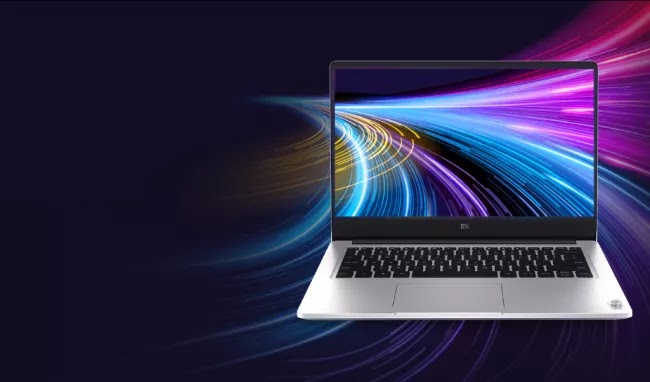
Mi NoteBook 14 goes on sale in India

Mi NoteBook 14 goes on sale in India

Mi NoteBook 14 goes on sale in India

Update(July 10): The laptops will continue sale today.

Xiaomi’s Mi NoteBook 14 and Mi Notebook 14 Horizon Edition will continue sale today, in India for the primary time. Both the models were unveiled recently in India which also marked their global debut.

The two laptops are available five configurations and that they start at Rs 41,999 and goes up to Rs 59,999. Comparted to the competition, in India, they're priced pretty aggressively. The laptops will continue sale via Amazon.in and also on mi.com at 12 noon today.

As a neighborhood of the launch offer, HDFC cardholders will get a moment cashback of Rs 2,000.

Mi NoteBook 14 Horizon Edition Specs

The special edition, Mi NoteBook 14 comes with a 14-inch Full HD display with 91% screen-to-body ratio. it's a resolution of 1920 x 1080. The machine comes with up to 512GB of M.2 PCIe Gen 3x4 NVMe SSD storage and 8GB DDR4 RAM running at 2666MHz.

Under the hood, the Horizon Edition is powered by either i5 or i7 10th Gen Intel processors. You get 2GB Nvidia MX350 GPU, which is one of the foremost capable graphics cards available for compact devices and at this price point. The laptop runs on Windows 10 Home Edition. Other features include Mi fast unlock to authenticate users via a connected Mi Band, and Mi Share to transfer files within devices.

It has a 46Wh battery and supports fast charging which may take the laptop from 0 to 50% during a little over a half-hour . There’s also a USB Type-C port (i7 only). Other ports include 2 x Type-A, 1 x USB 2.0, 1 x HDMI, and a combo audio jack. there's no webcam on the Horizon Edition, but one will come bundled within the box.

Mi NoteBook 14 Specs

(Image credit: Xiaomi)

The vanilla Mi Notebook 14 comes with the almost the same set of specs because of the Horizon, but with a couple of changes. These are powered by the 10th gen Intel Core i5 10210U processor and comes with either Nvidia MX250 GPU or integrated Intel Iris UHD620 graphics, counting on the configuration you select. It houses up to 512GB SATA SSD storage.

Port selection includes two USB 3.1 type-A ports, an HDMI 1.4b connector, a DC power in, a 3.55mm combo jack, and a USB 2.0 port. It also comes with a 46Wh battery which may last up to 10 hours.

Tuesday, November 26, 2019

11/26/2019 07:45:00 PM

Xiaomi Redmi K30 5G confirmed to launch in China on Dec ten

Entering new segments


(Image credit: Xiaomi)

Xiaomi has finally set a date for the Redmi K30 5G launch date in China — Dec ten.

Earlier this month, a Xiaomi government confirmed that the Redmi K30 is coming back before long, and can be the primary 5G smartphone from them. Speculation urged that the phone is disclosed early next year, however, the chief operating officer went on to substantiate that the phone can so be disclosed in Dec itself. It seems that the Chinese launch date is simply period away, on Dec ten.


(Image credit: Xiaomi)

The Redmi K30 can support each Sturmarbeiteilung and NSA 5G standards for improved coverage in regions wherever 5G infrastructure preparation might not be up to the mark. The previous teasers conjointly confirmed that it might be the primary device from the house of Xiaomi to sport a punch-hole show, with 2 selfie cameras tucked within the high left corner of the show.

Eventually, different specifications of the device conjointly surfaced, because of leaks and benchmarks of the device. it'll reportedly be able to switch the show refresh rate between 60Hz and 120Hz, connexion the flagship ranks. it'll run MIUI11 out-of-the-box, presumptively designed over humanoid ten. The leaked benchmarks conjointly recommend that a minimum of one in all the variants are supercharged by the flower 730 chipsets with Adreno 618 graphics.

Hot on the heels of the Redmi K30, Realme has confirmed that it'll even be unveiling its 1st 5G smartphone within the coming back months, referred to as the Realme X50. it's seemed to be supercharged by the flower 735 chipset, which is predicted to be Qualcomm’s 1st mid-range 5G chipset. we should always learn a lot regarding these devices within the coming back days.


source:

Tuesday, October 15, 2019

10/15/2019 01:01:00 PM

Mobile Phones: Realme X2 Pro debuts in China to take on the Redmi K20 Pro and OnePlus 7T

SD 855+, 64MP camera, 50W fast charging and more


Realme Mobiles has taken wraps off of its first flagship smartphone, the Realme X2 Pro, in China. And like all the recent flagship phones, this one too is powered by Qualcomm's top-of-the-line Snapdragon 855 Plus chipset, which makes it the most powerful offering by the Oppo spin-off yet.

Alongside, the company also announced the Realme X2 Pro Master Edition, which has been designed by Naoto Fukasawa and features a distinct design inspired by cement mix and red bricks. The back is made from glass and has been further treated to produce a matte finish.

The X2 Pro will be making its way to India sometime in December this year, as stated by CEO Madhav Sheth.


  • Here's how fast Realme X2 Pro's 50W SuperVOOC charging will be
  • Realme X2 Pro receives BIS certification ahead of its launch in India
  • Realme X2 with Snapdragon 730G unveiled in China


Realme X2 Pro specifications

Realme X2 Pro features a 6.5-inch Full HD+ (2400 x 1080 pixels) resolution Super AMOLED display, which has been sourced from Samsung. The screen has a 90Hz refresh rate and supports 100% of DCI-P3 color gamut. It is topped with a layer of Corning's Gorilla Glass 5 for added protection.

Being a flagship, Realme has not done away with the notch design on the front as opposed to other flagship phones who have implemented different solutions for a full-screen experience. It gives the phone a 91.7% screen-to-body ratio. Also, there's a fingerprint sensor embedded into the display for faster unlock speeds.

The X2 Pro has a quad-camera setup on the back, which consists of a primary 64MP camera that uses Samsung's GW1 sensor with an f/1.72 aperture and 6P lens. The secondary camera uses a 13MP telephoto lens with an f/2.5 aperture and support for 20x digital zoom. There's an 8MP ultra-wide lens with a 115-degree field-of-view that doubles up as a macro camera as it supports a focusing distance of up to 2.5 cm. The fourth camera uses a 2MP sensor for analyzing the depth and assisting in creating portrait pictures.

On the front, there is a 16MP selfie camera that uses the SonyIMX471 sensor for selfies.

The Qualcomm Snapdragon 855+ powers Realme X2 Pro. It comes in 6GB/8GB/12GB of RAM and three storage options-- 64GB/128GB/256GB. The Master Edition of the phone has a single variant, with 12GB RAM and 256GB UFS 3.0 storage. It runs on ColorOS 6.1, which is based on Android 9.0 Pie.

The phone also features stereo speakers that have been tuned by Dolby Atmos effects for Hi-res audio experience.

The X2 Pro comes fitted with a 4,000mAh battery that supports 50W SuperVOOC Flash Charge, which is claimed to charge the phone fully in 35 minutes tops.

Realme X2 Pro is priced starting at Rs CNY 2,699 (~Rs 27,000) for the base variant with 6GB RAM and 64GB storage going up to CNY 2,899 (~Rs 29,000) for the variant with 8GB RAM and 128GB storage and CNY 3,299 (~Rs 33,000) for the maxed out variant with 12GB RAM and 256GB storage. The Master Edition is also priced at CNY 3,299.


SOURCE:

Wednesday, September 18, 2019

9/18/2019 01:31:00 PM

Mi Band: Xiaomi Mi Band 4 at last touches base in India, estimated at Rs 2,299

Low on cost, not on highlights. 


Xiaomi is, by and by, hoping to reinforce its fortification on the wearable wellness tracker showcase in India with the new Mi Band 4. Propelled today, here's all that you have to think about it.

For Xiaomi, the Mi Band arrangement of wellness trackers have been a runaway hit as far back as they ended up accessible in India. The Mi Band 4 intends to expand upon those qualities, for example, long battery life, different types of activity following and water-sealing while at the same time acquiring a couple of valuable increases.

The greatest physical change accompanies the showcase, as the Mi Band 4 gets another 0.95-inch shading AMOLED show with a goals of 120 x 240. The board is contact touchy and furthermore has a delicate 2.5D bend on top. Indeed, even with that generally enormous showcase, the Mi Band 4 has a similar by and large impression as its forerunner and along these lines, the groups are tradable.

The wearable is fueled by a 135 mAh battery which should give a battery life of around 20 days on a solitary charge. Charging takes around 2 hours.

The Mi Band 4 is 5 ATM water-safe, so sweat and rains won't be an issue. This time, it likewise increases swimming stroke acknowledgment capacities, for example, free-form, backstroke, breaststroke, butterfly and so on alongside the standard slew of term, calories and laps.

There's a 24x7 dynamic pulse tracker as well, on the underside. Another UI makes its presentation on the Mi Band 4 which is much increasingly responsive and instinctive. It remains associated with your telephone over Bluetooth 5.0.

Different highlights incorporate music controls, the capacity to change and include your very own watch faces, react to notices, answer or reject calls, action following, pedometer and so on.

Xiaomi Mi Band 4 cost and accessibility in India

The Xiaomi Mi Band 4 will be accessible for buy beginning September 19, at a cost of Rs 2,299. Five band shading choices are accessible, including dark, blue, maroon, dim and red.


Wednesday, August 7, 2019

8/07/2019 09:53:00 PM

Mobile Phones: Xiaomi's 64MP camera system is coming soon on a Redmi phone

Realme Mobiles is also prepping to show off their 64MP camera phone


(Image credit: Xiaomi)

Xiaomi has finally showcased its 64MP camera system at an event titled "Imaging technology for the future". The Chinese electronics maker claims it to be one of the most advanced camera that's ever been developed for a smartphone. Xiaomi has also announced that it will be among the world's 1st few brands to launch a smartphone with a 64MP camera.

Meanwhile, Manu Kumar Jain, GlobalVP, Xiaomi & MD, Xiaomi India took to twitter and expressed his excitement on the announcement. He confirmed that the company will bring a Redmi phone with 64MP camera very soon.


(Image credit: Xiaomi)


Xiaomi's camera system uses Samsung GW1 sensor that measures 1/1.7" in size with 1.6um pixel size and is 38% larger than the 48MP sensor. It uses ISOCELL Plus technology that increases light intake and optimizes colours more accurately resulting in bright, sharp and vibrant images across different lighting environments.


(Image credit: Xiaomi)

Samsung's Bright GW1 sensor uses Tetracell technology that enables it to deliver a 16MP optimized image in low-light situations. While in daylight, the sensor can produce a well-detailed 64MP picture.

Also, Xiaomi has tweaked the ISO capabilities and its 64MP camera system supports Smart ISO along with Hybrid 3D HDR which assists the phone is processing and producing pictures with great dynamic range and natural colours.


Realme Mobiles has also scheduled an event for August 8 where the company will be showcasing their 64MP camera system that will arrive with Realme 5 sometime later this year.


Wednesday, June 12, 2019

6/12/2019 09:40:00 PM

Mobile Phones: Xiaomi Mi Band 4 with AMOLED screen launched in China

The Mi Band 4 has a bigger screen than the Mi Band 3


After months of speculation and tease, Xiaomi announced the Mi Band 4 in China on Tuesday. Featuring an improved design, the Mi Band 4 has a bigger screen than the Mi Band 3 but perhaps the most striking thing is that it is an RGB display.

The Mi Band 4 also has an NFC variant along with an Avengers limited edition series. The fitness tracker will go on its first sale in China on June 16 but there's no information currently about the availability of the Mi Band 4 in India.

Xiaomi Mi Band 4 features and specifications

Xiaomi Mi Band 4 features a 0.95-inch AMOLED RGB screen with a resolution of 120 x 240 pixels. It is coated with a 2.5D tempered glass for added protection against regular wear and tear. The Band 4 has 39.9% more display area due to the use of a two-layer capacitive touch panel, unlike the previous generation.


The display can be customized with over 77 themes and can be paired with complementing wrist-bands that are offered in various colors. The Mi Band 4 also comes with upgraded sensors in the form of a 6-axis accelerometer which can detect and monitor daily activities such as walking, riding a bicycle, swimming, running and even a bunch of sport and exercises.

It is also certified to work underwater up to 5ATM or 50 meters where it can gauge your swimming speed and stroke rate to provide a comprehensive analysis. The tracker is also equipped with a PPG heart rate monitor which analyses the pulse in real-time and alerts the wearer if it registers unusual activity. The sleep monitoring sensor has also been upgraded to provide a better outlook of your sleeping patterns which can be worked upon to achieve a sound sleep.

The Mi Band 4 also supports Xiaomi's AI assistant in China and offers voice control. It is possible that the company fine-tunes this functionality for Indian users to work with Google Assistant or Amazon Alexa when it launches here.

Xiaomi claims the regular Mi Band 4 can last for 20 days on a single charge while the NFC variant makes do with 15 days before requiring more juice.

Mi Band 4 Avengers Limited Edition model features three customized wrist-bands -- Blue with an insignia of Captain America, Red for Iron Man and Graphite Black with Avengers logo. This collector's edition comes with a certificate, nameplate and an Avengers theme on the band.

The Mi Band 4 starts at CNY169 which roughly translates to Rs 1,695 while the NFC variant is priced at CNY229 (~Rs 2,296). Mi Band 4 Avengers edition will go on sale for CNY349 (~Rs 3,500). We expect Xiaomi to launch it around the same price points when it decides to bring the Mi Band 4 to India.


READ MORE:

Tuesday, April 23, 2019

4/23/2019 05:57:00 PM

LG and Xiaomi could both be working on phones with three front-facing cameras

See your face in super high quality


Front-facing cameras on phones have traditionally been afterthoughts compared to rear cameras, but according to leaked patents, both LG and Xiaomi are planning handsets that will have three front-facing snappers.

A patent acquired by GSMArena shows an LG phone with three front-facing cameras housed in a large notch in the screen, with a separate three snappers on the back.

A patent of a Xiaomi phone from TigerMobiles again shows a triple-camera front-facing loadout, but it's housed in a slide-out section of the phone along with a speaker, and on the back are only two shooters.


  • These are the best camera phones available now
  • This is what we want to see in the Samsung Galaxy Note 10
  • What do we know about the iPhone 11?


We've only just seen the launch of the Samsung Galaxy A80, a device with three cameras housed in a pop-up section that can swivel to face front or back depending on if they're popped up, and so triple selfie-cams could be a growing trend in smartphones.

Patents are often the earliest and most tentative kind of leak – even if a patent is authentic it only shows a company is considering an idea, not that it will necessarily use it, but leaked patents from two different companies so close together suggests that three front-facing cameras in phones could become an important trend.

Why three cameras?

Having more lenses and sensors makes a phone take higher-quality images, as they can provide different services and specializations, but traditionally there's only been a medium-powered wide-angle lens on the front of a phone.

A handful of handsets have offered more than one front facing camera in the past, and recently the Samsung Galaxy S10 Plus launched with a secondary, depth-sensing sensor to take better portrait shots, so selfies would have the appropriate amount of background blur.

The Samsung Galaxy A80 also has a 3D depth sensor, and its third camera has an ultra-wide lens so you can take wider group shots or selfies in dramatic locations that capture more scenery.

It's likely that if these LG and Xiaomi phones see the light of day, they'll have a similar combination of powerful main camera joined by wide-angle and depth sensing companions, but even if they do materialize they're still a long way off.


READ MORE:

Monday, March 18, 2019

3/18/2019 10:32:00 PM

Wearable: Xiaomi Mi Band 4 is coming later this year

Another cheap fitness tracker


The Xiaomi Mi Band 3 may not be the most comprehensive fitness tracker on the market but it's remarkably popular due to its low price, so it's not a huge surprise that Xiaomi wants to follow it up with the Mi Band 4 later this year.

When asked in an earnings call whether the company planned to release a new fitness tracker in March or April, David Cui, Chief Financial Officer at Huami (a brand owned by Xiaomi) confirmed the Mi Band 4 is happening.

It won't be as soon as either March or April though. Cui said, "For Mi Band 4, it's going to be in this year. It will be in 2019. But I'm not sure, it's going to be in March and April. It is going to be in this year."


  • Our ranking of the best fitness trackers
  • More to spend? Check out our Fitbit Charge 3 review
  • You'll get more tech with the best smartwatches


We don't yet know what new features the company will bring to the Mi Band 4 fitness tracker, but Cui did confirm that the company plans to introduce new highlights to attract you to upgrade.

Cui said, "Each generation we learn something, we always do better." That's all we're getting for now, which is a big tease on what the Mi Band 4 will be able to do.

Don't expect game-changing features on the Mi Band 4 though. Xiaomi's fitness trackers are all about offering the cheapest possible product with enough features to justify wearing a device around your wrist.

That's likely to be the same here with the Mi Band 4, but we'll have to wait until later in 2019 to find out.

Xiaomi Mi Band 3 vs Mi Band 2: Battle of the affordable fitness bands


READ MORE:

Wednesday, February 6, 2019

2/06/2019 09:52:00 PM

World Of Tech: Xiaomi is prepping to launch Mi Shoes in India

One more addition to its ever-expanding portfolio


Last year, Xiaomi expanded into the lifestyle products sector with the launch of Mi Luggage and Travel Pillow, and more recently, an Anti-Pollution Mask and the Mi Focus Cube Gold. Now, the company has dropped a teaser on the Mi India Twitter page about an upcoming product launch- Mi Sports Shoes.

Putting their #BestFootForward, Xiaomi has hinted about the India launch of their shoe line, possibly in the near future. The shoes were released in China last year with the name Mi Sports Sneakers 2.

The manufacture of the shoe uses a Uni-Moulding process that has 5 different layers- multiple materials are fused into a single mold, thus offering better stability and support for the feet. The inner sole is made of a breathable material, and the upper part of the shoe is made with a three-dimensional seamless high-elastic knitting process- it's uber-durable, so you can even throw them in the washing machine, instead of cleaning them with ye olde toothbrush.

That also means that there isn't a chip in the sneakers to track your movements. They have a new independent fish-bone locking design. Xiaomi claims that these shoes have excellent grip, regardless of what the wearer is doing.

The shoes were launched in Black, Flower Grey, Floral Blue, and White in China; no word yet on whether all the colors will make it to the Indian market. They will be priced at Rs 2999 when they release in India sometime later this month.


READ MORE:

Thursday, January 24, 2019

1/24/2019 07:43:00 PM

The Xiaomi foldable phone concept looks incredible in new teaser video

Maybe a little too incredible...


We've just been given another look at the Xiaomi foldable phone, and this time it's a well lit shot of the firm's co-founder seemingly using the device to open apps and make video calls.

It looks to be the same device which was teased in a short video clip by @evleaks a few weeks ago, but this time we get a much better look at the concept foldable smartphone.

What gives this video credibility is the flexible phone is being used by Lin Bin, the co-founder of Xiaomi, and he shared it on his personal Weibo account where he said the "Xiaomi double folding mobile phone is coming."

Instead of having a central folding action, this device has two folding hinges, with the outer thirds of the large display folding behind the central portion of the screen.

That's different to the only other foldable phone we've managed to get our hands on - the Royole FlexPai - which has a more traditional central folding action, but also considerably more bezel, while the Xiaomi offering looks far slicker.

You can see the Xiaomi foldable phone in action below.


A little too good?

As impressive as the phone appears in the video, it's worth taking it with a pinch of salt. We're skeptical as the concept phone seems too good to be true.

Having been hands on with the Royole FlexPai - a heavy, thick device with clunky software and a sizable bezel to one side to house the various technical features of the phone - it's difficult to see how Xiaomi has made such a seemingly slick device.

It's worth noting that this is still very much a concept device, with Bin saying "if you like it, we will consider making a mass production machine in the future."

What it does mean is the rumored folding Samsung Galaxy X, which is tipped to launch on February 20 alongside the Galaxy S10, could have some serious competition.


SOURCE:

Saturday, January 5, 2019

1/05/2019 10:49:00 PM

Mobile Phone: Is this Xiaomi’s foldable tablet?

A leaked video purportedly reveals a folding tablet


Foldable devices are getting more and more buzz, and we might even see one this year. Notable tipster Evan Blass tweeted a video of what could be a Xiaomi tablet that folds into thirds, though he noted that he couldn’t verify its authenticity.

Though it’s unclear if this is actually a Xiaomi product, or even if it’s anywhere near market-ready, the tablet does seem to function and respond to touch gestures before folding up without seams.

But is it a real product, or is it a “gadget porn deep fake” as Blass noted in his tweet? If it’s an actual device, it’s far ahead of what other manufacturers have been capable of in their revealed products.

The race to reveal foldables is on

While Samsung has been working to release a foldable device for years, it finally demonstrated the so-called Galaxy X on (a very shadowed) stage last fall. That phone’s ‘Infinity Flex’ display folds along a single crease, clamshell-style, with another screen on the front.

In contrast, the purported Xiaomi tablet bends in thirds down to a size comparable to a smartphone. Other manufacturers are trying different methods to achieve both form factors: the Royole FlexPai, which might be the first foldable device to market, folds in half (though the hinge is still large enough that it doesn’t fold flat).

Other big phone manufacturers are racing to reveal their own foldable phones, especially after Google confirmed Android will support foldable phones. Oppo claims it will unveil its foldable device at Mobile World Congress in February, and while LG was supposed to show off its own device at CES 2019, that reveal might be delayed for a while.

Before foldable phones take over, check out our list of the best smartphones on the market.


SOURCE:

Thursday, January 3, 2019

1/03/2019 07:20:00 PM

Xiaomi launches Mi AirPOP PM2.5 anti-pollution mask in India for Rs 249

Affordable solution to fight pollution


Xiaomi releases Mi AirPOP PM 2.The affordableIndia. Earlier, we reported that Xiaomi might roll out the Mi Purely Air mask in the country today, but the recent tweet has confirmed that it’s the Mi AirPOP PM2.5 Anti-Pollution Mask that goes on sale at 12 PM today on Mi India website.

The mask comes in a pack of two priced affordably at Rs 249, which makes it unlikely to come with the three level fan and N95 filter as the Mi Purely Air Mask. Instead, there is a vortex valve that discharges warm air and vapor while restricting the pollutants to enter the mask.

As the name says it’s a PM2.5 mask, it means it can achieve PM2.5 filtration. The company claims it can protect users from 99% of bacteria, pollen, and particles which are as small as 2.5 micrometers. In simple words, it should remove most of the dust and debris present in the air.

It has four layers of filtration and soft and skin friendly fabric for a snug and comfortable fit. As of now, it is available only in black color. It weighs just 32.2 grams and lasts for three years if the packaging is left unopened.

Each mask can be used for 15 hours, which means if you're using the mask for one hour a day, the pair should last you a month. Looking at the rising pollution levels in India, it is a good investment if you are a daily commuter.


SOURCE:

Wednesday, December 5, 2018

12/05/2018 09:49:00 PM

Xiaomi surges past Apple in global wearables shipped as the market grows overall

Apple falls to second place


2018 seems on track to be a big year for wearables as global shipments rose 21.7% in Q3, according to a report by industry research firm IDC. But that growth happened in regions outside the US as the American region’s expansion dipped 0.4%, indicating a split in user appetites as different markets become saturated, the report suggested.

And that has led to an upset in the rankings: in IDC's Q2 2018 report, Apple held the lead in a number of wearables shipped globally, but only just. In Q3, Xiaomi outsold Apple by over 2 million devices. Whether that trend will hold through the holiday sales season (traditionally a strong time for Apple sales) in Q4 2018 has yet to be seen.

The global wearables market benefits from geographic differences, according to Ramon T. Llamas, research director for IDC's Wearables team.

"China – the largest market for wearables and more than double the size of the U.S. market – has grown thanks to strong device development and experimentation, low-cost products, and strong demand for basic devices to draw in new users,” Llamas said in a press release. “Meanwhile, the U.S. market – while slowing down – presents an opportunity for vendors to offer more featured and higher-priced devices to current users and possibly to recapture old ones. In between the two markets are many other countries in various stages of development, and this allows vendors to take different approaches to meet demand.”

Wearables' winners and ... winners?

Brand growth followed these trends, with a split between higher-end smartwatches and more affordable fitness bands with fewer features.

Xiaomi took the top spot in Q3 2018, shipping 6.9 million units to take a 21.5% share of the wearables market - up from 3.6 million units for a 13.5% share in the same period last year. Per the report, they accomplished this feat by expanding sales outside China, where they’d previously shipped 80% of their products.

Apple took the No. 2 spot and, despite the release of Apple Watch 4, the company’s Watch 3 made up the bulk of the 4.2 million wearable devices shipped.

Fitbit stayed at the third spot and still shipped 3.5 million units with its new Charge 3 and Fitbit Ace fitness bands, though its market share dropped from 13.7% to 10.9%. The release of its Fitbit Versa smartwatch allowed the company to keep the No. 2 slot in top smartwatch vendors.

Huawei shipped 1.9 million units for 5.9% share (down from 6.0%) with 1.9 million shipped, but maintained its position with unique offerings like the band-and-Bluetooth-earbud combo, the TalkBand B5.

Samsung rounded out the top five with 1.8 million devices shipped, managing to grow 91% from the 900,000 devices it shipped in Q3 2017.

Health: The Next Frontier 

Even though the Apple Watch 4 didn’t account for a lot of the company’s shipped wearables, it still represents a new front in the wearables market: health. The Watch 4’s EKG-measuring heartbeat sensor and health-tracking software show Apple marketing its smartwatch to health-conscious users.

Fitbit, of course, has been in this space for a while - but there’s a difference between tracking fitness and monitoring health. Both Fitbit and Apple are extending their wearable tech in different directions to service particular health needs. Fitbit, then, is moving to invest in sleep-tracking tech.

And there's the obvious caveat here: while the report noted market share in terms of units shipped, that isn't necessarily reflective of sales. Xiaomi had Apple beat by over 2 million units, but the latter may have generated far more revenue since it exclusively sells smartwatches, while the former's product margins are notoriously thin.

In other words, market share does not equal market dominance, though it will be interesting to see how the growing volume of affordable wearables impacts smartwatch demand.


SOURCE:

Sunday, November 11, 2018

11/11/2018 11:07:00 PM

Xiaomi Unveils Flagship Mi 8 Pro, Gears Up to Challenge Smartphone Giants

The Chinese smartphone and consumer IoT company herald its arrival in the UK with a new flagship handset and a store in London.


Xiaomi, currently the number four smartphone-maker worldwide behind Samsung, Huawei and Apple, has officially entered the UK market, spearheading its latest European expansion with the global debut of a new flagship handset, the Mi 8 Pro.

The company will also open its first authorized Mi Store in the UK on 18 November, in London's Westfield shopping center. This will showcase not only Xiaomi's smartphones but also a range of smart home and lifestyle products, including fitness tracking bands, an electric scooter and more.

Xiaomi joins a number of smartphone manufacturers seeking to offer premium features at a competitive price and has officially committed to limiting its net profit margin to 5 percent on hardware products. The new Mi 8 Pro starts at £499 -- the same entry price as the OnePlus 6T, from another would-be smartphone market disruptor.

Standout features of the Mi 8 Pro are a 6.21-inch AMOLED display with an on-screen fingerprint sensor, a Snapdragon 845 platform with 8GB of RAM and 128GB of internal storage, a transparent 'Titanium 3D glass' back, dual 12MP rear cameras and a 20MP front camera, plus IR face unlock.


Here's a specs comparison with the OnePlus 6T:


The Mi 8 Pro is available from today (9 November) via Three, Amazon, Argos, John Lewis, Carphone Warehouse, Currys PC World, Very, Go Mobile, Mobile Phones Direct, Katana and Mi.com, and -- from 18 November -- in the London Mi Store.


Other Mi Ecosystem products whose UK availability was announced yesterday were: Redmi 6A (affordable 5.45-inch smartphone, £99); Band 3 (fitness tracker, £26.99) and Mi Electric Scooter (£399).

"Today we witness a new chapter in Xiaomi's global expansion journey, underpinned by our global ambitions. We are thrilled to make great strides by announcing our arrival in the UK. By bringing a range of our amazing products at honest pricing we want to offer more choices and let everyone in the UK enjoy a connected simple life through our innovative technology," said Wang Xiang, senior vice president of Xiaomi Corporation, in a statement.


SOURCE:

Thursday, July 26, 2018

7/26/2018 10:29:00 PM

Xiaomi Mi Band 3 vs Mi Band 2: Battle of the affordable fitness bands

Cheap tracker vs cheaper tracker

Xiaomi Mi Band 3 vs Mi Band 2

The Xiaomi Mi Band fitness trackers are popular and that's down to the combination of user activity tracking features and affordable prices.

With the Xiaomi Mi Band 3 now out in the wild - our review is underway at the moment - we thought it would be interesting to compare this to the wildly popular Mi Band 2 from a couple of years ago.

The Mi Band 3 brings a couple of new features to the table, but is it worth buying if you already own a Mi Band 2? Read on below to find out which will be the better fitness tracker for you.

Design and display 

To the untrained eye, it's unlikely you'll notice a major design change between the Xiaomi Mi Band 3 and its predecessor. Both are thin and light activity bands that wrap around your wrist with a silicone strap.

There's a small fitness tracker inside each that can be popped out of the bands and put into other ones if you want, for example, a different design at different points in your day.

Both trackers come in multiple color options for the bands, plus there's a large number of third-party bands you can get, so there's a variety of different designs overall.

The Xiaomi Mi Band 3 is a touch longer (it has a bigger display) but that's not a major design change that will alter the way you use the fitness tracker. It's still notably light and won't strain your wrist.

Xiaomi Mi Band 3 vs Mi Band 2

In terms of screen, both offer OLED displays that are only black and white. Each is small, but the Mi Band 2's is by far the smallest at 0.42 inches, while the Mi Band 3 almost doubles that to 0.78-inches.

The Mi Band 3 has a much better display with a resolution of 128 x 80 (the Mi Band 2 is just 72 x 40) as well as touchscreen functionality. But while only the newer model has a touchscreen, both have a touch key below the screen.

Xiaomi's screens aren't going to rival the Samsung Gear Fit 2 Pro any time soon, but if you're looking for the better of these two products in terms of the design and display you'll have to opt for the Mi Band 3.

Fitness

Xiaomi Mi Band 3 vs Mi Band 2

Xiaomi has packed lots of fitness tools into both the Mi Band 2 and Mi Band 3, but the newer device is better.

Both trackers will keep an eye on your daily step count and your sleep quality, and all of that data will appear in the Mi-Fit app that you'll be able to download to your smartphone.

There's also a heart rate monitor on both fitness trackers that will keep an eye on your beats per minute, but you don't get GPS features on either tracker.

While the Mi Band 2 is water-resistant, the company doesn't actively recommend it for swim tracking like it does for the Mi Band 3. If you want a tool to track your swims, the Mi Band 3 won't be the best but it will be better than nothing and much better than the Mi Band 2, which isn't suited for pool use.

Specs and battery

Xiaomi Mi Band 3 vs Mi Band 2

One version of the Xiaomi Mi Band 3 comes with NFC functionality, and that allows those in China to use the Xiaomi Pay service. That's not available outside China, but Xiaomi may one day bring the service to other countries.

Most versions of the tracker don't have NFC though so that probably won't be a major upgrade you have to worry about.

The Xiaomi Mi Band 3 also comes with a more reliable connectivity tech in the form of Bluetooth 4.2 (compared to Bluetooth 4.0 on the Mi Band 2).

Officially Xiaomi says the Mi Band 3 and 2 are both meant to last up to 20 days, and that depends on how much you'll be using features on the tracker. After a week of usage, we found the Xiaomi Mi Band 2 still had 85% battery left - that's better than what Xiaomi estimates.

We have yet to complete our testing with the Mi Band 3, but we hope it will offer a similar level of battery life to the last-gen device.

Price

Truth is, both the Xiaomi Mi Band 2 and Mi Band 3 are impressively cheap considering what each can do. The Mi Band 3 is newer, so is a touch more expensive, but it's still a very affordable price.

It's on sale for 179 Chinese yuan (about $30 / AU$36) and you can buy it in the UK right now for £23 from Gearbest. The Mi Band 2 launched at £28/$35/AU$50 but in the UK we've seen the price drop to around £20, so it's only a touch less than the newer product.

Takeaway

These products are so closely priced that we think it's a no-brainer to go for the Mi Band 3.

There may not be much reason to upgrade to the Band 3 if you already own and like the Xiaomi Mi Band 2, but if you're buying a new one outright and you can find it, go for the more recent tracker to get that better screen and waterproof design.


Friday, June 29, 2018

6/29/2018 10:15:00 PM

Xiaomi announces Redmi 6 Pro with dual rear cameras, Mi Pad 4 with Snapdragon 660 SoC

Available starting at CNY 999


Chinese smartphone maker Xiaomi has announced a new budget smartphone and a tablet, called the Redmi 6 Pro and Mi Pad 4 in China. The devices have been in the news for some time now after they were leaked, revealing their design and specifications.

The Mi Pad 4 is the successor to the popular Mi Pad 3 that was launched in China in April last year. The Redmi 6 Pro is the first Redmi device to feature a notch and we may see more Redmi devices being launched with a notch in the future.

The Mi Pad 4 has been launched in WiFi and WiFi + LTE variants and will go on sale in China from June 27, starting from CNY 1,099 for the WiFi variant and CNY 1,499 for the LTE variant. The Redmi 6 Pro will be available starting at CNY 999 starting from June 26.

Xiaomi Redmi 6 Pro Specifications


The Xiaomi Redmi 6 Pro runs on Android 8.1 Oreo with MIUI 9 skinned on top and features a 5.84-inch full HD+ 2.5D curved glass display with a resolution of 2280 x 1080 pixels and an aspect ratio of 19:9. The device has a notch at the top for the front camera and sensors.

In terms of performance, the Xiaomi Redmi 6 Pro is powered by an octa core Qualcomm Snapdragon 625 SoC coupled with an Adreno 506 GPU. In terms of memory, the device has been launched in three variants – 3GB RAM + 32GB internal storage, 4GB RAM + 32GB internal storage and 4GB RAM + 64GB internal storage.

Coming to the camera department, the Redmi 6 Pro features a dual camera setup at the back consisting of a 12MP Sony IMX486 sensor with 1.25um pixel size, f/2.2 aperture, phase detection autofocus, LED flash and a secondary 5MP Samsung S5K5E8 sensor with f/2.2 aperture and 1.12um pixel size. On the front, it sports a 5MP selfie camera.

It is powered by a 4,000mAh battery and connectivity options on the device include 4G VoLTE, Wi-Fi 802.11 a/b/g/n, Bluetooth 4.2, GPS, 3.5mm audio jack and an Infrared sensor.

Xiaomi Mi Pad 4 Specifications


The Xiaomi Mi Pad 4 also runs on Android 8.1 Oreo with MIUI 9 skinned on top. It features an 8-inch full HD+ display with a resolution of 1920 x 1200 pixels and an aspect ratio of 16:10.

In terms of performance, the Mi Pad 4 is powered by an octa-core Qualcomm Snapdragon 660 SoC coupled with Adreno 512 GPU. In terms of memory, the device will be available in two variants – 3GB RAM + 32GB internal storage and 4GB RAM + 64GB internal storage.

Coming to the camera department, the Mi Pad 4 features a single 13MP primary camera with OV13855 sensor and f/2.0 aperture. On the front, it sports a 5MP selfie camera with Samsung S5K5E8 sensor and f/2.0 aperture.

The Mi Pad 4 is powered by a 6,000mAh battery and connectivity options on the device include 4G LTE, WiFi 802.11 ac, Bluetooth 5.0, GPS, 3.5mm audio jack and a USB Type – C port.

Pricing and Availability

The Redmi 6 Pro is priced at CNY 999 for the 3GB RAM variant, CNY 1,199 for the 4GB RAM + 32GB storage variant and CNY 1,299 for the 4GB RAM + 64GB storage variant. It will be available in China starting from June 26 in Rose Gold, Gold, Blue, Black and Red colors.

The Mi Pad 4 has been priced at CNY 1,099 for the 3GB RAM variant, CNY 1,399 for the 4GB RAM variant and the LTE variant has been priced at CNY 1,499.


Monday, June 4, 2018

6/04/2018 04:20:00 PM

iPhone X clone? Xiaomi Mi 8 has notch, face unlock, top chipset but far lower price

Xiaomi's new flagship Mi 8 Explorer Edition is the first Android phone with the iPhone X's 3D face unlock.


Xiaomi's Mi 8 Explorer Edition features a transparent glass back.

Chinese smartphone maker Xiaomi has announced the Mi 8, its iPhone X lookalike with a notch and face unlock.

While it's hard not to see the similarities between the Mi 8 and iPhone X, from the notch to the positioning of the rear cameras, the Mi 8 Explorer Edition's eye-catching transparent glass back showing off its internals stands apart -- even though some have cast doubt as to whether it shows actual components.

In another Apple-like move, Xiaomi opted to hop straight from last year's Mi 6 to the Mi 8 to mark its eighth anniversary in the smartphone business.

Regardless of the comparisons to the iPhone X, the Mi 8 lives up to Xiaomi's tradition of cramming high-end features into its Mi flagships and selling them at a far lower price than Apple and Samsung flagships.

The Mi 8 phone runs on Qualcomm's top-of-the-line Snapdragon 845 processor and features a 12-megapixel dual camera on the rear and a 20-megapixel front-facing camera.

It's got a 6.12-inch Samsung OLED screen with the notch at the top that houses the infrared camera and infrared illuminator for face unlock but also has a fingerprint scanner on the rear of the phone.

The Mi 8 Explorer Edition is a step up from the Mi 8, offering the world's first pressure-sensitive in-screen fingerprint scanner, which Xiaomi says will make unlocking faster.

The Explorer Edition also features 3D face unlock, a first for Android, and employs the same 'structured light' technique used by Apple's Face ID to project multiple measurements on the user's face. And like the iPhone X, the Mi 8 features Xiaomi's take on Apple's animoji.

Finally, Xiaomi launched a smaller Mi 8 SE with a 5.88-inch Samsung AMOLED display running on Qualcomm's Snapdragon 710 chip.

The Mi 8 and Mi 8 SE will go on sale in China in June and will cost RMB 2,699 ($420) and RMB 1,799 ($280). The Explorer Edition will cost RMB 3,699 ($575) but Xiaomi hasn't announced availability yet.


Saturday, April 28, 2018

4/28/2018 04:23:00 PM

Best Xiaomi Mi 6X features: Is this what the Mi A2 will look like?

Here's what we liked


Xiaomi has announced the long-awaited Mi 6X smartphone in China on Wednesday. It is the successor to the Mi 5X aka Mi A1 in India.

With the Mi 6X, Xiaomi has differentiated itself from the Redmi series without increasing the price of the phone. It has a different design and forms factor with a smaller battery, a different camera and the latest version of Android.

In China, the Mi 6X has three RAM variants— 4GB/32GB, 4GB/64GB and 6GB/128GB. Price starts at CNY 1,599 (approx. Rs. 16,900) for the base variant, while the 4GB RAM and 64GB storage option costs CNY 1,799 (approx. Rs. 19,000). The high-end variant has a CNY 1,999 (around Rs. 21,000) price tag. It will go on sale in China starting 10am local time on Friday, April 27.

The Mi 6X is made for China, but the phone may make it to India with some changes as the successor to the Mi A1. At most, we can expect the Android One certification, as it was very well-received by Indian users. 

Until then, let us take a look at the best features of the Mi 6X.

AI-powered dual-camera 

One of the major upgrades this time is the camera, now it has AI integration to enhance photo reproduction quality. The camera looks solid for low-light pictures on paper, it has a 20MP Sony IMX376 sensor with f/1.75 aperture and fixed focal length. This means the Mi 6X/A2 focuses on selfies too. 

The back of the phone has a 12MP primary camera with a Sony IMX486 sensor of f/1.75 aperture and 1.25-micron pixel size. The secondary camera is exactly the same as the front camera sensor but with 1-micron pixel size.

While the setup seems promising on paper, it is further backed by AI scene recognition for enhancing colors, and to reproduce natural looking portrait pictures. To recall, the Mi A1 was rated the best sub 15K smartphone camera by us, and we expect the same with this one.

Up-to-date chipset

The Mi 6X runs Qualcomm's Snapdragon 660 octa-core chipset (4x2.2GHz Kyro 260 cores + 4x1.8GHz Kyro 260 cores) at its heart. It’s the same chipset that powers the recently launched Nokia 7 plus and has done really well in our tests. On the basis of our experience with the Nokia 7 plus, the 6GB RAM variant of the phone is likely to offer smooth performance.

Sleek design

The Mi 6X retains the design language of its predecessor, but there have been a few additions on top. Like the Redmi Note 5 Pro and new Mi Mix 2S, the Mi 6X also has a vertical iPhone X-like dual-camera design.

At 7.3mm the Mi 6X looks sleek and shares its resemblance with the Mi A1 from the back. But the front has seen major changes, the 5.5-inch 16:9 display has been upgraded to a new 18:9 FHD+ display measuring 5.99-inches. It results in minimal bezels and more screen space. 

Connectivity and sensors

It is priced affordably, but the Mi 6X doesn’t compromise on connectivity options and sensors. It has all the basic connectivity options like 4G LTE, dual-band Wi-Fi a/b/g/n/ac, Wi-Fi Direct, Miracast, Bluetooth 5.0, IR emitter and a USB Type-C port. 

To recall, the Mi A1 was the only phone under this price range to have a USB Type-C port, while phones like Redmi Note 5 Pro, Zenfone Max Pro M1, and Honor 9 Lite still use a micro USB port. 

The phone, aside from the complete set of connectivity options, packs all the basic sensors too. It has an accelerometer, ambient light sensor, gyroscope, proximity sensor and fingerprint sensor.

Latest software

Unlike the Redmi Note phones from Xiaomi, the Mi 6X ships with Android 8.1 Oreo out of the box. The Chinese variant will have an MIUI 9.5 skin atop. As already mentioned, if it debuts in India, it’s most likely going to run stock Android.

What’s more?

The smartphone has a 3010mAh battery, with Quick Charge 3.0 support. Notably, the 3.5mm jack is absent, but we assume the company will provide a converter in the box. Still, it might be a deal breaker for some.

It has face unlock and also has the AI-powered translation, that can convert text from Chinese languages to English, French, German, Spanish, Japanese, Korean and Indian languages.