Breaking

Showing posts with label Mac. Show all posts

Tuesday, October 20, 2020

10/20/2020 06:00:00 AM

Apple: Apple could boast revolutionary ARM-based Macs on November 17

Apple: Apple could boast revolutionary ARM-based Macs on November 17

Apple: Apple could boast revolutionary ARM-based Macs on November 17


One last surprise

(Image credit: gizmochina)

Having just announced the iPhone 12, it's like Apple has one last surprise future for us, with a renowned Apple leaker claiming the corporate will boast its ARM-based Mac PCs on an occasion on November 17.

According to Jon Prosser, who features a reputation for accurate Apple leaks (and certainly isn’t on Tim Cook’s Christmas card list anymore), there'll be an ARM Mac event on November 17, with confirmation approaching November 10. So, not too long to ascertain if he’s on the cash.

We wouldn’t be too surprised if this was the case. As we mentioned earlier, Prosser features a good reputation for accurate Apple leaks, and we’ve also heard from other sources that new Apple Silicon-toting Macs will make an appearance a while in November.


ARM incoming

Apple’s first ARM-based Macs are an enormous deal because it marks the primary time Apple is going to be making its own processors for its Macs and MacBooks. Recently, Intel has been Apple’s choice for providing processors for its Macs, but it seems Apple now wants greater control over the hardware in its Macs and MacBooks, very similar to it does with its iPhones.


17/07/20Canon EOS R5 | Everything you would like to understand In 1 Minute
It means these new Macs and MacBooks might be a number of the foremost innovative – and exciting – computers Apple has released in a while, boasting better performance, longer battery lives, and possibly cheaper price tags.

We can’t wait to ascertain them, so hopefully, we won’t have too long to attend.


Hindi Translation:

Apple: Apple 17 नवंबर को क्रांतिकारी एआरएम-आधारित मैक का दावा कर सकता है

सिर्फ iPhone 12 की घोषणा करने के बाद, ऐसा लगता है कि Apple हमारे लिए एक आखिरी आश्चर्य भविष्य है, एक प्रसिद्ध Apple लीकर का दावा है कि कॉर्पोरेट 17 नवंबर को अपने एआरएम-आधारित मैक पीसी को एक अवसर पर घमंड करेगा।

जॉन प्रोसेर के अनुसार, जो सटीक Apple लीक (और निश्चित रूप से टिम कुक की क्रिसमस कार्ड सूची में अब नहीं है) के लिए एक प्रतिष्ठा प्रदान करता है, 17 नवंबर को एआरएम मैक इवेंट होगा। पुष्टि के साथ 10 नवंबर। यह पता लगाने के लिए कि क्या वह नकदी पर है।

यदि यह मामला होता तो हम बहुत हैरान नहीं होते। जैसा कि हमने पहले उल्लेख किया था, प्रॉसेसर सटीक Apple लीक के लिए एक अच्छी प्रतिष्ठा प्रदान करता है, और हमने अन्य स्रोतों से भी सुना है कि नए Apple Silicon-toting Mac नवंबर में थोड़ी देर के लिए दिखाई देंगे।

पुष्टि करने के लिए, वहाँ एक नवंबर एआरएम मैक घटना है।

मैं 17 नवंबर को सुनवाई कर रहा हूं। 🗓

- जॉन प्रोसेर (@jon_prosser) 16 अक्टूबर, 2020

एआरएम इनकमिंग

Apple का पहला ARM- आधारित Mac एक बहुत बड़ा सौदा है क्योंकि यह प्राथमिक समय को दर्शाता है कि Apple अपने Mac और MacBooks के लिए अपना प्रोसेसर बनाने जा रहा है। हाल ही में, इंटेल अपने Mac के लिए प्रोसेसर प्रदान करने के लिए Apple की पसंद रहा है, लेकिन ऐसा लगता है कि Apple अब अपने Mac और MacBooks में हार्डवेयर पर अधिक नियंत्रण चाहता है, बहुत कुछ ऐसा ही इसके iPhones के साथ भी है।


17/07 / 20Canon EOS R5 | सब कुछ आप 1 मिनट में समझना चाहेंगे
इसका मतलब है कि ये नए Macs और MacBooks सबसे नवीन और रोमांचक हो सकते हैं - कंप्यूटर Apple ने थोड़ी देर में जारी किया है, जिसमें बेहतर प्रदर्शन, लंबी बैटरी जीवन और संभवतः सस्ती कीमत के टैग हैं।

हम उनका पता लगाने के लिए इंतजार नहीं कर सकते हैं, इसलिए उम्मीद है कि, हमें उपस्थित होने में बहुत समय नहीं लगा है।


Thursday, January 30, 2020

1/30/2020 04:08:00 PM

Mobile News: Apples 2020 product plans for iPhones, Macs and more outlined by noted analyst

iPhones, iPads, MacBooks and more

Mobile News: Apples 2020 product plans for iPhones, Macs and more outlined by noted analyst

When analyst Ming-Chi Kuo talks about Apple, it's worth listening. This time, Kuo has suggested that Apple features a mass of latest products from a possible iPhone SE 2 to a possible AirPower device to unveil within the half of this year.

This fresh crop of predictions was spotted by MacRumors and suggests a whole product lineup. the most important of those predictions may be a 4.7-inch LCD iPhone, which might be a possible follow-up to the beloved iPhone SE.


  • See what's up with 5G and therefore the iPhone 12
  • Here's all we all know about the iPhone 12
  • The iPhone SE 2 might be delayed by Coronavirus


You see, as Apple's devices have moved into a good more premium segment of the market, the thought of the iPhone SE and iPhone 5C has felt left behind. But, there has been no shortage of speculation that a successor to the iPhone SE would come. A model with an LCD would add up, as Apple has reserved OLED displays for its higher-tier phones.

MacBooks and iPads can also be getting refreshes. Apple has already upgraded the 15-inch MacBook Pro to a 16-inch model, while also removing the contentious butterfly key switch mechanism. It's possible other MacBook Pro models will get an equivalent treatment as Apple moves back to traditional scissor switches. Kuo had previously suggested Apple would abandon butterfly switches on this timeline. An iPad Pro 2020 refresh is cheap to expect.


Less anticipated but no less exciting

Kuo has also suggested Apple would release a wireless charging mat, ultra-wideband tag, and "high-end Bluetooth headphone." These are all a touch further off the regular warpath for Apple but are still expected within the same timeline because the other products Kuo suggested.

The ultra-wideband tags might be the long-rumored AirTag from Apple to compete with Tile trackers. So, as Apple delves into even more product categories, it's going to be arising with how to assist you to avoid losing your expensive items.

Aside from its Beats headphones, Apple's own headphone efforts are limited to bud-style devices just like the AirPods. there is a possibility that Apple has something like that future to travel against Surface Headphones or our perennial favorites, the Sony WH-1000XM3.

Finally, a wireless charging mat from Apple could go a variety of the way. it's going to be an easy wireless charger given the polish Apple is understood for. It might be a multi-device wireless charging station. Or, it might be the AirPower that Apple previously canceled.

Whatever these products ultimately end up to be (if they end up at all), we may determine within the half of the year.


Friday, December 20, 2019

12/20/2019 05:28:00 PM

Mac Pro’s 8TB SSD upgrade costs quite a MacBook Pro 16-inch

And that’s the new MacBook Pro 16-inch with an 8-core CPU…


Apple has added the choice for buyers of the Mac Pro 2019 to grab themselves an 8TB SSD when ordering their workstation.

At launch, which in fact wasn’t far more than every week ago, the utmost capacity available was 4TB, and Apple promised the power to double that was coming – so now it’s here, but as you'll imagine, the upgrade comes with a good old cost.


  • Everything we all know about the new Mac Pro
  • Check out the simplest PC components
  • And these are the simplest Macs on the market


As Mac Rumors spotted, upgrading from the bottom 256GB storage choice to 8TB will set you back $2,600 (£2,340 / AU$4,160).

18/12/19What is that the best computer game of the decade? | TechRadar’s Top 10 List
Nobody will argue that’s a hefty chunk of money, and indeed it’s actually a dollar quite you’ll buy the costlier 8-core CPU spin on the new MacBook Pro 16-inch (which weighs in at $2,599, with none upgrades).

However, within the great scheme of what’s usually charged for workstation upgrades, the value of the 8TB SSD isn’t really surprising. and people speccing up a very high-end Mac Pro, which could cost something like 50 grand plus, will probably view it as a palatable upgrade – if they need the utmost amount of internal storage.

Remember that while the Mac Pro benefits from a modular design and is formed to be easy to upgrade and repair, the SSD isn’t something you'll replace yourself, as it’s tied in with the PC’s T2 security chip, so an Apple technician is required to facilitate replacement.

At any rate, for several people, if they need more storage with the Mac Pro, there are many alternative options for hooking up external drives (like an NVMe SSD via PCIe).

GPU choices

Some further options also are coming for the new Mac Pro on the graphics card front, with the supply of the Radeon Pro W5700X (along with a dual GPU configuration using that AMD graphics solution).

While all this talk about Mac Pro’s costing 50 grand might sound ridiculous to the typical consumer (and understandably so), for the professional creatives who the PC is aimed toward, Apple’s new machine is really relatively competitively priced once you check out other workstations that the likes of videographers might use.

Even so, the $400 (£360 / AU$640) wheels are clearly a step too far, and moves like that aren’t helping the general perception of the Mac Pro’s pricing.

Wednesday, August 21, 2019

8/21/2019 07:50:00 PM

Samsung Galaxy Note 10 now links up with Windows and Mac PCs via supercharged DeX app

DeX opens up a world of PC possibilities...


Samsung has officially unleashed its new DeX app which allows you to hook up a Galaxy Note 10 to a Windows PC or Mac, and use the phone in a desktop environment (effectively on top of the desktop OS – with added benefits which we’ll come onto momentarily).

If all this is new to you, let’s explain a bit further: DeX previously allowed you to connect your Samsung smartphone with an external display, to use your handset and mobile apps on a large screen.

But the new app allows you to hook up your Galaxy Note 10 (or Note 10 Plus) to a Windows 7 or Windows 10 PC (but not Windows 8), or macOS (10.13+) machine via a USB cable.

Then you can run all your mobile apps on the PC’s desktop within DeX, or watch videos from your phone, play mobile games on the larger display of your desktop PC or laptop, and of course benefit from the use of a keyboard and mouse where that might be handy.

DeX dragging

And there’s a big bonus here in the form of being able to drag-and-drop files directly from your phone to your PC, and vice versa. So you could take a photo from your Note 10 and whip it onto the PC to tweak it up in a proper heavyweight image editor, for example.

Furthermore, as XDA Developers observes, Linux on DeX is available via the DeX app, allowing you to create a container and run an Ubuntu Linux image, giving you even more flexibility and options here.

It’s not clear what Samsung intends to do in terms of giving users with older Galaxy handsets backward compatibility, but at the moment, this is strictly a Galaxy Note 10-only affair, as mentioned.

Finally, it’s worth noting that the app does warn that your phone might get hot running the DeX application, although exactly how hot likely depends on what you’ve got the hardware doing, of course.


SOURCE:

Wednesday, April 10, 2019

4/10/2019 04:22:00 PM

Windows, Mac, or Linux? We compare the pros and cons of these computing platforms

We take a hyperbole-free, zero-snark, and comprehensive look at why you might want to choose each of the big three operating systems. If you're considering a change, read this first.


By mid-2019, most people are fully entrenched with their favorite operating system choice. But, if you're upgrading from an old machine, you might want to re-evaluate your options. If you're choosing an operating system for your desktop or laptop computer, there are three main choices: Windows, MacOS, and Linux.

In this article, we're going to take a comprehensive look at the differences between these platforms for desktop use. Before we get started, let's establish a few ground rules and recognize a few realities.

We're looking at desktop and laptop use only. Choosing a server, IoT, or infrastructure operating system is a very different beast, something we don't have room to discuss in this article.

We are well aware of the nearly religious affinities for each of these platforms. We'll touch lightly on some of the fundamental features that drive these affinities, but we're not preaching. Each choice works for different people. We're not telling you what to do, we're just discussing some factors you might want to keep in mind when making a choice.

We will consider how these well-understood OSs differ in 2019. We've started each OS off with six key considerations, so if you want to just skim, you'll get a good feel for the pros and cons of each system merely by scanning the 18 considerations in our pro and con lists.

And, with that, let's take a deep dive into today's three leading desktop platforms.

Use and cost

Let's start with the key questions I ask when anyone comes to me for advice about computer purchasing:


  • What do you want to do with it?
  • How much do you want to spend?
  • Which of those two (use versus spend) is more important?


Windows typically comes with new PCs. If you have an old PC, it almost certainly came with Windows. Pretty much the only time you're going to pay to buy Windows is if you're building one of your own, and we'll address that later. Macs always come with MacOS, so there's no cost there. And, of course, Linux is free. The much bigger cost for all these environments will be your ongoing maintenance expenses.

Choosing a computer is always about making trade-off decisions. If you've got a very limited budget, then your choice is often going to be Windows or even Linux. If you're going to do heavy graphics or video production, your choice might often be Mac. The point is, before you choose your desktop platform, it's important for you to identify your needs.

I find that the trade-off between use and spend is often the deciding factor. I recently bought a new main desktop machine. In my case, I didn't want to spend all that much, but my bigger priority was getting my job done.

Because of the amount of work I have to do, I'm always finding ways to save time. If my computer choice increases productivity at the expense of cost, well, then I'm probably going to be spending more money. I need those hours back.

You may have a hard-and-fast budget, or you may have a key need. As you work your way through your choices, keep these factors (and the balance between them) in mind.

windows-10-april-2019-update-the-new-fea-5c92610fdd173300c125b5b7-1-mar-25-2019-16-42-08-poster.jpg

Understanding Windows


Let's talk Windows. Windows went through a rough period during its Windows 8 generation. Microsoft removed the Start menu, forcing users to rely on gestures to find features and launch applications. Microsoft also introduced a limited version of Windows called Windows RT, which only allowed Windows Store apps and didn't run on the Intel platform.

Three years later, in 2015, Microsoft introduced Windows 10, a substantially improved version of Windows that returned the Start menu. Microsoft improved the user interface, streamlined many of the settings, and eliminated the odd inconsistencies that had haunted Windows 8. Windows 10, which has had some substantial interim upgrades, is a truly strong Windows release.

By most accounts, Windows runs on roughly 90 percent of PCs worldwide, with desktop Linux usage accounting for a very low single digit percentage of usage and MacOS making up the rest. In developed markets like the US, the Mac percentage is considerably higher, at around 20 percent. But corporate usage, with the exception of some companies like IBM, is almost all Windows. For most people, Windows is the default choice.

WINDOWS MEANS CHOICE

In fact, choice is Windows' outstanding feature. No matter what kind of computer you want, what configuration, or what form-factor, there's a Windows machine for you. Microsoft has long embraced touch-screen computing with Windows, a feature not found in Macs anywhere. Windows machines are built by hundreds of manufacturers, and users have long built their own machines from easily-available components.

That means if you want a Windows computer that's really a tablet with a detachable keyboard, an all-in-one, a super-beefy tower machine with lots of blinking colored lights, or even a system on a USB thumb drive, along with so many more options, there's a Windows machine for you.

When it comes to customization, that choice increases exponentially. If you want to build a machine yourself, you can add nearly any configuration of cards and features you want. Do you want four beefy graphics cards working in tandem? Windows can do it. Do you want on-board instrumentation inputs? Windows can do it. Do you want to be able to run 10 drives internal to the machine? Well, of course, Windows can do it.

There are downsides to all this flexibility, of course. Getting all these independently produced components to work together can be challenging. Finding exactly the right mix of drivers that don't conflict with or break each other can often be a hair-pulling experience.

But if you're building something this custom, you've probably been down this road before. Most Windows users will buy pre-built laptops where all the drivers generally get along with each other and (again, generally) have been pre-tested at the factory before shipping.

VARIABLE QUALITY AND VARIABLE COST

Another big benefit of Windows is cost. While machines from mainstream manufacturers like Dell, Microsoft, and Lenovo have prices comparable to Apple products, it's also possible to buy a Windows laptop for under $200. It'll perform like a dog, but it will run. You can also build a $100,000 PC, if the urge strikes you.

Because of the vast number of Windows suppliers, product quality can be inconsistent. If you purchase a machine built for a business buyer from a top-tier vendor, you're almost sure to get excellent quality, better components, pre-shipment testing, and long-term support -- at a higher purchase price. But if you purchase a less expensive machine from a white box reseller or many of the lower-cost off-branded suppliers, component quality, support, and testing can range from unpredictable to downright unavailable.

As you might imagine, as the platform with the largest market share, Windows also offers the most applications. When you choose a machine, it's about the apps you need to run. This is a much bigger factor than the operating system or even the cost.

In my experience, the applications on Windows range from excellent to some that are, to be kind, are barely workable. This, of course, is not unique to just Windows, but because there are so many developers, you see a wider range of spotty apps along with a wider range of apps for almost any purpose.

To improve on Windows app quality, Microsoft has instituted the Windows Store. Developer participation is optional, so not all apps are distributed through the Store. That said, Microsoft has been diligent in keeping an eye on quality, eliminating apps that are unsafe for users as they find them.

But there's one Windows disadvantage. Because there are so many more Windows users, malware, spyware, and ransomware are far, far more prevalent on Windows than on MacOS or Linux. The vastly larger total number of potential targets provides a considerably larger return on investment for ransomware and similar attacks. Nearly all breaches, including the vast corporate breaches, are initiated through a phishing or malware attack that gains a foothold on an individual's Windows PC and then makes the jump into a corporate network.

ENTERPRISE AND GAMING

For corporate users, Windows-based authentication integrates "out of the box" with Active Directory-based corporate servers. You can accomplish the same thing with Mac and Linux machines, but you'll need to get extra add-on software to do so. With Windows, corporate networking is built in -- at least as long as you're running the Pro versions. Windows Home does not come with corporate connectivity. There will be an additional upgrade fee.

For home users, gaming is huge on Windows-based PCs. While there are never-ending debates over whether consoles have more gaming power than beefy gaming PCs, there's no doubt that gaming PCs offer a level of gaming involvement and customization that nothing can top. Not only can Windows PCs be equipped with incredible power, there's also an entire submarket in providing RGB lighting effects for everything from motherboards to memory sticks. If you're a gamer and you want to get your bling on, nothing beats PC gaming.

Getting to know MacOS


If you could reach back in time 35 years ago and gently pluck an original Macintosh user from 1984 and put her in front of a brand new 2019 Mac, she would be able to operate today's machine. The file system would look the same. The menu bar would look the same. Even the trash would look the same.

Sure, instead of just a few thousand black and white pixels, the screens would be in glorious high-resolution color, and the speed, breadth, and depth of the applications would be mind-boggling, but the fundamental interface would be understandable.

No OS other than MacOS has had that level of continuity. Macs have undergone fundamental processor changes, jumping from 68000-based devices to PowerPCs, migrating to Intel chips, and -- probably in the next few years -- migrating to Apple's own silicon. But to the users, every single change in how the Mac has evolved has had a level of internal consistency and predictability unrivaled by any other platform.

Interestingly, even though some aspects of the system remain effectively unchanged for more than three decades, that doesn't mean that MacOS feels particularly dated, although, as nearly every Mac user will admit, it does have its quirks.

Although Macs have historically suffered far fewer malware threats than Windows machines, there has been a small rise in malware variants targeting MacOS users -- mostly for the contents of cryptocurrency wallets. While it's not as existentially necessary to run an anti-malware program on a Mac, it's generally a good idea. Microsoft has recently starting bringing its Defender software to Macs, but right now, that's limited to enterprise use.

THE MACINTOSH ECOSYSTEM

We can't discuss MacOS without discussing Macintoshes. The two go together. While Windows can run on thousands of different machines from hundreds of different vendors, MacOS is distributed by Apple to run solely on Apple hardware. There is a small, intrepid group of Hackintosh builders who source Macintosh compatible hardware and build their own systems, but they're outliers, and the process of building a Hackintosh takes some work.

A common misconception about Macintosh hardware is that it's more expensive than equivalent PC hardware. In fact, that's not true. If you compare spec-for-spec Mac hardware against the equivalent premiere PC hardware like the Microsoft SurfaceBook or the Lenovo ThinkPad X1 Carbon, you'll find that the pricing is similar. When I compared a highly equipped 2018 Mac mini against available PC parts, I was unable to source a PC with anywhere near the capability and size of the Mac mini.

Where PCs are cheaper is when you're not looking at brand-name or spec-for-spec comparisons. You can absolutely get cheaper laptops and desktops for Windows than Macs. Additionally, if you're willing to sacrifice Mac's legendary design and go for a traditional tower Windows PC, you can generally get more performance for the dollar.

Although the buy-in cost for Apple hardware is often more expensive, many have found that the overall cost of ownership over the lifetime of the system is less expensive with Macs. IBM did a study before the company decided to standardize on Macs, where they found that:

PCs drive twice the amount of support calls. They're also three times more expensive. That's right, depending on the model, IBM is saving anywhere from $273 to $543 per Mac compared to a PC, over a four-year lifespan.

Macs are also appealing because of their design and integration. MacOS is tightly integrated with iOS, to the point that you can even share clipboards between a Mac and an iPhone, or use an iPhone to take a picture that drops directly into a Mac application.

LEGENDARY EASE OF USE

Although some Windows users may dispute this, many Mac users believe that MacOS is easier to install and update, offers faster updates with less hassle, and allows applications to be installed and managed with greater ease than Windows.

Out of the box, MacOS also comes with a deep range of applications for free, including the music composition tool GarageBand, video editing application iMovie, and a complete productivity package consisting of Pages (word processing and layout), Numbers (spreadsheet), and Keynote (presentations). The MacOS Preview app provides a wide range of features, including editing PDFs.

While MacOS is often touted as an easy-to-use operating system, it also greatly appeals to design and development professionals. Under the hood, MacOS has a UNIX foundation, which means that the UNIX command line is a mere terminal window away. MacOS also has AppleScript, which can be used to automate complex workflows.

RUN MAC, WINDOWS, AND LINUX APPS

If you sufficiently equip your Mac (and by this, I mean an i7 processor or better, 16GB of RAM or better, and definitely SSD instead of hard drive), you can use Parallels or another virtualization application to provide multiple operating systems on the Mac. This is a big appeal for me. I use a well-equipped Mac with Parallels, and I'm able to run Windows and Linux side by side with MacOS applications, even dragging and dropping across operating systems. This level of flexibility is unmatched on any other OS.

It's important to note that most Macs can't be upgraded. When you spec out your CPU, memory and storage, that's what you'll have to live with. While the new, 2018 Mac mini does allow RAM upgrades, it is a complex, tedious, and delicate process. Other machines, like the insanely expensive iMac Pro, allow RAM to be upgraded, but it requires a highly skilled technician to remove the permanently glued display and case to get at the machine's innards, voiding the warranty in the process..

Finally, there are some applications that run solely on MacOS, like the high-end video production tool Final Cut Pro X. With a virtualized copy of Windows, a Mac can be used to run any application you might need (including Windows and Linux programs), where if you're running on a Windows machine, MacOS applications are not available.

Keep in mind, though, that you're limited to the hardware produced by Apple. If Apple chooses not to update a form factor or model for a few years (as has happened a lot in recent years), you're out of luck for that hardware unless you decide to build a Hackintosh. But with the advent of the T2 security chip last year, and the expected move to Apple-designed CPU chips, it may not be possible to home-build a Hackintosh for much longer.

Looking at Linux


I have three Raspberry Pis running the OctoPi distribution of Linux controlling my 3D printers. I have a Debian distribution running my home server. Out on the Internet, I have at least 10 CentOS distribution virtual machines running my websites. And in my various home devices, I have an uncountable number of Linux instances running, driving everything from my smart TVs to my Internet router.

Linux is renowned for its versatility, particularly in servers and embedded solutions. But in this article, we're talking about desktop Linux implementations, where you'd use Linux with a keyboard and mouse to, at the very least, check your email.

Unlike either Windows or MacOS, Linux is an open-source operating system, originally developed by Linus Torvalds back in 1991. Because it's open source, it can be modified and extended by anyone; a virtual army of loosely affiliated coders have been working on it for nearly 30 years.

OPEN SOURCE

Also because it's open source, different variants (called distributions) have been released, containing everything from different core functionality to a wide variation of settings and configuration options, to different user interfaces, and even different fundamental purposes. The OctoPi distribution running on my $30 Raspberry Pis was built entirely around managing 3D printers.

One reason many of the Linux faithful flock to the operating system is because it's not controlled by Microsoft or Apple. This can be something of political preference or it can be a practical one: The desire or need to customize an OS at a level not permitted by a corporate overlord.

MANY LINUX DISTROS

For our desktop comparison though, let's focus on the truly practical. What can it do for you today? Well, first, as we've established, there's no "it." This is no one true Linux. You'll need to choose a distro (shorthand for "distribution"). We'll make that easy for you. Our in-house Linux guru, Steven J. Vaughan-Nichols, recommends Linux Mint, calling it "The better-than-ever Linux desktop."

There was a time when the graphical user interface of Linux wasn't up to Windows or MacOS standards. Now, there are many different Linux GUIs, and the ones that come with Mint are every bit the equal of Windows' Explorer interface or the Mac's Finder.

Although Linux is considerably more secure than Windows and even somewhat more secure than MacOS, that doesn't mean Linux is without its security flaws. Linux doesn't have as many malware programs, security flaws, back doors, and exploits, but they are there. But they're a whole lot less than the virtual flood of malware that infects Windows users on a daily basis. Network administrators and developers like this more minimal security footprint, but it's likely that using MacOS would provide a similarly low-risk profile, with a lot more software compatibility.

With a few exceptions, mostly from Dell, you're not going to buy a PC that already runs Linux. The vast majority of users retrofit a former Windows PC with a Linux OS or build a PC from parts and load a Linux distro. This is not hard. Linux installers have also come a long way. My wife, who is technically inclined but had never used Linux, installed Linux Mint on an old laptop in just an hour or so, with no help.

A VERY HANDS-ON OPTION

That said, the usability of Linux isn't just the desktop. Much of the complexity results in trying to get corporate solutions to work in a Linux environment. For example, the webcast software we use requires true PowerPoint files. Even though there are Linux substitute solutions for slide preparations, making it all work on a workflow deadline can often be time-consuming.

There are compatibility solutions like WINE and Crossover, but once again, you're spending time fiddling for compatibility when you might otherwise be getting your job done. Another common approach is to use cloud-based software such as Google Docs or Office 365. Yes, Office 365 will run on Linux via Chrome (although the web version does sacrifice some functionality).

You also have an enormous range of devices that support Linux. For example, if you have an HDMI-equipped TV, an old USB keyboard and USB mouse, you can set up a moderately workable Linux desktop on a Raspberry Pi for less than $80.

Application selection is a bit of an issue for Linux users. Linux runs the Chrome browser (among others), so any web-based app is fully functional on Linux. But if you're a die-hard Microsoft Office or Adobe Creative Cloud user, you might have to find substitute solutions.

That's the key with Linux applications. There are substitute (usually free) solutions for nearly any MacOS or Windows app you might choose to use. They don't always work the same. Some are rougher around the edges, not having had the polishing effects of professional product management. While mostly file-format compatible, they're not identical.

That said, regardless of whether you want office apps, media production apps, or coding tools, there are Linux versions available -- usually without any fee or subscription.

While there has been some push for Linux gaming, the fact is that both MacOS and Linux lag behind Windows when it comes to gaming selection. If you're a hard-core gamer, you'll want to investigate carefully which games are available.

The Chromebook option

Chromebooks are basically the Chrome browser baked into the hardware of a notebook computer. Ranging from a few hundred bucks to over a thousand dollars, Chromebooks come in various power and sleekness levels, depending on your budget.

Chromebooks run on Chrome OS, which is a variant of the open source Chromium OS, which is based on Linux.

In general, when you're running a Chromebook, you're limited to apps that you can access from your browser. For many, that's enough. But for those who need to run native Linux apps, it's possible to run an integrated Linux environment in a VM, right within Chrome OS.

What makes Chromebooks particularly compelling is how easy they are to manage. It's a simple button tap to completely clear and reinstall, which makes Chromebooks a favorite among school IT managers who normally have to face complex installation and update processes and maintenance protocols.

Which OS is right for you?

If you were stuck on a deserted island with good Internet, and all you had was one of the above OSes, you'd be fine. You could generally get anything done that you'd want to get done with Windows, MacOS, or Linux. To some degree, that's why OS choice has become something of a minor "religious" war because instead of tangible differences, the OS choice becomes one of the preferences.

That said, there are some reasons you might want to choose one OS over another. Here are a few if-then decision recommendations that might help.


  • If you have an old PC and you want to update it to a fully modern OS for free, go with Linux.
  • If you want to be able to choose from any hardware configuration you want with zero restrictions, go with Windows.
  • If you want to run MacOS, Windows, and Linux apps all on the same machine, run MacOS.
  • If you want super-tight integration between iOS and your desktop OS, with carefully tuned hardware, go with MacOS.
  • If you want to get a notebook computer for less than $1,000, get a Windows machine or a Chromebook, or retrofit Linux on an older laptop.
  • If you want to play Triple-A PC games, get Windows.
  • If you want to brag about how much better your machine is than everyone else's, get a Windows machine… or a Mac… or a Linux machine. There's a lot to brag about with each of these OSs.


What do you think? Which OS do you run and why did you make your choice? Comment below. And, hey, be nice. We all have different opinions. Let's be friendly and keep things practical and not ideological. No one needs more bile these days.


READ MORE:

Saturday, March 2, 2019

3/02/2019 07:26:00 PM

Thunderclap flaws impact how Windows, Mac, Linux handle Thunderbolt peripherals

Thunderclap vulnerabilities allow the creation of highly dangerous malicious peripherals that can steal data from OS memory.


Windows, Mac, Linux, and FreeBSD systems are all impacted by a new vulnerability that was disclosed this week at the NDSS 2019 security conference.

The vulnerability --named Thunderclap-- affects the way Thunderbolt-based peripherals are allowed to connect and interact with these operating systems, allowing a malicious device to steal data directly from the operating system's memory, including highly sensitive information.

The research team behind this vulnerability says that "all Apple laptops and desktops produced since 2011 are vulnerable, with the exception of the 12-inch MacBook."

Similarly, "many laptops and some desktops, designed to run Windows or Linux produced since 2016 are also affected," as long as they support Thunderbolt interfacing.

WHAT IS THUNDERBOLT?

Thunderbolt is the name of a hardware interface designed by Apple and Intel to allow the connection of external peripherals (keyboards, chargers, video projectors, network cards, etc.) to a computer.

These interfaces became wildly popular because they combined different technologies into one single cable, such as the ability to transmit DC power (for charging purposes), serial data (via PCI Express), and video output (via DisplayPort).

The technology was initially available for Apple devices but was later made available for all hardware vendors, becoming ubiquitous nowadays, especially thanks to the standard's latest version, Thunderbolt 3.

But according to the research team, all Thunderbolt versions are affected by Thunderclap. This means Thunderbolt 1 and 2 (the interface versions that use a Mini DisplayPort [MDP] connector) and Thunderbolt 3 (the one that works via USB-C ports).

WHAT IS THUNDERCLAP?


Thunderclap is a collection of flaws in the way the Thunderbolt hardware interface has been implemented on operating systems.

At the core of this vulnerability, researchers say they are exploiting an OS design issue where the operating system automatically puts faith in any newly connected peripheral, granting it access to all of its memory --a state is known as Direct Memory Access (DMA).

Thunderclap flaws allow attackers to create malicious, but fully-working peripherals that when connected via a Thunderbolt-capable port can perform their normal operations, but also run malicious code in the operating system's background without any restriction from the operating.

This makes the Thunderclap attack highly dangerous, as it can be easily hidden inside any peripheral.

The Thunderclap vulnerabilities are even capable of bypassing an OS security feature known as Input-Output Memory Management Units (IOMMUs) that hardware and OS makers have created in the early 2000s to counter malicious peripherals that abuse their access to the entire OS memory (in what's known as a DMA attack).

The reason why Thunderclap vulnerabilities work against IOMMU is either because operating systems disable this feature by default, or, in cases the feature has been enabled by the user, the OS leaves user data in the same memory space where the malicious peripheral runs its exploit code, making IOMMU useless.

What's being done about it?

Researchers from the University of Cambridge, Rice University, and SRI International discovered the Thunderclap issues back in 2016, and they've been working with hardware and OS versions for three years in complete silence to have them fixed.

However, despite the almost three-year warning, OS makers have been slow to react, with most of the Thunderclap attack variations described in a research paper published today still working. Here's the current state of patches, according to researchers:

Windows - "Microsoft have enabled support for the IOMMU for Thunderbolt devices in Windows 10 version 1803, which shipped in 2018. Earlier hardware upgraded to 1803 requires a firmware update from the vendor. This brings them into line with the baseline for our work, however the more complex vulnerabilities we describe remain relevant."

macOS - "In macOS 10.12.4 and later, Apple addressed the specific network card vulnerability we used to achieve a root shell. However the general scope of our work still applies; in particular that Thunderbolt devices have access to all network traffic and sometimes keystrokes and framebuffer data."

Linux - "Recently, Intel has contributed patches to version 5.0 of the Linux kernel (shortly to be released) that enable the IOMMU for Thunderbolt and prevent the protection-bypass vulnerability that uses the ATS feature of PCI Express."

FreeBSD - "The FreeBSD Project indicated that malicious peripheral devices are not currently within their threat model for security response. However, FreeBSD does not currently support Thunderbolt hotplugging."

As the table below shows, most Thunderclap flaws are still unpatched.

Thunderclap flaws still working
Image: Markettos et al.

In the meantime, users are advised to disable Thunderbolt ports via BIOS/UEFI firmware settings and to avoid plugging in peripherals from untrusted sources.

Technical details about the Thunderclap flaws are available in a research paper entitled "Thunderclap: Exploring Vulnerabilities in Operating System IOMMU Protection via DMA from Untrustworthy Peripherals," available for download in PDF format from here and here, with more details here.

The research team also released the "Thunderclap platform" on GitHub, which is a collection of ready-made proof-of-concept code to create malicious Thunderclap peripherals.

Extra details are also available on a dedicated website and in this blog post.

As a closing note, Thunderclap vulnerabilities can also be exploited by compromised PCI Express (PCIe) peripherals, such as plug-in cards or chips soldered to the motherboard, but these attacks require compromising the peripheral's firmware, making the attack much harder to pull off than just plugging in a charger or video projector via a Thunderbolt interface.


READ MORE:

Tuesday, January 15, 2019

1/15/2019 10:03:00 PM

Which Mac to buy? 10 tips to help you decide

If you're thinking about buying a Mac, you know you're about to make an expensive, long-term decision. We outline key factors to consider when making that buying decision.


I recently got a request from a reader. His kid is going to college for media production and needs to get a Mac. He wanted to know what to buy and how to configure a Mac to best suit his child's needs. I get questions like this a lot, so in this article, I'm going to answer the more general question: what should you think about when buying a Mac?

Let's get the whole platform choice issue out of the way first. This isn't about whether you should buy a Mac or a Windows machine. That's a whole different debate and there are good answers for both approaches. In this article, we'll assume you've decided to get a Mac and are now trying to decide what, exactly, to buy.

There are a number of choice vectors you'll need to balance. The first is cost. New Macs range from $799 up to over $13,000. There are also used Macs, and while I won't discuss them here, most of the configuration factors I'll be discussing apply to them as well.

Cost is a big factor in Mac purchases because Macs can be so expensive. Apple also tends to charge a premium for incremental features like more RAM and more storage. Most Macs are also not upgradeable, so what you decide on now has to last you a long time.

My Macs have lasted quite a long time. I gave away a ten-year-old iMac that was still running when I moved. Up until last month, my main machine was a still very functional four-year-old iMac. Our fleet of older Mac minis is six and seven years old. They'll probably only go out of service when Apple stops issuing OS updates for them and then relied upon applications also stop doing updates.

You should expect that the Mac you're buying today will be in active use for at least three years, and possibly five and six years. As such, you'll need to think hard on what you're going to need to do, not just today, but into the future.

DESKTOP VS. MOBILE

Your first decision is going to be desktop vs. mobile. The vast majority of Mac buyers buy notebooks. This makes a lot of sense because modern Mac notebooks can also be used as desktops, merely by adding a dock, a monitor, keyboard, and mouse.

Until 2018, the other big reason to buy desktop machines was more memory. MacBooks and MacBook Pros did not support as much memory as the higher end desktop Macs, so if you needed RAM, you were forced to get a desktop. Today, while that's true for huge RAM footprints, the 2018 MacBook Pro models support a good amount of RAM. We'll talk more about RAM later.

There are three desktop form factors available: the iMac, the Mac mini, and the trash can-shaped Mac Pro. Let's start with the easy one. Do not, do not, DO NOT buy a Mac Pro. The Mac Pro, while still being sold, is woefully obsolete and will most likely be replaced this year. It's not even lower in price. It's just obsolete.

That leaves you with the iMac vs. Mac mini choice for desktops. I've had a couple of iMacs and really liked them, but I'm not a big fan of being forced to use a provided screen. The iMac is an all-in-one, so you either have to like that screen or not. That can be inconvenient.

Here's a quick example: I recently stopped using my 2013 iMac as my main machine. It would make a great media center machine because it's still very highly equipped and powerful. But it's huge and heavy. It's not something I can practically put under our living room TV without it being an eyesore.

CHOOSING DESKTOP

Today, your desktop choices are quite capable iMacs, the very expensive but insanely powerful iMac Pro, and the new 2018 Mac Mini, which can be equipped to be almost as powerful as the iMac Pro for about two thirds the price.

One advantage of the desktop models Apple now ships is that you can upgrade the RAM (although it can be a challenging process and may void the warranty). Even so, if you want RAM upgradeability, you want a desktop.

If you want to biggest RAM footprint, you'll get it with desktop machines. If absolutely maxing out RAM footprint isn't that important (and it's hugely expensive), you may not need a desktop.

Finally, the 5K display Apple includes with the iMac and iMac Pro is beautiful. If you like that display, you might want to get a desktop.

CHOOSING A NOTEBOOK

Most folks, though, will choose a notebook. You have four choices: the base MacBook, the new 2018 MacBook Air, and the 13-inch and 15-inch MacBook Pro.

Again, we'll make this somewhat easy. Don't buy the base MacBook. It's obsolete. If you're looking for similar weight, price, and sleekness, the new 2018 MacBook Air is a far better choice. Be careful here, though. Apple still sells a MacBook Air model without the Retina display. Don't buy that. You will definitely benefit from the higher-quality more modern display.

The big decision here is going to be size and weight. A lot of folks love the MacBook Air because it's just so light and portable. The new model for 2018 is really quite nice.

Other people choose the MacBook Pros because of performance and screen size. Back when the MacBook Pros had a ton of ports, it was an easier decision. I bought my 2015 MacBook Pro in large part because it had so many ports, and so was quite flexible. Today, if you want ports, you'll be buying a dongle, no matter which machine you buy.

It's actually quite a tough decision whether to buy a 13-inch MacBook Pro or a 13-inch MacBook Air. They're very similar. The MacBook Pros have the Touch Bar, which is silly and probably not worth making a buying decision over.

The mid-level MacBook Pro is very, very similar to the MacBook Air, so if you're buying the i5 processor model, your choice is really going to be whether you want two or four Thunderbolt 3 ports. If you want two, and a little bit lighter machine, get the Air. If you want four, get the Pro.

Don't forget to factor in RAM. The MacBook Pro goes up to 32GB, while the Air still maxes at 16GB. If you need 32GB, you'll want the Pro.

The 15-inch MacBook Pro is different. First, there's a bigger display and for some of us, that's all we need to know. But the 15-inch MacBook Pro also comes with a GPU that can increase graphics performance. That's helpful, but as I'll explain in a bit, not as critical as you might think.

Where the rubber meets the road in buying a Mac is really in how you spec it out. This falls into four main categories: RAM, storage, processor, and video processor. This is a huge decision because some of these things can't be changed after you buy the machine and they're insane, almost obscenely expensive.

Let's start with the processor. You absolutely can't upgrade your processor after you make the purchase. The price difference between processor levels on a Mac is actually not that big, about $200 per bump. I made the mistake of buying an i5 for my MacBook Pro, and that meant that it couldn't do some things I later found myself needing to do. I've regretted cheaping out on that processor purchase ever since making it.

TIP: Buy as much processor as you can afford. Try to get at least an i7.

RAM is the second big factor. While you can (with effort) upgrade RAM on the desktop models, you can't on the notebook models. For me, RAM is a huge factor. I run very big apps, lots of them, and use a ton of RAM. I actually can't get my work done on less than 32GB RAM. But because RAM is so expensive, I didn't opt to go to 64GB on my last purchase.

My rule of thumb is, after processor, max out your RAM based on your budget. Try to avoid buying only 8GB RAM. It's really too little to run most Mac environments, especially as your usage goes up.

TIP: 16GB RAM is the sweet spot. Buy as much more as you can afford. Don't buy 8GB.

GRAPHICS PURCHASE DECISION

All modern Macs now come with Thunderbolt 3, which provides nearly bus-speed data transfers. For video and storage, this means you can externalize much of what you're using. That means you can upgrade later, as your needs grow.

When it comes to video processor, adding an external GPU will run about $700 and up. But you don't need to get one unless you truly need one. The only reason you'd buy a GPU in the 15-inch MacBook Pro is because you need the larger screen capability and you know you'll need graphics powerhouse capability on the go.

If, for example, you're going to be on-location and producing videos away from home, you'll want as much internal video capability as possible. Otherwise, get an eGPU when you need one.

TIP: If you know for sure you need mobile graphics power, get as much built-in GPU as you can afford. Otherwise, wait and get an eGPU when you're sure you need it.

BUYING STORAGE

Shockingly, you can still buy Macs that come with hard drives instead of SSDs. Let's kick this off with a very simple tip:

TIP: Never, ever buy a hard drive Mac again. Always get SSD.

Yes, Apple sells a tiered storage option it calls Fusion Drive. And yes, a big Fusion Drive is less expensive than the equivalent SSD. But it's a bad idea in the long run. All the Fusion Drive does is offload your most commonly used requests to a small SSD, and leaves most of your data on the hard drive. Hard drives are ten to twenty times slower than SSDs.

Apple's internal flash SSD storage is exceptional. It's ludicrously fast. But it's also expensive. Ideally, what you'll do is buy as much internal flash SSD storage as you can afford, and then add external Thunderbolt 3 SSD storage as an add-on later. Because Thunderbolt 3 is so fast, you'll see almost no speed hit (especially if you get an M.2-based SSD) in an external drive.

TIP: Get 256 to 512GB internal flash SSD. Add more external flash storage as needed.

Don't get the 128GB SSD option. It's really too small to grow with, especially as the OS upgrades over time. But 256GB is a workable size, if a bit small. Given that you can add very fast external storage, that's the way to go. External storage is much less expensive than Apple's own storage, so this is where you can save a few bucks and still have all the performance you need.

10 THINGS

Now that you know that you need to think about a Mac purchase by deciding between desktop and notebook, top-end RAM and regular RAM, and Thunderbolt 3-expandable or not, you have the basic framework for buying a Mac. With that, then, let's look at ten considerations to use when making your decision.


  1. If you need an iMac Pro, you already know it. Nothing I'm telling you here is news to you.
  2. Do not buy the Mac Pro, the base MacBook, or the non-Retina MacBook Air.
  3. Most people buy notebooks. Unless you're very enamored by the all-in-one iMac or the highly flexible Mac mini, you're going to get either a MacBook Pro or MacBook Air.
  4. If you want a computer you can tuck just about anywhere, but don't need to take it on the road, get a Mac mini.
  5. If you need a bigger screen on the road, get a 15-inch MacBook Pro.
  6. If you need a smaller notebook, you're going to need to choose between the very similar MacBook Air and 13-inch MacBook Pro. Get the MacBook Pro if you need more power. Get the MacBook Air to save money or weight.
  7. Buy as much processor as you can afford. Try not to get anything less than an i7 or you may regret it.
  8. Buy as much RAM as you can afford. Try not to get anything less than 16GB or you may regret it.
  9. You can always expand storage later because Thunderbolt 3 is just that fast.
  10. Never buy a Mac with a hard drive. That time is past.


There you go. If you follow the advice in this guide, you'll get the most Mac bang for your buck. Let me know what you chose. Feel free to chat in the TalkBacks below.


Thursday, December 6, 2018

12/06/2018 07:27:00 PM

Max out your new Mac mini with iFixit's new RAM upgrade kit

Save hundreds of dollars by adding your own RAM to your new Mac mini rather than buying it from Apple.


If you're thinking of buying the new 2018 Mac mini -- or maybe you've already bought one -- you can save hundreds of dollars by upgrading the RAM yourself rather than buying it from Apple.

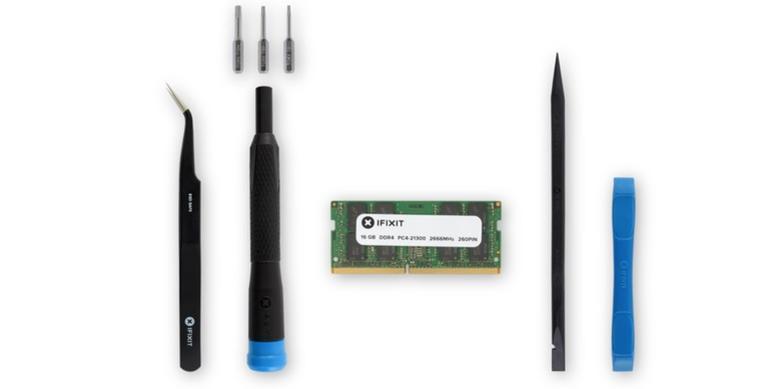
iFixit has released a new upgrade kit that gives you all the tools you need, as well as more RAM, to upgrade your new Mac mini.

Called the Mac mini Late 2018 Memory Maxxer RAM Upgrade Kit, the kit comes with the following:


  • One or two (depending on whether you buy the 16 GB or 32 GB kit) PC4-21300 16 GB RAM chip
  • Spudger
  • iFixit opening tool
  • Angled tweezers
  • Precision bit driver
  • 4 mm precision bits required for the job (Torx T5, Torx TR6, and Torx TR10)


iFixit's tools are some of the best available -- I know because I use them every day! -- and will make the upgrade process as smooth and as painless for you as possible.

This means that if you have a 2018 Mac mini with the base 8 GB of RAM, you can upgrade to 16 GB for only $165, compared to the $200 Apple wants for the extra RAM. And as a bonus, you can also make use of one of the 4 GB RAM modules, which means you end up with 20 GB of RAM!

If you go for iFixit's 32 GB kit, which costs $325, you're actually saving a massive $275 compared to what Apple charges for the RAM.

iFixit has also published a handy 2018 Mac mini RAM upgrade guide.

My ZDNet colleague David Gewirtz carried out this upgrade and documented the process (even publishing a video) explaining how to do it. However, note that Gewirtz is very experienced when it comes to carrying out hardware upgrades, and he describes the process as "a tiresome and fiddly process that's not for the faint of heart."


SOURCE:

Friday, November 16, 2018

11/16/2018 05:19:00 PM

Add 14 ports to your Mac or PC with the OWC Thunderbolt 3 dock

Like the look of Apple's new MacBook Air, but don't think that you could survive with only two Thunderbolt ports and a headphone jack? Fear not, because OWC has a dock that will allow you to have all the ports you could ever need.


Are you running short of ports, or have you bought a new system such as the MacBook Air that's a bit anemic when it comes to ports? OWC has the tool for you in the form of their new Thunderbolt 3 dock.

The OWC Thunderbolt 3 dock comes with a staggering array of ports.

On the back, there are four USB-A 3.1 Gen 1 ports, one of which supports 7.5W fast charging, an S/PDIF port, a Gigabit Ethernet port, two Thunderbolt 3 ports, and a single Mini DisplayPort. On the front, there's a USB-A 3.1 Gen 1 port (again, this one supports 7.5W fast charging), USB-C ports that support Power Delivery, an analog audio in/out, an SD Card reader, and a microSD card reader.

The dock can also support two 4K displays or a single 5K display.

No Jony Ive minimalism here.

The dock will work with any Windows or macOS system that has a free Thunderbolt 3 port.

I've used several OWC Thunderbolt docks over the years and found them to be a great way to add much-needed ports to a system that might otherwise need dongles (or require you to throw out your old hardware and upgrade to USB-C/Thunderbolt).

The dock is available from OWC via MacSales for $299.99 and comes in a choice of Space Gray and Silver finishes.

Make your old Mac faster


SOURCE:

Wednesday, November 14, 2018

11/14/2018 01:00:00 AM

Third-party Mac repairs can be blocked by a new T2 security chip, Apple confirms

The proprietary diagnostic tool now required for certain repairs


Apple’s latest T2 The proprietary introduced to us last year when it made an appearance in the tech giant’s then-newest computers, the 2017 iMac Pro and MacBook Pro.

The processor uses an ARM-based architecture and is designed to handle some of the newer features that were introduced in last year’s MacBook Pros, including the Touch Bar and Touch ID. On the iMac, it looks after video and graphics rendering, along with beefing up security by allowing firmware-level passwords to be set.

Unfortunately, it's also been speculated that the T2 chip could render a Mac inoperable if certain components were replaced as part of third-party repairs. This aspect was first revealed in October, when internal documentation emerged that suggested the T2 chip requires a proprietary diagnostic tool to be run after any repairs are made.

That tool, called the AST 2 System Configuration Suite, is distributed to Apple Stores and authorized service centers only – meaning owners of the newer machines have no choice but to go to an Apple Store or an authorized service center if you need to get certain parts of your Mac replaced. DIY repairs will also likely brick the devices.

While Apple didn’t respond to these reports when they first surfaced, the Cupertino firm has finally confirmed to The Verge that the earlier rumors are true.

Locked in

According to The Verge’s report, Apple has officially stated that “repairs involving certain components on newer Macs, like the logic board and Touch ID sensor” cannot be done by third parties.


Apple has not elaborated on what “other” components are affected, however, the internal documents unearthed last month specifically list the display assembly, logic board, top case, and Touch ID board for the MacBook Pro, along with the logic board and flash storage on the iMac Pro. This could mean that the newly announced Mac mini and MacBook Air will also be affected.

The official confirmation has raised concerns amongst Apple critics that the company is further locking its customers into its own ecosystem. In an email to The Verge, iFixit’s CEO Kyle Wiens called it “a guillotine” being held over the necks of Apple users.

The tech giant has previously locked out iPhones from third-party repairs, for which the company was fined millions of dollars in Australia.


SOURCE:

Thursday, November 1, 2018

11/01/2018 05:05:00 PM

Apple inflation: iPhone, iPad, and Mac prices all surge amid new launches

Apple has pricing power and appears to be using it as prices go higher with every product launch in 2018. Will tech buyers push back?


In the past two months, Apple has launched the iPhone XS, iPhone XS Max, iPhone XR, iPad Pro, Mac mini, and MacBook Air. The common thread? Apple is testing how much it can raise prices -- and the prospect has Wall Street analysts salivating. Tech buyers may not be so happy.

Must read: Apple's new iPad Pro, MacBook Air, and Mac mini: Can feature, specs retain business momentum?

If we've learned anything about Apple in recent months and years, it's that the company has pricing power. While Samsung customers may choke on higher prices and push the company into more of a value-oriented pitch, Apple remains the luxury device maker.

We're about to find out just how far Apple can push price increases. To be fair, commodity costs have risen, and China tariffs are going to hit at some point. In many ways, Apple is just part of a broader inflation trend in the US economy. In other words, Apple isn't the only company looking to raise prices to preserve margins.

Another point to ponder is that Apple has raised premium device prices, but offered other devices like the iPhone XR to appeal to those of us that don't want to go higher than $1,000 for a phone.

Nevertheless, Apple's higher prices are hard to miss. Jefferies analyst Timothy O'Shea outlined the price increases following the iPad Pro and MacBook Air launch. He could hardly contain himself over the prospect of higher average selling prices boosting revenue.

O'Shea outlined what many of you are finding out as you configure Apple devices:

Hardware prices continue to rise across product lines. Starting at $799, the new 11-inch iPad Pro is 23 percent more expensive than the previous model's $649. Starting at $1,199, the new MacBook Air is 20 percent more expensive than the previous model's $999. And starting at $799, the new Mac Mini is a whopping 60 percent more expensive than its predecessor at $499. iPhone prices have risen 13 percent and 19 percent during the last two years.

O'Shea also noted that Apple has "clear pricing power in the near term" and is "clearly flexing its muscle here." The other wrinkle here is that accessory prices are going higher, too. The Apple Pencil costs $129, or 30 percent more than the first gen. The Smart Keyboard Folio starts at $179, 13 percent more than the older version. "Bottom line, after you spend 23 percent more for this year's iPad Pro, you also spend more on pricier accessories," he said in a research note.

It's a nice gig if you can get it. In technology, Apple is one of a few companies that can maintain pricing power. Analysts aren't going crazy raising their revenue projections for Apple, but they are likely to as soon as the company reports earnings on Thursday.

Apple is expected to report fourth-quarter revenue of $61.57 billion and net income of $13.48 billion. For fiscal 2018, Apple is expected to report net income of $58.91 billion on revenue of $264.03 billion. And that windfall is before the full effect of Apple's hardware refresh and price increases are seen. Here's a look at Apple's historical as well as projections for the future via Thomson Reuters.


SOURCE: