Breaking

Showing posts with label Graphics Cards. Show all posts

Wednesday, July 15, 2020

7/15/2020 02:30:00 AM

Tech Update: Intel Tiger Lake integrated Xe graphics beats Nvidia recent MX350 laptop GPU

Tech Update: Intel Tiger Lake integrated Xe graphics beats Nvidia recent MX350 laptop GPU


Another clue that 11th-gen Tiger Lake integrated GPUs are going to be impressive for gaming

Intel’s Core i7-1165G7 Tiger Lake processor for laptops has been spotted in leaked benchmarks, which show integrated graphics (just about) outperforming the GeForce MX350, a standalone notebook graphics card which was released by Nvidia just a couple of months back.

The Intel Core i7-1165G7 has Xe graphics with 96 execution units (EUs) and 768 cores, clocked at 1.3GHz within the benchmark comparison which is highlighted by Rogaine, a really active leaker on Twitter (as spotted by Videocardz).


The Intel CPU is rated with a 15W base TDP, and note that it'll sit below the Core i7-1185G7, so won’t be the top-end Tiger Lake model for laptops (11th-gen high-end parts are often pushed to 28W), and as Videocardz observes, the MX350 is obtainable in 25W and 15W variants.

In the Geekbench 4 OpenCL benchmark, Intel’s Xe integrated graphics manage to rack up a score of 59,845, which just sneaks before the MX350 on 59,828.

There are slight variations within the individual benchmarks, with the Intel solution having a transparent win when it involves the Gaussian Blur test, and Nvidia’s GeForce GPU romping home with a simple win for the high-energy physics test.

Another leaked Geekbench 4 compute benchmark highlighted by Tum_Apisak on Twitter compared the performance of the Core i7-1165G7 versus Intel’s Core i5-1135G7 (with 80 EUs), with the results of the latter around 13.5% slower, which is just about needless to say.

Game on

On the face of it, the fight against the MX350 seems like a really impressive win for Intel’s Tiger Lake silicon, although we've to require any leaked benchmark with an appropriate dose of salt. And albeit it's genuine, this result's just one benchmark – and a computer-related one at that, with a gaming benchmark being a really different matter.

That said, Rogaine specifically notes that similar results are observed in 3DMark, suggesting that this does reflect gaming prospects pretty accurately. And indeed we've also recently seen Intel showing off Battlefield V running on a laptop using integrated Xe graphics, managing a solid 30 frames per second approximately on top quality graphics settings at 1080p resolution.

Of course, that was on a prototype laptop too, therefore the results with a finished product could rather be better still.

Future thin-and-light laptops that don’t have a discrete (standalone) graphics card could, then, offer some pretty impressive gaming performance levels when equipped with Tiger Lake processors.

As to when these notebooks could be available, Intel’s 11th-gen mobile processors are expected to ship to manufacturers soon, and that they should be appearing in laptops on the shelves at the top of 2020, ready combat AMD’s Ryzen 4000 models.


Source URL

Thursday, May 2, 2019

5/02/2019 05:43:00 PM

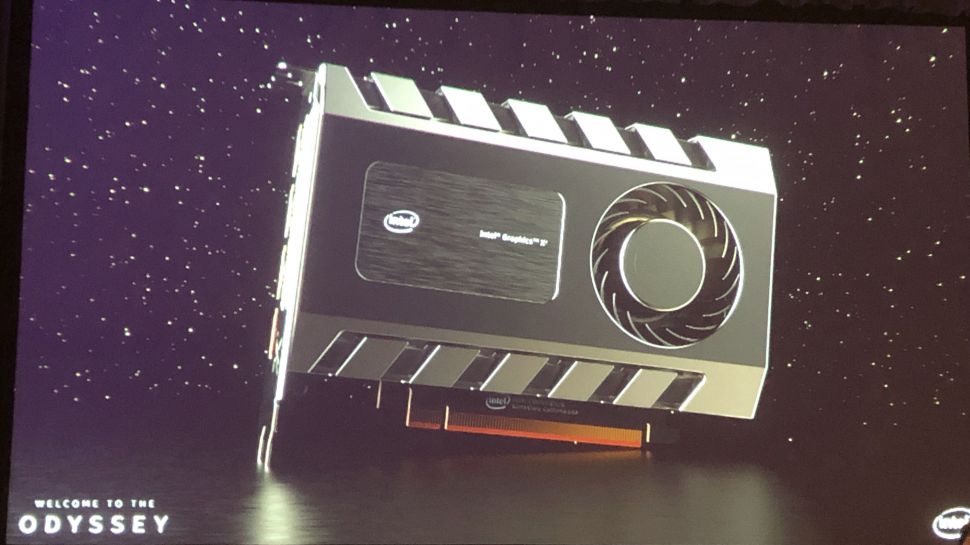
Intel’s Xe graphics cards will have baked-in support for ray tracing

At least for data center products – but maybe for consumer GPUs as well?


Intel has announced that hardware ray tracing will be supported with its upcoming graphics cards, at least in the data center models – but that’s perhaps a solid clue that the firm’s consumer GPUs will also support the technology.

The news that Intel’s Xe GPUs will carry said support came in a lengthy blog post regarding the FMX graphics conference, in which the company noted: “The Intel Xe architecture roadmap for data center optimized rendering includes ray tracing hardware acceleration support for the Intel Rendering Framework family of API’s and libraries.”

So, there’s been a fair bit of chatter already about whether Intel’s consumer graphics cards might support ray tracing, given that Nvidia has very much championed the tech with its latest Turing RTX products – which have dedicated cores to better cope with the demands of ray tracing – and that firm will be Intel’s big rival in the GPU space.


  • AMD vs Intel: which chipmaker does processors better?
  • Building a gaming PC? Here’s a step-by-step guide
  • Everything we know so far about Intel’s new graphics cards


And if its data center GPUs are coming with ray tracing support built-in at the hardware level, it’s not a huge leap to make in imagining that Intel is also planning this for its mainstream graphics card offerings (or at least the high-end ones, perhaps).

All this is speculation at this point, obviously, and there’s no guarantee that this will happen. As ever, we’ll have to wait and see, but as Intel’s new GPUs are expected to come out in 2020, it might not be too long before we hear more on exactly how far the chip giant plans to go with ray tracing support.

There’s another caveat here, too: the above announcement states that ray tracing is on the architecture roadmap, so that doesn’t necessarily mean it will be involved in the initial incarnation of Intel’s Xe products. But we can obviously hope that will likely be the case.

Cinematic angle

Another interesting point here is that at the FMX conference, which covers all sorts of topics on graphics, animations, and effects, Intel was pushing Embree, its high-performance ray tracing kernels, along with other technologies designed for photorealistic output and cutting-edge visual effects employed in big-name animated movies like ‘How to Train Your Dragon’.

And more specifically, Xeon processors running Embree, with the blog post touting the benefits of Intel Xeon Scalable processors along with these technologies, and incoming Intel Xe GPUs, which when all tied together should allow new heights of impressiveness to be reached in the realm of animated movies.

Animations, whether shorts or full-length films, have already reached some pretty incredible levels of realism, so it’s quite exciting to think that Intel’s new graphics cards should help to drive further innovation in conjunction with its processors – and hopefully make this sort of technology more widely available to filmmakers – concerns about consumer graphics cards aside.


READ MORE:

Friday, February 22, 2019

2/22/2019 04:23:00 PM

GeForce GTX 1650 rumor spills spec details, assures us GPU is imminent

The low-end Turing graphics card will pack 4GB of video RAM


A fresh rumor claims that Nvidia is going to launch a third wallet-friendly non-RTX Turing graphics card – backing up the previous speculation that three variants will be released this month and next – and some alleged specs for this GeForce GTX 1650 model have been shared.

To recap, the graphics grapevine insists that the GTX 1660 Ti launches tomorrow – and we’ve seen leaked pictures of retail product boxes to back up its existence – and that it will be followed by a vanilla GTX 1660.

Speculation about those video cards has been around for quite some time now, but last month, we also heard about a rumored GTX 1650 to sit at the bottom end of the Turing range. And this is the GPU that industry sources are now ‘confirming’ the existence of, as Wccftech reports.


  • Here are all the latest GTX 1660 Ti rumors
  • The GTX 1660 Ti will match the GTX 1070 for power
  • Find the best processor to pair with this rumored GPU


It will supposedly launch next month, as is the case with the GTX 1660 – although previous chatter has indicated that 1650 will arrive slightly later in March.

We’ve also heard some spec details in this latest leak, with the GTX 1650 seemingly based on a different Turing GPU than the GTX 1660 Ti and 1660 (possibly the TU117 GPU, so the report contends).

Other alleged specs for the GTX 1650 include a base clock speed of 1485MHz, and it will run with 4GB of video RAM. That’s less than the 6GB which its bigger brother GTX 1660 models will pack.

Memory matters
What’s also worth noting on the video memory front is that while the GTX 1660 Ti is expected to use GDDR6 RAM, both the vanilla GTX 1660 and 1650 could potentially use GDDR5. Again, that’s far from confirmed – indeed none of this is – an Nvidia may want to keep to the uniform usage of GDDR6 for the entire Turing range.

There was no further word on pricing in this fresh report, but we have heard previously that the 1660 Ti will be pegged at $279 (around £215, AU$390), with the GTX 1660 commanding an asking price of $229 (around £175, AU$320).

1650 is expected to be pitched at a sub-$200 price point, with $179 (around £135, AU$250) being mentioned in that rumor from last month. (Price conversions are provided for perspective – although the actual prices outside the US will doubtless be very different to this, as ever).

We should know all the gory details very soon, however, because as we noted at the outset, the GTX 1660 Ti is expected to be launched by Nvidia tomorrow, and the company will doubtless talk about the other GPUs if they are indeed in the pipeline and ready to be delivered imminently.

Nvidia could certainly use some more wallet-friendly options in its Turing range of graphics cards, given that since the launch of the RTX models – which boast ray tracing tech that the GTX flavors will lack – we’ve heard the company itself admit that gamers aren’t buying higher-end models because they’re simply too pricey.


Monday, February 11, 2019

2/11/2019 10:36:00 PM

Graphic Card: AMD’s Navi graphics cards may not arrive until October

New rumor puts paid to older speculation of a summer launch


A new report alleges that AMD’s next-gen 7nm Navi GPUs won’t emerge until October of this year, which is later than the previous speculation that pointed to a summer release.

You may recall that last month, references to Navi graphics cards were uncovered in the source code of macOS, and this underlined previous buzz from the graphics grapevine which was hopeful for a July launch.

That said, going back further to a leaked roadmap from AMD, this suggested that Navi would pitch up in the second half of 2019, so October is still in line with this.


  • Here’s our full AMD Radeon VII review
  • Or should you upgrade to a GeForce RTX 2080?
  • And don’t forget that Intel may soon jump into the GPU arena


The October date comes from sources who apparently spoke to French tech site Cowcotland, not the most renowned source of accurate rumors – although it did recently chip in with some interesting info on the availability of the Radeon VII in France. Still, we should take this speculation with a very hefty pinch of the white stuff.

However, it does make some kind of sense, and not just because it ties up with the aforementioned leaked roadmap.

We just mentioned the availability of the Radeon VII, which is AMD’s first 7nm graphics card – though note that it’s still based on the current-gen Vega architecture, not Navi – and stock of that GPU is very thin on the ground, at least going by what we heard during the launch last week, and from what we can observe now.

For example, in the UK, there are still some Radeon VII cards available at the main stockist, Overclockers UK, but the caveat is the remaining Gigabyte and MSI models are priced at an eye-watering £799.99 – so it seems that folks aren’t quite prepared to pay this much.

All the other cheaper cards – pitched as low as £649.99 in the case of Sapphire – sold out within a few hours of the launch (we were watching, and indeed that Sapphire Radeon VII was sold out almost immediately).

Pop on over to Newegg in the US and every single Radeon VII GPU is sold out (they are all priced at the same $699.99, which is the recommended price tag).

By all accounts, there were only 20 Radeon VII cards in the whole of France at launch, as Cowcotland reported last week.

Production problems?

Anyway, the point to bear in mind here is that there are seemingly clear issues with Radeon VII production, and a lot of that may be down to the Lunar New Year holiday in China, which sees the big manufacturing factories close.

And catching up with rebalancing Radeon VII supply and demand could take its toll on the production schedule for next-gen Navi graphics cards. Particularly when there’s another potential force to consider here, namely that Navi GPUs may also be used outside of the PC arena in next-gen consoles (according to the rumor mill, anyway), thus exerting more pressure on the supply chain.

As ever, we will just have to see how things pan out, although, given all this, it wouldn’t be surprising to see the rumored Navi GPUs which are in the pipeline get delayed until much later in 2019.

Note that the Navi graphics cards we are expecting to see this year will be more budget-friendly mid-range models, with the high-end efforts aimed at the likes of enthusiasts and hardcore gamers not expected to turn up until 2020.

We are expecting to see four models later this year – Navi 16, Navi 12, Navi 10 and Navi 9 – according to the info turned up by digging through the macOS Mojave source code.


READ MORE:

Thursday, January 31, 2019

1/31/2019 04:33:00 PM

Graphic Card: GTX 1660 Ti models from Gigabyte and MSI spotted

Various GTX 1660 Ti graphics cards have appeared in EEC listings


More fuel has been added to the fire in terms of the rumors that Nvidia does indeed have a GeForce GTX 1660 Ti in the pipeline, with listings for various models of such a graphics card from Gigabyte and MSI having been spotted at the EEC website.

The EEC is the Eurasian Economic Commission – a regulatory body of the union between Russia and Armenia, Belarus, Kazakhstan, along with Kyrgyzstan – and Videocardz pointed out the following listings for Gigabyte GPUs:


  • GV-N166TAORUS-6GD
  • GV-N166TGAMING OC-6GD
  • GV-N166TWF2OC-6GD
  • GV-N166TOC-6GD
  • GV-N166TIXOC-6GD
  • GV-N166TGAMINGOC PRO
  • GV-N166TGAMINGOC WHITE
  • GV-N166TGAMING-6GD
  • GV-N166TWF2-6GD
  • GV-N166TD5-6GD
  • GV-N166TIX-6GD


As you can see, these refer to ‘Aorus’ and ‘Gaming’ models, as well as ‘OC’ (overclocked) and ‘Pro’ spins on the cards, and also WindForce (‘WF’).

They shape up pretty much as expected, and these are all along the lines of existing Gigabyte products like the GV-N2070WF3-8GC, which is the firm’s current GeForce RTX 2070 WindForce with 8GB of video RAM (so the 6 at the end of the 1660 Ti GPUs denotes 6GB of onboard memory, as rumored).

Furthermore, the following MSI models were spotted, with a more straightforward naming scheme:


  • MSI GeForce GTX 1660 Ti GAMING Z 6G
  • MSI GeForce GTX 1660 Ti ARMOR 6G OC
  • MSI GeForce GTX 1660 Ti VENTUS XS 6G OC
  • MSI GeForce GTX 1660 Ti GAMING X 6G


Weight of evidence

This is the most solid slab of evidence we’ve seen yet that a GTX 1660 Ti is indeed on the way from Nvidia, as incoming hardware products are quite often spotted in EEC listings online, and there is a broad range of authentic sounding models covered here across two GPU vendors.

Indeed, the sheer weight of all this evidence is growing now, and it seems rather more likely that the GPU is imminent, and that the name – which we were always taken with a hefty pinch of salt – might just be on the money after all.

Why the odd-seeming GTX 1660 Ti moniker? Confusion abounds on that score, and the truth is no one really knows, although some chatter that we’ve seen online has suggested Nvidia might be looking to remind folks of the GeForce GTX 660 Ti. The latter was a popular card which hit the sweet spot of price, performance and power consumption when it came to GPUs back in the Kepler days. Well, it’s as good a theory as any…

At any rate, speculation points to a February 15 launch for the GTX 1660 Ti. The GPU rumor mill also insists that Nvidia will follow up this card with a vanilla GTX 1660, and a GTX 1650, all of which are intended to be cheaper options for those who don’t want to fork out a lot of cash for an RTX model.

These GTX Turing spins are supposedly based on a TU116 GPU with 1,536 CUDA cores, and won’t have the ray tracing chops seen on the RTX cards, with pricing allegedly set to be pitched at $279 (around £210, AU$390) for the GTX 1660 Ti.

The theory continues that the GTX 1660 will drop the asking price to $229 (around £175, AU$320), and the GTX 1650 will be pitched at $179 (around £135, AU$250). Although even the rumor peddlers admitted that those prices could change before launch.

Further evidence of the existence of the 1660 Ti includes a leaked photo of an alleged Nvidia pre-briefing event for third-party graphics card manufacturers and a benchmark which was spotted that shows the GPU could be around 20% faster than a GTX 1060.

Before we get too carried away, however, it’s still worth underlining that nothing is certain here, and all this remains in the domain of speculation. Still, with the purported launch only a couple of weeks away, we haven’t got long to wait to find out the truth.


READ MORE:

Tuesday, January 22, 2019

1/22/2019 10:38:00 PM

GTX 1660 Ti could be 20% faster than GTX 1060 according to leaked benchmark

Ashes of the Singularity result looks impressive


Rumors recently began circulating that Nvidia is about to launch a new graphics card – the GTX 1660 Ti, which is a Turing GPU without the ray tracing technology (RTX) of Nvidia's recent graphics card, and now a fresh benchmark leak gives us an (alleged) glimpse of its power.

Assuming this leak, from the Ashes of the Singularity benchmark database, is indeed true, it shows that the GTX 1660 Ti scored 7,400 at 1080p (high) resolution, as spotted by prolific leaker TUM_APISAK (via Videocardz).

View image on Twitter

In comparison, the GTX 1060 recorded a result of 6,200, which makes the incoming GTX 1660 Ti almost 20% faster, and therefore in the same ballpark as the GTX 1070 – of course, assuming that the graphics card actually exists.

Naturally, exactly how exciting this result is depends on how much the new graphics card costs, so we can’t put things fully into perspective until we know that. The broad idea seems to pitch this GPU between the old GTX 1060 and the new RTX 2060.

Reported reveal

Nvidia will reportedly reveal the GTX 1660 Ti – and rumor has it there will also be a GTX 1660, which makes some kind of sense – at some point in February.

We’ll just have to sit tight and see, although the naming scheme of these alleged GPUs does seem rather odd (you would expect Nvidia to stick with its current naming convention and call these newcomers the 1160 and 1160 Ti).

The theory is that the GTX 1660 Ti will run with a TU116 GPU sporting 1,536 CUDA cores, backed by 6GB of GDDR6 video memory. So it looks to be a powerful enough offering, aimed at those who aren’t that bothered about ray tracing, and don’t want to fork out the substantial premium for an RTX model.

At any rate, whether this speculation turns out to be on the money, or not, Nvidia will surely be looking to introduce some form of more wallet-friendly GPU for this current generation.


SOURCE:

Tuesday, January 8, 2019

1/08/2019 04:39:00 PM

HP updates Omen 15 laptop, Omen Obelisk desktop with Nvidia RTX graphics

Bringing an Omen into the next generation


At CES 2019, gaming laptops are the stars of the show, and HP wasn't going to let everyone else have all the fun. The biggest PC manufacturer announced the HP Omen 15 gaming laptop, refreshed with Nvidia RTX graphics.

After completely redesigning the HP Omen 15 to include 8th-generation Coffee Lake processors last year, the 2019 model is essentially a refresh to include the latest Nvidia Turing graphics.

It still includes the same Intel Core i7-8750H processor, 16GB of RAM, 128GB SSD and 1TB hard drive as last year's model. But, with an upgraded Nvidia GeForce RTX GPU that should make running games on its 15.6-inch FHD (1,920 x 1,080) display a breeze.

You'll also have the option to upgrade the laptops display to a whopping 240Hz refresh rate, starting in June. However, HP hasn't released pricing information on this upgrade.

The HP Omen 15 is expected to release in February, starting at $1,369 (about £1,080, AU$1,930).

The two towers


HP knows there's still a lot of life in the best gaming PCs, and it has refreshed its Omen Obelisk desktops with 9th-generation Intel Coffee Lake Refresh processors and Nvidia Turing graphics.

Users will be able to opt for either the HP Omen Obelisk 875 1010 or 1020. The former features an Intel Core i7-9700K and an Nvidia GeForce RTX 2080, bumped up to an Intel Core i9-9900K and an RTX 2080 Ti for the latter. Both models feature the same 16GB of RAM and 512GB SSD with a 1TB hard drive.

They'll also have tool-less designs, making it a breeze to upgrade, and are compatible with any PC components that will work with a micro-ATX motherboard.

The HP Omen Obelisk will be available in March, starting at $2,249 (about £1,770, AU$3,180).


SOURCE:

Wednesday, January 2, 2019

1/02/2019 09:38:00 PM

Graphic Cards 2019: The (other) big three in 2019: AMD, Intel and Nvidia

What new PC processors will we see in 2019?


This last year has been a bizarre one in the world of PC components. AMD, Intel, and Nvidia have all launched major product lines that ruled their prospective portions of the market – at least for a little while.

AMD launched its Ryzen and Threadripper 2nd Generation lineups, which brought about fantastic performance at a bargain price, while Nvidia launched Turing and the best graphics cards we’ve ever seen. And, Intel? Well, Intel released four different microarchitectures to varying degrees of success.

But, what will 2019 look like? As all of these manufacturers mobilize to launch more efficient silicon than ever before, will we finally start seeing 7-nanometer (nm) processors in the mainstream? Or, will AMD launch a line of graphics cards that give the RTX 2080 and RTX 2080 Ti a run for their money? What will the mid- and low-end Nvidia Turing cards look like?

AMD 2019


For years, AMD has been playing the underdog both in graphics cards and the best processors.

However, now that AMD is selling twice as many processors as Intel, it’s heading into the new year as a dominant force in the market – even if it still needs to catch up to Nvidia.

Ryzen 3rd Generation. The AMD Ryzen 3000 series processors are a sure thing in 2019, and while leaks have pointed to them being 16-core monstrosities with core speeds up to 4.7GHz, we think that’s a little bit pie-in-the-sky. Still, AMD is shrinking its manufacturing process to 7nm in 2019, according to leaked roadmaps from Informatica Cero, so we’ll likely see better efficiency and performance across the board – hopefully while keeping its stellar price-to-performance balance.

Threadripper 3rd Generation. As is the norm over the last couple of years, we’ll likely see a new line of Threadripper HEDT processors show up in Summer 2019. The leaked roadmap we mentioned earlier points to a “Castle Peak” architecture following AMD Ryzen Threadripper 2nd Generation, likely based on the same Zen 2 process as Ryzen 3rd Generation. Similar to its mainstream Ryzen platform, we expect AMD’s next HEDT line to bring improved efficiency and performance.

AMD Vega 7nm. AMD has a press conference at CES 2019, and we’re pretty sure that it’s going to announce 7nm Vega graphics cards for creatives and professionals. We’ve already seen AMD tease 7nm graphics cards for CES, and the AMD Vega II logo has been revealed in a trademark application. It’s a pretty safe bet that AMD Vega II will be revealed very soon.

AMD Navi. But, what about consumer graphics cards? Ever since Nvidia launched Turing with, frankly, insane prices, we’ve been hoping AMD Navi would come out and give Team Green some much-needed competition. We’ve seen a leak that suggests that AMD will release an RX 3080, which would compete with the Nvidia GeForce RTX 2070 for half the price. If this is true, 2019 is going to be an exciting year for graphics cards

Intel 2019


We know significantly less about what Intel is going to do in 2019. It’s known that the silicon giant is going to do something, but the specifics are a bit arcane at the moment.

Between Cannon Lake, Sunny Cove and some HEDT chips, we’re sure following Intel is going to be a rollercoaster this year – like it is every year.

Sunny Cove? Cannon Lake? Coffee Lake Refresh just came out a couple months ago, bringing extremely high core counts and clock speeds together for the first time – the Intel Core i9-9900K blows everything out of the water. It’s still a stopgap, though. We’ve been waiting for 10nm Cannon Lake processors for years now, so hopefully we’ll see some more efficient silicon in 2019 – even if it’s called Sunny Cove instead.

More laptop processors. Even though Intel’s 9th generation of processors kicked off in October 2018 with Coffee Lake Refresh, we’re still seeing a ton of laptops with the 8th-generation Kaby Lake Refresh processors that launched all the way back in 2018. We expect Intel to refresh mainstream laptops next year, though we’d be happy if we saw more laptops with Whisky Lake chips.

Intel graphics cards. Intel has been hinting at launching its own line of graphics cards for a while now, and we have to say: we’re intrigued. While Intel has come out and said that it’s on track to release graphics cards in 2020, not 2019, Intel will likely show off some of its new graphics architecture. Will they be consumer cards? Or – what we think is more likely – GPUs aimed at taking on Nvidia Volta and AMD Vega in the professional space? We’ll just have to wait and see.

Nvidia in 2019


Nvidia had a pretty action-packed 2018, so we’re not expecting anything groundbreaking from the graphics giant.

It already launched Turing for consumers and Volta for data scientists and professionals, so we’ll likely see those lineups expand throughout the year.

More Turing desktop graphics. We’ve started to see some leaks and speculation crop up about the Nvidia RTX 2060 start to surface. The Nvidia Turing lineup, as it exists today, is extremely expensive, so we’re hoping that whatever the RTX 2060 is capable of, it’ll be more affordable for mainstream consumers. Not everyone wants to drop a thousand bills on a graphics card.

RTX Mobility. Sure, the best gaming PCs have had access to Nvidia Turing for a few months now, but what about gaming laptops? Well, word on the street is that Nvidia will announce RTX Mobility graphics for laptops at CES 2019. We’ll likely see the RTX 2070 Max-Q as the premiere mobile GPU, but we could see the RTX 2080 make its way to a laptop near you as well.


SOURCE:

Monday, December 31, 2018

12/31/2018 09:45:00 PM

AMD Ryzen Threadripper 3rd Generation release date, news, and rumors

AMD’s next HEDT chips


Now that AMD is on the verge of revealing its 7nm next-generation processors, what will the future look like for Threadripper 3rd Generation – its next line of HEDT processors?

Now that AMD Ryzen is nearly two years old at this point, and we’ve seen Team Red come out with winning CPU after winning CPU, we’ve been asking ourselves where things go from here.

AMD is on the verge of launching its 7nm Zen 2 architecture, according to its own roadmap and CES 2019 plans, which should drastically improve both performance and efficiency and deliver some of the best processors we’ve seen yet. And, while this is definitely exciting news for users looking for the Ryzen 3rd Generation processors, we’re more interested in the next line of Threadripper chips.

With chips like the AMD Ryzen Threadripper 2990WX, AMD blew the lid off of what to expect from HEDT – or high-end desktop – processors. With AMD Ryzen Threadripper 3rd Generation, we’re expecting to see even more cores, performance and value.

Cut to the chase


  • What is it? AMD’s next line of HEDT processors 
  • When is it out? Likely Summer 2019
  • What will it cost? TBD


AMD Ryzen Threadripper 3rd Generation release date

While AMD hasn’t come out and announced the release date for its next Threadripper chips, the last two Threadripper generations have been pretty consistent, so we have a basis for speculation.

Both the original Threadripper and Threadripper 2nd Generation launched in August of 2017 and 2018, respectively. We’re fairly sure that AMD is going to follow the same general release schedule this time around, but, obviously, we don’t know that for sure.

AMD’s latest roadmap shows its Zen 2 architecture launching in 2019 – with a likely reveal at CES 2019. If AMD does reveal Zen 2, along with Ryzen 3rd Generation at CES, it’s likely that we’ll see Threadripper 3rd Generation at Computex 2019, with a release date following in the following months.

We’ll update this article as soon as we hear more substantial rumors about the release date.

AMD Ryzen Threadripper 3rd Generation

Now, so far ahead of AMD Ryzen Threadripper 3rd Generation’s launch, we don’t have any official pricing information, but we can look at past generations to get an idea of what AMD’s next HEDT chips will cost.

The original lineup of Threadripper topped out with the $999 (£999, AU$1,439) AMD Ryzen Threadripper 1950X, but the second generation introduced surprisingly lower priced replacements. There were also two higher specced – and higher priced – additions. We believe Threadripper 3rd Generation will follow the latter model.

The prices of AMD Ryzen Threadripper 2nd Generation chips are as follows: 


  • Ryzen Threadripper 2990WX: $1,799 (£1,639, AU$2,679)
  • Ryzen Threadripper 2970WX: $1,299 (£1,159, AU$2,039)
  • Ryzen Threadripper 2950X: $899 (£809, AU$1,415)
  • Ryzen Threadripper 2920X: $649 (£583, AU$1,019)


AMD could very well surprise us and introduce an even higher-end SKU, but we don’t think that’s likely. Stay tuned, and we’ll update this page as soon as we hear any Threadripper 3rd Generation price information.

AMD Ryzen Threadripper 3rd Generation specs


With AMD Ryzen Threadripper 3rd Generation, we expect to see a huge bump in core counts, efficiency and per-core performance with Threadripper 3rd Generation. If you need a refresher on last year’s Threadripper lineup’s specs they’re as follows:


  • Ryzen Threadripper 2920X: 12-cores, 24-threads, clocked at 3.5GHz to 4.3GHz
  • Ryzen Threadripper 2950X: 16-cores, 32-threads, clocked at 3.5GHz to 4.4GHz
  • Ryzen Threadripper 2970WX: 24-cores, 48-threads, clocked at 3.0GHz to 4.2GHz
  • Ryzen Threadripper 2990WX: 32-cores, 64-threads, clocked at 3.0GHz to 4.2GHz


We’re sure that with the move to 7nm, AMD is going to massively improve specs. But, with Threadripper 3rd Generation, or Castle Peak, rumors are thin on the ground. However, there is plenty of buzz about the AMD Ryzen 3000 series, not to mention the 64-core AMD Epyc server CPU.

There is already speculation that suggests there will be a 16-core, 32-thread Ryzen 3000 CPU, with higher instructions per clock (IPC) than previous processors. That’s double what the Ryzen 7 2700X features, and if AMD is able to do the same with Threadripper – we could see a 64-core HEDT chip.

It wouldn’t even be the first 64-core processor in AMD’s lineup. AMD recently showed off its latest Epyc processors, based off its Rome microarchitecture, with up to 64-cores.

If AMD is able to bring those high core counts to Castle Peak HEDT processors, we could see AMD absolutely dominate Intel’s Basin Falls Refresh. And, if Intel can’t answer with anything but 14nm silicon, AMD might claim the HEDT throne like it did when it topped Intel’s mainstream sales.


SOURCE:

Tuesday, December 18, 2018

12/18/2018 07:21:00 PM

Nvidia GeForce MX250 graphics pop up in HP laptop leak

The next in entry-grade Nvidia graphics appears


Nvidia may be preparing more than just RTX graphics for laptops at CES 2019, with a reference to MX250 graphics just appearing in an HP laptop listing.

The supposed HP Zahn 66 Pro 14 G2 Notebook PC was reportedly listed somewhere by HP with a Nvidia GeForce MX250 with 2GB of GDDR5 memory, first shared by Twitter user Momomo.

It is currently still unknown whether this new mobile graphics processor or GPU, has been built on the new Turing architecture – a la the RTX series – or Pascal, like the current MX150 is built upon. However, the “first traces of TU107 and TU108 graphics processor have already been found,” according to VideoCardz.

There is no more information on MX250 graphics, but plenty more on this business-bent laptop that will contain the updated GPU. It will be equipped with 8th generation Intel Core i5 or i7 processors with a 14-inch FHD (1,920 x 1,080) display, up to 512GB SSD storage or 1TB hard drive along with up to 32GB of memory.

VideoCardz is so bold as to suggest a CES 2019 announcement, not that we all aren’t at least hoping for it, too.

The question remains, however, of what other laptops (that we’d actually use) will have these shiny, new graphics options? Stay tuned for more (hopefully) at CES 2019 – we’ll be there.

These are the best graphics cards for gaming desktops


Sunday, December 16, 2018

12/16/2018 10:59:00 PM

Next-gen mobile AMD Ryzen processors spotted in laptop benchmarks

Five new CPUs listed so far


On top of a full range of Ryzen 3rd Generation desktop processors, it looks like AMD already has a few mobile CPUs inside upcoming laptops.

Hexus spotted Geekbench results for three different AMD Ryzen 3000 Series Picasso APUs fitted inside two classified HP laptops. First up is the HP Laptop 17-ca1xxx equipped with an AMD Ryzen 5 3500U, which is listed as a 2.1GHz quad-core processor featuring eight threads and Radeon Vega Mobile Gfx integrated graphics.

A second HP Laptop 17-ca1xxx showed up in GeekBench’s records twice but equipped with a different AMD Ryzen 3 3300U CPU. It seems to be a small step behind the chip listed above as it only has 4-cores, 4-threads running at 2.1GHz with Radeon Vega Mobile Gfx integrated graphics.

Lastly, the HP Laptop 14-cm1xxx showed up with a 2.6GHz MD Ryzen 3 3200U that appears to be a dual-core processor featuring 4 threads and Radeon Vega Mobile Gfx integrated graphics.

Geekbench results are always a little shaky, but TUM_APISAK also corroborated the report by tweeting out the same processor names along with a two additional chips.

Interestingly, the serial leaker noted there will be a high-end Ryzen 7 3700U CPU equipped with 4-cores, 8-threads running between 2.2GHz and 3.8GHz base and boost frequencies, respectively. The 300U was also listed as an extremely low-end 300U chip that might be destined for the first AMD-powered Chromebooks.

Digging into the details listed on the GeekBench results seem to reveal that upcoming Picasso APUs will pair 12nm FinFET Raven Ridge CPUs with Vega GPUs. So these chips may technically be part of an extended Ryzen 2nd Generation family due to its use of the 12nm Zen+ architecture.

At CES 2019, we fully expect AMD will announce its hotly anticipated 7nm Zen 2 architecture that should be the foundation of the company’s next Ryzen 3rd Generation and Ryzen Threadripper 3rd Generation processors.

Meanwhile, Intel just announced its 10nm Sunny Cove architecture


Thursday, December 13, 2018

12/13/2018 10:30:00 PM

AMD’s latest graphics card software lets you stream VR games to your phone

Radeon Software’s biggest upgrade in years


AMD Radeon Software has seen several annual updates over the last few years, however, Adrenalin 2019 Edition is bringing some of the biggest and most unique features we’ve seen yet, particularly introducing VR and game streaming to your phone.

AMD Radeon Software Adrenalin 2019 Edition’s single biggest feature has to be ReLive for VR, which essentially lets players stream VR games running on their PC to a phone-powered VR headset (i.e. Google Daydream View and Samsung Gear VR) and standalone VR headsets (i.e. the Oculus Quest and HTC Vive Focus).

This all might sound bananas, but it really works well. During a short demo, we hardly experienced any lag or slowdown in frame rate that would have caused us a bout of nausea. Instead, we were able to freely look around just as if we were playing VR games with a traditional headset hooked up directly to a PC.


By linking AMD’s Radeon Software on PCs with the Radeon ReLive VR app on phones and standalone VR headsets, players can access their full catalog of Steam VR games.

Of course, visuals take a small tick down, as they’re tuned for low-latency and to ensure a seamless experience. At the same time, the program utilizes low-level hardware acceleration to optimize streaming from your PC to a mobile VR headset.

Not only does this give users a great way of experiencing completely wireless VR, they can also experience more high-end VR games that were typically locked to the PC. It’s especially important to give PC-based VR games another place to live, as there seems to be no new Oculus Rift in sight and companies are now focused on introducing more standalone headsets.

The AMD Link app will only initially available on the Google Play Store and HTC Viveport marketplace, but AMD also plans to release its app on the Oculus Store soon.


Game streaming finally arrives

At long last, Adrenalin 2019 Edition also introduces game streaming. Players will now be able to use their AMD Link app on iOS and Android smartphones to play games running on their PC through their phone.

What’s more, players can expect up to 4K resolutions at 60 frames per second (fps) with low-latency while gaming on their tablets and phones. AMD claims its game streaming solution is even up to 44% faster than (unspecified) competitive solutions.

To get started, users simply need to pair up the AMD Link app with their PC and – presto – they’ll be able to launch games with just a tap. The interface will introduce on-screen controls, but users will also be able to hook up their phone to a Bluetooth controller.

Outside of gaming, AMD Link will also allow users to streaming their PC desktop, which will come in handy if you ever need to remote into your PC or just stream 4K video from your PC.


Live streaming for pros

Aside from VR and game streaming, Adrenalin 2019 Edition is also enhancing the way you can live stream broadcast to an audience. To this end, AMD is introducing a new Scene Editor to ReLive that allows users to pull in multiple recording sources and add graphics to create a dynamic streaming overlay. With the added ability to transition between scenes using hotkeys or the Radeon Overlay, this is essentially AMD’s version of OBS or XSplit for the Twitch broadcasters out there.

ReLive has also received a few other smaller improvements including high-quality audio recording with support for multi-channel audio (i.e. all your teammates talking), in-game replay as well as easy GIF creation and sharing.

Everything else

There are almost too many Adrenalin 2019 Edition improvements to mention, and as much as we’d like to spend all day writing about them, here's a list of the rest of the most important upgrades:


  • Installer: streamlined with a simple one-click install process.
  • Project ReSX: delivers improved FPS performance and 99th percentile frame times for popular PC eSports games to ensure a faster click-to-response time.
  • Game Advisor: in-game performance testing that recommends quality setting changes to improve the performance or increase image quality.
  • Radeon Wittman: improved performance with auto-GPU overclocking and undervolting, memory overclocking and application-bound tuning. fan speed control and unlocked DPM state customization for Radeon RX Vega-series graphics cards.
  • Radeon Chill: up to 20% greater power savings in games such as Fortnite, Overwatch and PUBG.
  • FreeSync 2 HDR: improved auto-tone mapping for a more detailed picture across the frame and different levels of lighting across the frame.
  • Virtual Super Resolution: enhanced detail on ultra-wide 21:9 monitors
  • Radeon Overlay: added WattMan access while in-game and expanded performance metrics display.
  • AMD Link: added voice control, Radeon WattMan access, Enhanced Performance Metrics access and live stream editing to create playback videos.
  • Up until now, we've always felt that AMD's Radeon Software had it bit more polish than Nvidia's GeForce Experience – but not nearly as many features. With Adrenalin 2019 Edition, it now seems AMD may have even surpassed Nvidia's software suite for the time being.

Meanwhile, the war of the best graphics cards rages on.


SOURCE:

Monday, December 3, 2018

12/03/2018 07:30:00 PM

Graphic Card: Nvidia Titan RTX shows up online, could be coming soon

We’ve witnessed a trio of supposed ‘leaks’ on social media


Nvidia is teasing the release of its Titan RTX graphics card – which will doubtless be a powerhouse of a GPU – in a series of leaks spilled on social media.

As spotted by PC Gamer, the card turned up in an image tweeted by Andrew Ng, the co-founder of Coursera, nestling inside a PC he was trying out some ‘new hardware’ in.

Along with that, Gavin Free – creator of YouTube channel ‘The Slow Mo Guys’ – posted an image of the GPU on Instagram, in a very similar pic with the PC side panel open so you can see the card and the glowing Titan logo.

If that's not evidenced enough, during a Linus Tech Tips video, the box of the Titan RTX was ‘accidentally’ pulled out and shown off.

Convenient leaks

While these could be a bunch of accidental leaks of the graphics card and its box, it’s likely that Nvidia has given permission for these folks to tease the Titan RTX  – and if the aim is to begin to drum up excitement now, we can hope that a launch is fairly imminent.

Naturally, we are expecting a graphics card with a huge amount of power on tap, and a GPU that outdoes the already blisteringly fast GeForce RTX 2080 Ti.

We loved the latter in our review, where it snagged a ‘best in class’ award, allowing for high frame rate gaming in 4K resolution with just one card – although it is extremely pricey. Of course, the Titan RTX is likely to be even more expensive.

The best graphics cards 2018: all the top GPUs for gaming


SOURCE:

Thursday, October 11, 2018

10/11/2018 10:28:00 PM

Nvidia’s GeForce RTX laptop graphics cards could be unleashed in January

Although the flagship RTX 2080 won’t arrive, to begin with, rumor claims


Word on the GPU grapevine is that Nvidia will unleash its next-gen GeForce RTX graphics cards for laptops around CES time, meaning January 2019.

The mobile-targeted line-up will be headed up by the RTX 2080 Mobility along with a Max-Q spin on that GPU.

Then Nvidia will have the RTX 2070 Mobility, again with a Max-Q version, followed by the RTX 2060 Ti Mobility and vanilla RTX 2060 Mobility. At the lower-end will be the RTX 2050 Ti Mobility and again a vanilla RTX 2050.

All of these GPUs will apparently be released when January rolls around, as mentioned, except for the flagship RTX 2080 Mobility offerings which won’t come until a ‘bit later’.

Bear in mind that this is very much speculation, and comes courtesy of an unnamed source who spoke to Wccftech, so exercise some caution with these sort of rumors.

Gaming goodness

Still, those who enjoy gaming on a portable will doubtless be excited at the prospect of having a new RTX 2080 GPU before too long – even if this top-of-the-range model won’t be arriving, to begin with if all this is correct. It’s worth noting that previously, the rumor mongers expected this flagship graphics offering to be the first to launch (and possibly before the year was out, too).

It’s also interesting to note that according to this report, only the RTX 2080 and 2070 will be given the Max-Q treatment. Nvidia’s Max-Q technology involves optimizing the GPU in terms of its design and power-efficiency, meaning that laptop manufacturers can fit a powerful graphics solution into a relatively thin and light gaming notebook.

Finally, Wccftech also clarifies that the anonymous source didn’t explicitly name every one of these GPUs as being part of the RTX series, so there is a possibility that lower tier models could still be branded GTX cards rather than RTX.

So yes, this one is certainly rather up in the air, but if we are getting close to launch – or at least an unveiling from Nvidia – there will be more rumors along soon, no doubt, to help clarify the exact picture on the mobile GPU front.

These are the best graphics cards you can buy in 2018


SOURCE:

Sunday, September 16, 2018

9/16/2018 07:30:00 PM

Nvidia Claims GeForce RTX 2080 hits the Sweet Spot for 4K Gaming at 60 fps

RTX 2080 is apparently the bang-on GPU for the holy grail of smooth 4K


Ahead of the imminent launch of its next-gen graphics cards, Nvidia has shared some fresh details about exactly how quick the GeForce RTX 2080 and GeForce RTX 2080 Ti will be, with the former absolutely doing the trick in terms of realizing 4K gaming at a fluid 60 frames per second.

The new graph – which is rather vague (more on that later) – shared by Nvidia over at the GTC Japan 2018 keynote shows the comparative performance of the incoming Turing architecture compared to the last two preceding generations (Pascal and Maxwell).

Most importantly, it marks the necessary performance oomph to achieve 4K at 60 fps, and that’s a line which the GeForce RTX 2080 sits right on, showing that this is the card you need to achieve that holy grail combination of high-resolution and smoothness.


It also underlines the fact that the RTX 2080 will be faster than the outgoing GTX 1080 Ti (as already shown in a leaked benchmark), although admittedly the latter does come close to hitting 4K nirvana, as we noted in our review (sitting more around the 50 to 60 fps range, although not with every contemporary title, though).

The other interesting point is that the gap between the RTX 2080 and RTX 2080 Ti is larger than the gap between the GTX 1080 and GTX 1080 Ti, meaning that the new Ti GPU represents an even bigger performance jump over the vanilla 2080 compared to the Pascal graphics cards. And that’s obviously good news for those looking at the top-end offering of Nvidia’s new GPUs.

Graph Gripes

Now, there are some caveats here, namely that as we already mentioned, the graph Nvidia showed off is pretty sketchy, with no actual hard numbers cited on the axes, or any details of which games were tested and on what sort of visual detail settings (or indeed with what complementing hardware).

It’s just a few comparative lines on a black background, really, so we have to take Nvidia’s word for it that this represents the reality of its new graphics cards – at least for the time being, until we get our hands on a review sample to crunch our own frame rate numbers.

Nvidia also shared a slide which reiterates that games employing Turing’s new DLSS (Deep Learning Super-Sampling) feature can expect a major frame rate boost, which comes as no surprise, as the firm has already said to expect up to twice the performance levels in titles like Ark: Survival Evolved. In other words, super-smooth 4K certainly won’t be a problem there.

A further nine games which support DLSS have also just been announced, and those include Darksiders III, Fear the Wolves, Hellblade: Senua’s Sacrifice, and Overkill’s The Walking Dead.

Nvidia’s new Turing graphics cards are due out on September 20, with the RTX 2080 coming with a recommended price of $799 (£749, AU$1,199), and the RTX 2080 Ti being pitched at $1,199 (£1,099, AU$1,899). The range starts with the RTX 2070 which will cost $599 (£569, AU$899).


Tuesday, August 14, 2018

8/14/2018 07:22:00 PM

Nvidia announces the Turing architecture and its first ray tracing GPUs

Meet the New Quadro RTX Family


Nvidia’s long-rumored Turing GPU architecture for next-generation graphics cards is finally official, and it’s more than we could have hoped for.

Turing incorporates a number of new features and technologies, chief among them are new RT Cores that power real-time ray tracing. These specialized cores essentially compute how light and sound travel in a 3D environment at a rate of up to 10 GigaRays.

That might sound like a made-up unit of measuring performance, but Nvidia claims Turing can process real-time ray tracing 25-times faster than the previous Pascal architecture. The technology firm also noted that its GPU nodes can outperform CPU nodes by 30 times when used for final-frame rendering for film effects.

On top of this specialized ray tracing technology, Nvidia has also integrated the Tensor Cores seen in Volta to inject artificial intelligence into this GPU architecture. These Tensor Cores will essentially deliver up to 500 trillion tensor operations a second and accelerate deep learning training and inferencing.

AI will, in turn, help power new rendering methods such as deep learning anti-aliasing, which promises a high-quality image rendering complete with de-noising, resolution scaling and video re-timing.


A bold new world for graphics

Nvidia Turing will combine both its RT Cores and Tensor Cores to usher in a new form of hybrid rendering that includes both simulation and enhanced rasterization. Team Green announced this technology will first power media production in the visual effects industry to create cinematic-quality interactive experiences.

To that end, Nvidia also introduced three new Quadro RTX graphics cards featuring up to 48GB of GDDR6 memory, 4,608 CUDA Cores and 576 Tensor Cores built upon the Turing architecture.


Although Nvidia made no mention of Turing-based GeForce graphics cards, this is the clearest picture thus far of what they could end up looking like. We’re almost certain that we’ll see the Nvidia GeForce RTX 2080 or Nvidia GeForce GTX 1180 by the end of the month.


Saturday, August 11, 2018

8/11/2018 10:39:00 PM

Nvidia GeForce GTX 1180 Founder’s Edition Could Have Dual-Fan Cooling and ‘Breakthrough’ Performance

The rumor mill has spun out another couple of interesting nuggets

Graphics Cards

The Founder’s Edition of Nvidia’s incoming GeForce GTX 1180 – or possibly the GTX 2080 (various rumors point to different possible names) – will run with a hefty dual-fan cooling system, according to the latest speculation concerning the next-gen GPUs.

This comes from BenchLife, which claims that the Founder’s Edition will boast a dual-fan open-air cooling system – which is a first for Nvidia’s own cards – to give plenty of oomph when it comes to reducing the temperature the card runs at.

In other words, this could indicate that the power of the successor to the GTX 1080 requires something a little beefier to keep it tamed when running demanding games and pushing a lot of pixels.

All of this is pure speculation at this point, of course – but it’s definitely an interesting piece of GPU gossip to bear in mind.

Breakthrough performance?

As Wccftech.com, which spotted the above rumor, notes, graphics card manufacturer Galax has also released a statement (via a company rep) to the effect that the next-gen cards from Nvidia will be a ‘breakthrough’ affair in terms of performance, again building up anticipation for these incoming GPUs.

The GPU vendor also indicated that the launch would happen by September – or at least, we’ll get to see ‘information’ on the cards, which could mean an unveiling. Although in that case, we’re hoping to see a reveal earlier than that at Gamescom, where Nvidia is planning a GeForce Gaming Celebration event with ‘spectacular surprises’ promised.

As ever, we’ll have to wait and see. It’s worth noting that previous rumors have pointed to an August 30 release (on sale) date for the GTX 1180, with other cards (GTX 1180+ – possibly a variant with more memory – and GTX 1170) to follow at the end of September, and at the end of October (GTX 1160).

That said, the latter rumored information looked somewhat shaky when it was spilled, and with August 30 less than three weeks away now, and nothing more than vague rumors floating about still, you’ve got to wonder how realistic a prospect that might be.